
Is Domestic Capital Driving India’s Market Rally? Insights from Dhruv Goyal
Indian Equity

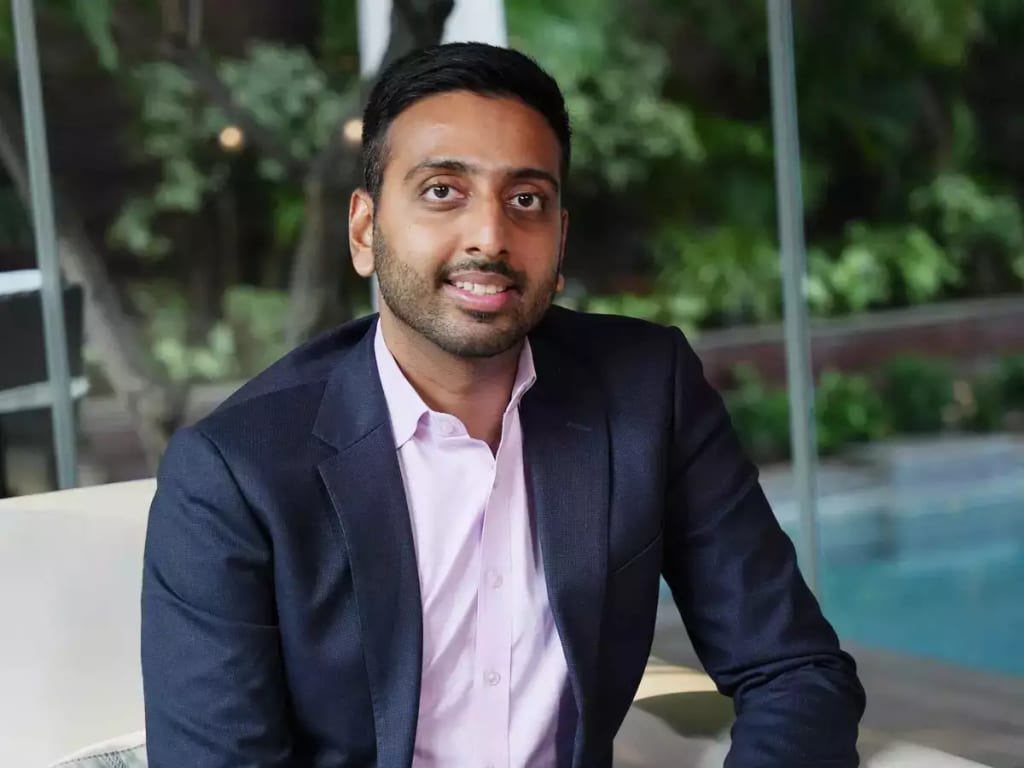
India's stock markets have witnessed an unprecedented surge, defying global economic uncertainties and emerging as one of the best-performing markets in recent years. At the core of this rally lies a crucial yet often underappreciated force—domestic capital.
Dhruv Goyal, Founder and CEO of FourLion Capital, emphasizes that India's retail and institutional investors are increasingly shaping the trajectory of its financial markets. But is domestic capital truly the backbone of this sustained market growth? And how does it shield the economy from global volatility? Let’s explore these critical questions.
The Rise of Domestic Investors in India’s Markets
Traditionally, India’s stock market was largely influenced by Foreign Institutional Investors (FIIs), whose capital inflows and outflows dictated market sentiment. However, in recent years, domestic institutional investors (DIIs) and retail investors have taken center stage, providing stability and resilience to the markets.
Key Trends Fueling Domestic Capital Growth
- Rise in Retail Participation: With the advent of digital trading platforms and widespread financial literacy, millions of first-time investors have entered the stock market.
- Boom in Mutual Funds: Systematic Investment Plans (SIPs) have surged, with monthly inflows crossing record highs.
- Government and Regulatory Support: Policies encouraging domestic investment and reducing dependency on foreign capital have strengthened market resilience.
- Growth of Indian Institutional Investors: Pension funds, insurance companies, and asset management firms are playing an increasingly dominant role in market stabilization.
According to Dhruv Goyal, this transformation represents a structural shift that will define India’s financial landscape in the years to come.
How Domestic Capital is Shielding India from Global Market Shocks
The global economy has faced significant challenges, including interest rate hikes, geopolitical tensions, and financial crises in major economies. Despite these headwinds, India’s stock markets have continued their upward momentum. One major reason? The growing influence of domestic capital.
1. Cushioning Against FII Outflows
Historically, when FIIs withdrew from Indian markets, it led to sharp corrections. However, in recent years, DIIs and retail investors have acted as a counterbalance, absorbing selling pressure and preventing steep declines.
For instance, in 2022, FIIs pulled out over ₹2.7 lakh crore from Indian equities. Yet, markets remained resilient, largely due to the ₹3.2 lakh crore infused by DIIs, underscoring the power of domestic capital.
2. Driving Long-Term Market Stability
Unlike foreign investors, who often enter and exit markets based on short-term global trends, domestic investors tend to have a longer investment horizon. This approach fosters stability and reduces market volatility.
Dhruv Goyal believes that the increasing reliance on domestic capital makes India's stock markets less vulnerable to external shocks, making them more attractive to long-term investors.
3. Supporting India's Economic Growth Story
India’s GDP growth, expanding middle class, and robust corporate earnings create a compelling investment case. Domestic investors, who have firsthand knowledge of these dynamics, are more confident in India's growth potential, leading to sustained capital inflows.
The Role of Policy and Innovation in Strengthening Domestic Investments
The Indian government and regulatory bodies have played a proactive role in boosting investor confidence and encouraging domestic capital participation. Key initiatives include:
1. The Rise of Retail Investing Through Digital Platforms
Innovative fintech solutions have revolutionized investing, making it accessible to millions. Apps like Zerodha, Groww, and Upstox have simplified trading, empowering retail investors.
2. The Mutual Fund Revolution
SEBI’s initiatives, such as making mutual fund investing more transparent and investor-friendly, have led to record-high SIP contributions, ensuring steady domestic capital inflows.
3. Strengthening the Pension & Insurance Sector
The increasing role of pension funds and insurance companies is crucial in stabilizing markets. The Employees’ Provident Fund Organization (EPFO) and Life Insurance Corporation (LIC) now play an integral role in the stock market, providing a steady investment base.
Challenges to Domestic Capital Dominance
Despite its strong growth, domestic capital faces some hurdles:
Market Overvaluation: With increased participation, there is the risk of speculative bubbles forming in certain sectors.
Economic Slowdowns: A prolonged economic downturn could impact domestic investor sentiment and liquidity.
Need for Financial Education: Many new investors lack the necessary financial literacy, leading to herd behavior and speculative trading.
To address these challenges, Dhruv Goyal's emphasizes the need for sustained financial education initiatives and diversification strategies.
Looking Ahead: The Future of Domestic Capital in India
The structural shift toward domestic-driven markets is expected to continue. Analysts predict that by 2030, DIIs could surpass FIIs in total market share, making Indian markets even more self-reliant.
According to Goyal, the key focus areas moving forward should be:
- Enhancing financial literacy to promote responsible investing.
- Encouraging retirement and pension fund participation in equities.
- Strengthening corporate governance to attract long-term domestic investors.
Conclusion: The Road Ahead for Indian Markets
The Indian stock market's bull run is not merely a result of global trends but a testament to the power of domestic capital. With rising retail participation, mutual fund growth, and robust institutional backing, India is forging a path toward financial self-reliance.
As Dhruv Goyal highlights, domestic investors are not just participants but the backbone of India’s market rally. The question now is not whether they will sustain this momentum, but how they will shape the future of Indian equities.
What do you think? Will domestic capital continue to drive India's stock market? Share your thoughts in the comments!
About the Creator
Dhruv Goyal
Dhruv Goyal is the founder of FourLion Capital, a prominent investment firm specializing in global macroeconomic. Get More: Dhruv Goyal | Dhruv Goyal's | Dhruv Goyal Blog | Dhruv Goyal Web | Dhruv Goyal Profile | Dhruv Goyal News
Keep reading
More stories from Dhruv Goyal and writers in Journal and other communities.
The Story of Dhruv Goyal: Turning Challenges into Triumphs with Passion and Resilience
Success stories often stem from individuals who have faced adversity head-on, turning obstacles into opportunities. Dhruv Goyal is one such visionary who has made a name for himself by transforming challenges into triumphs with passion, resilience, and an unwavering belief in his abilities. His journey is one of perseverance, innovation, and leadership, proving that determination and a strong mindset can break through even the toughest barriers.
By Dhruv Goyal10 months ago in Journal
Brandon Michael Davis Austin Advancing Hope Through Education and Child Protection
Across many regions of the world, children grow up in conditions shaped by instability rather than security. Conflict, forced displacement, exploitation, and chronic poverty interrupt schooling and erode the structures that help young people feel safe and valued. In these settings, education is often sidelined in favor of immediate survival needs. Brandon Michael Davis Austin has spent decades working to change that narrative, showing that education is not a secondary concern in crisis but a vital foundation for protection and recovery.
By Brandon Michael Davisabout 11 hours ago in Journal
My New Book is Finally Here
My poetry collection Beautiful and Brutal Things is done. It's actually done and finally published over 270 pages. Over a year of my life went into this book. More than a year, really. Long days at my computer, sometimes seven days a week because I couldn't stop even when I probably should have. Then two months of editing that felt harder than the writing itself. But it's finished, and I'm still standing, and the book is real.
By Tim Carmichael6 days ago in BookClub




Comments
There are no comments for this story
Be the first to respond and start the conversation.