
Iran’s Duality: Part 3 : Ally or Opportunist?
Iran - Israel conflict

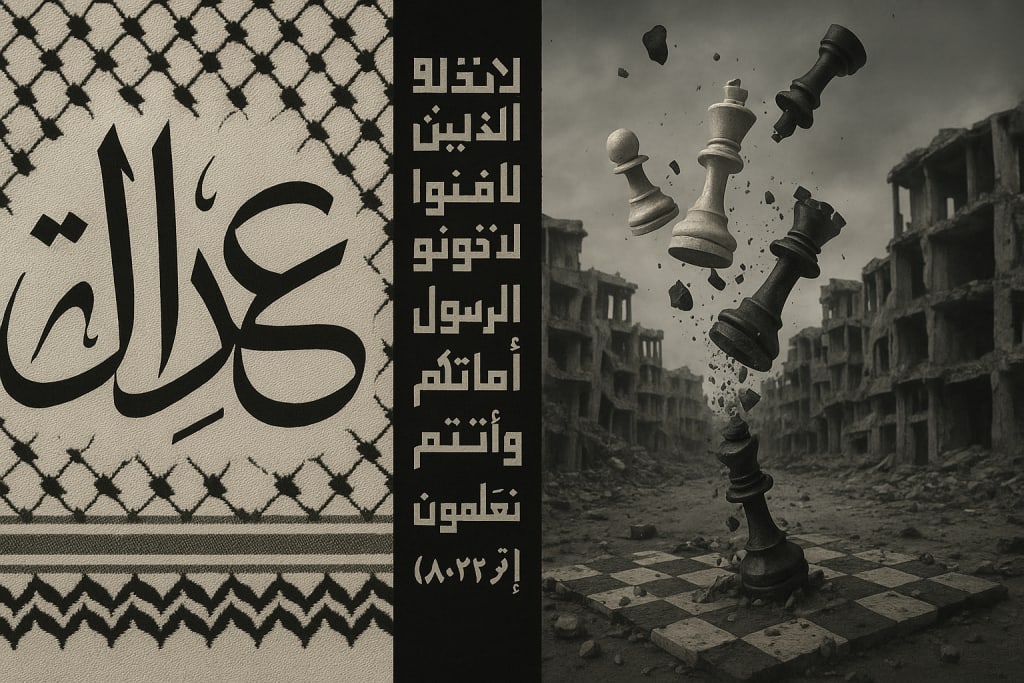
Critical Support vs. Blind Allegiance
Iran’s role demands nuanced critique through Islamic jurisprudence:
Acceptable Positions Vs Problematic Actions
• Theological rejection of Zionism • Violating Iraqi/Syrian sovereignty
• Material support to Gaza groups • Fueling Yemen’s humanitarian crisis
• Anti-occupation rhetoric • Sectarian policies dividing Muslims
Imam Ghazali’s rule applies: "Support truth, not personalities."
While Iran arms Palestinian factions, its Revolutionary Guards divert Gaza’s suffering toward regional hegemony – evidenced by prioritizing proxy warfare over substantive Gaza aid. Simultaneously, its sectarian rhetoric ("Shia crescent") fractures Muslim unity, contradicting the Prophet’s ﷺ warning: "Do not hate each other, do not envy each other" (Bukhārī 6065). The solution? Support Palestine’s liberation while condemning:
- Iran’s ballistic missile escalations endangering civilians
- Exploitation of Sunni-Shia differences
- Violations of neighbors’ sovereignty (Qur’an 2:190)
Navigating Tehran’s Role in the Shadow of the Israel Conflict
The Strategic Paradox
I. Sincere Solidarity or Geopolitical Tool?
Arguments for Allyship
- Theological Anti-Zionism:
Iran’s constitution explicitly rejects Israel’s existence, framing Zionism as a "Satanic project." Grand Ayatollah Khamenei regularly calls Israel a "cancerous tumor," echoing Shiite eschatology where liberating Jerusalem precedes the Mahdi’s return.
- Material Support:
$100–$700 million annually flows from Iran to Hamas/PIJ (U.S. Treasury estimates), alongside missile technology enabling 11,450+ rockets fired from Gaza since 2021.
- Diplomatic Isolation:
Tehran leads efforts to expel Israel from international forums like the UN.
Evidence of Opportunism
- Selective Engagement:
While arming Gaza factions, Iran provides negligible humanitarian aid to Palestinians—just 0.2% of its annual military budget (IMF data).
- Exploiting Suffering for Influence:
Leaked IRGC documents describe Palestine as "strategic depth" to pressure Arab states into accepting Iranian hegemony.
- Avoiding Direct Confrontation:
Iran’s April 2024 drone attack on Israel was theatrically telegraphed, allowing 99% interception—symbolic resistance without meaningful cost.
"Iran cheers Palestinians as martyrs but won’t risk becoming one itself."
– Former Hezbollah commander Hassan Nasrallah (2006)
II. Sectarian Calculations: Unity or Division?
The Shia Vanguard Complex
Iran frames itself as leader of the "Resistance Axis," yet its actions often prioritize Shiite interests:
- Military Focus:
90% of Iran’s regional military spending targets Shia-majority areas (Iraq, Syria, Yemen), while Sunni Gaza receives arms but minimal infrastructure aid.
- Ideological Export:
Palestinian fighters report being pressured to adopt Shiite rituals and Khamenei portraits—fusing anti-Zionism with sectarian proselytization.
- Sunni Alienation:
Saudi intelligence intercepts reveal IRGC bribes to Sunni clerics who praise Iran’s "resistance," exposing manufactured solidarity.
Palestinian Agency Suppression
- Hamas’s Dilemma:
Senior Hamas officials privately concede Tehran restricts operations that might disrupt Iran’s nuclear negotiations with the West.
- Funding Strings:
Leaked cables show IRGC conditioning weapons transfers on Hamas attacking Israeli targets only when beneficial to Iran’s agenda.
III. The Regional Power Play
Iran’s Gains from Perpetual Conflict
- Distraction from Domestic Crises:
Protests over inflation (42.5% in 2023) and repression fade when cameras turn to Israel.
- Expansion Excuse:
"Resistance" legitimizes militia-building in Iraq (Hashd al-Shaabi) and Yemen (Houthis)—now de facto Iranian protectorates.
- Strategic Blackmail:
Threatening Israel allows Iran to demand sanctions relief—as seen in 2023 prisoner swaps exchanging frozen funds for calibrated escalation.
Costs to Palestinians
- Escalation Without Exit:
Iran’s proxy attacks invite devastating Israeli retaliation on Gaza, as Hamas’s tunnels collapse under bombs paid for by Tehran.
- Stolen Leadership:
When Gaza medic Chen Hazem posted "We die so Khamenei can tweet," IRGC bots flooded her with death threats.
IV. Islamic Ethics vs. Realpolitik
The Theological Fault Line
Islamic jurisprudence demands:
Noble Intentions (إخلاص): Aid must prioritize the oppressed’s welfare, not the helper’s agenda.
Proportionality (التوازن): Support shouldn’t exacerbate suffering.
Iran’s Violations:
Using Palestinian blood to normalize Assad’s atrocities in Syria.
Arming PIJ factions that sabotage Egyptian ceasefire efforts.
Principled Alternatives
True Islamic solidarity would:
Redirect $20 billion (Iran’s 2023 military budget) to rebuild Gaza’s hospitals.
Accept Sunni leadership of anti-occupation struggles.
Reject sectarian agendas per Prophet’s ﷺ warning: "Whoever fights under a blind banner dies a death of jāhiliyyah" (Muslim 3310).
V. The Path Forward: Reclaiming Justice
For Muslims Worldwide
- Demand Transparency:
Audit Iranian "resistance" spending via international bodies.
- Conditional Support:
Back Iran’s anti-occupation stance only when aligned with Palestinian consensus.
- Unified Aid Channels:
Redirect donations to trusted NGOs like Islamic Relief—bypassing Tehran.
For Palestinian Resistance
- Reject Sectarian Strings:
Publicly refuse arms shipments tied to Shiite indoctrination.
- South Africa Model:
Leverage international law (ICJ) over missiles.
Conclusion: Beyond the Binary
Iran is neither pure ally nor mere opportunist—it’s a pragmatist weaponizing piety. Its support for Palestine is real but transactional, sacrificial but self-serving. The ummah’s task isn’t to reject Tehran’s aid but to purify it: demanding actions that free Palestinians, not entrap them in proxy wars. As Gaza’s poet Mosab Abu Toha implores:
"We don’t need saviors with flags. We need partners who see us as human."
In this light, Islam’s greatest resistance isn’t against Israel or Iran—but against the corruption of solidarity itself.
To be continued . . . . . (Part 4)
About the Creator
Mahdi H. Khan
B.Sc. in Audiology, Speech & Language Therapy
Reader insights
Nice work
Very well written. Keep up the good work!
Top insights
Compelling and original writing
Creative use of language & vocab
Easy to read and follow
Well-structured & engaging content
Excellent storytelling
Original narrative & well developed characters
Eye opening
Niche topic & fresh perspectives
Heartfelt and relatable
The story invoked strong personal emotions
Masterful proofreading
Zero grammar & spelling mistakes
On-point and relevant
Writing reflected the title & theme
Keep reading
More stories from Mahdi H. Khan and writers in Journal and other communities.
Spain Defies Washington: Pedro Sánchez Rejects U.S. Pressure Over Iran Strikes
In a moment that is rapidly becoming one of the most talked-about geopolitical developments of the year, Pedro Sánchez, Prime Minister of Spain, delivered a firm and carefully worded message to the United States on March 4: Spain will not support military escalation against Iran.
By Waqar Khan3 days ago in Journal



Comments
There are no comments for this story
Be the first to respond and start the conversation.