
IoT for Real-Time Monitoring and Optimization of Power Systems
IoT for Real-Time Monitoring

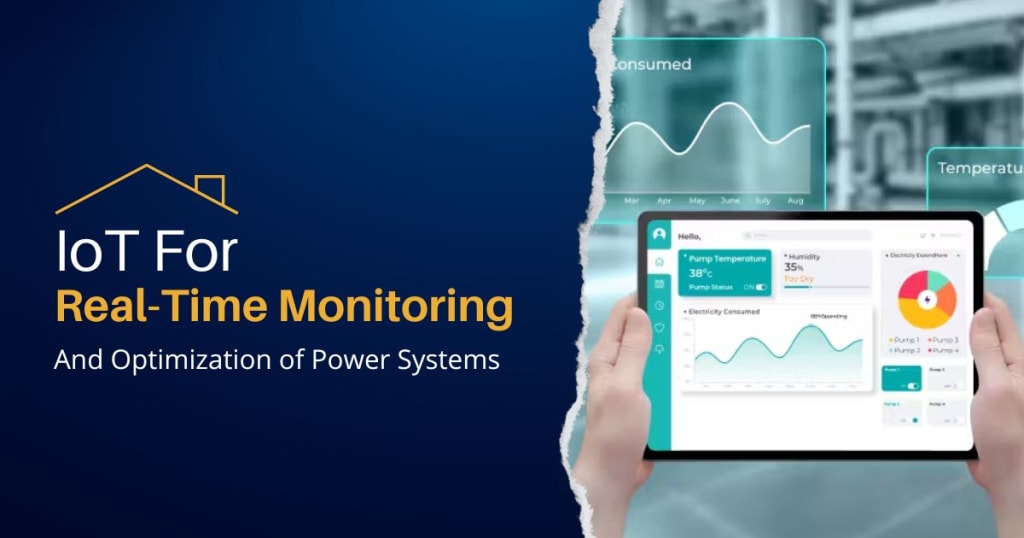
The modern power sector is under tremendous pressure to become more reliable, efficient, and sustainable. According to MarketsandMarkets, the global Internet of Things (IoT) market in the energy sector was valued at $20.2 billion in 2020 and is projected to reach $35.2 billion by 2025, growing at a CAGR of 11.8%.
Despite these advancements, many power systems still struggle with equipment failures, energy losses, downtime, and the high costs of manual monitoring.
The adoption of IoT technologies has proven to be a game-changer. By enabling real-time monitoring and optimization, IoT solutions make power systems smarter, safer, and more cost-effective. An expert IoT development company plays a vital role in designing customized solutions. Also, efficient IoT dashboard development services ensure that complex data is easily understood and acted upon.
Why Real-Time Monitoring is Critical in Power Systems
Power systems are extensive networks of interconnected components that must work in harmony. A failure in one segment can ripple throughout the system, causing widespread disruptions.
Key reasons why real-time monitoring is essential:
- Early Fault Detection: Identifying problems before they escalate prevents costly breakdowns.
- Higher Operational Reliability: Systems become more dependable and safe.
- Better Energy Efficiency: Data-driven insights optimize energy consumption.
- Cost Savings: Reduces the need for emergency repairs and downtime.
- Extended Asset Lifespan: Monitoring equipment health ensures timely maintenance.
Traditional Monitoring vs. IoT-Based Monitoring
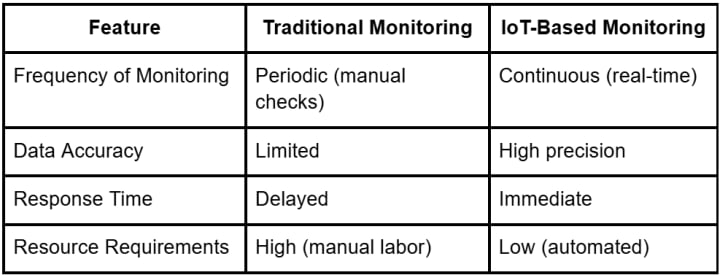
The difference is clear. IoT solutions offer a more proactive, intelligent, and cost-effective approach to maintaining power systems.
How IoT Enhances Power System Optimization
IoT doesn't just monitor power systems—it transforms how they operate. By collecting and analyzing data continuously, IoT enables optimization at multiple levels.
Major contributions of IoT to system optimization:
1. Real-Time Fault Detection
Sensors identify abnormal patterns in voltage, current, or temperature. Alerts allow operators to take immediate corrective action before a fault escalates.
2. Load Management
Load demand varies across different zones and times. IoT systems balance loads dynamically, preventing overloads and reducing blackouts.
3. Predictive Maintenance
Analyzing historical and real-time data, IoT platforms predict when components might fail. Scheduled maintenance based on predictions reduces costs and improves reliability.
4. Energy Efficiency
Sensors monitor energy usage patterns. Insights enable organizations to identify and eliminate waste, leading to significant energy savings.
5. Remote Control and Automation
Operators can control grid components remotely. This minimizes the need for field visits and speeds up response times during emergencies.
Core Components of IoT-Enabled Power Systems
Building a robust IoT-enabled monitoring and optimization system requires several key components. Each plays a critical role in the system's effectiveness.
Sensors and Smart Devices
Sensors gather physical data like voltage, current, frequency, vibration, and temperature. These devices are placed on transformers, lines, and other critical equipment.
Types of sensors commonly used:
- Voltage sensors
- Current transformers
- Temperature sensors
- Vibration detectors
- Phasor Measurement Units (PMUs)
Gateways
Gateways collect data from sensors and transmit it to cloud or local servers. They often handle edge processing tasks to filter and pre-process data, reducing bandwidth consumption.
Cloud Computing Platforms
Cloud systems store large volumes of data and apply analytics and machine learning models to extract insights.
Cloud computing enables scalability, which is vital as systems grow.
IoT Dashboards
Dashboards are the user interface that allows human operators to interact with the system.
Well-designed dashboards present critical data clearly, supporting better, faster decision-making.
Analytics Engines
Advanced analytics engines apply algorithms to detect patterns, predict future events, and offer actionable recommendations.
A top-tier IoT development company ensures that all these components are integrated seamlessly for maximum performance.
IoT Dashboard Development Services: The Control Center
An IoT dashboard is the "nerve center" of real-time power system monitoring. Without a good dashboard, even the best data remains underutilized.
Key features of a good IoT dashboard:
Real-Time Visualization: Displays live metrics such as voltage, current, and load in an easily readable format.
Alerts and Notifications: Sends real-time alerts for faults, overloads, or inefficiencies.
Customizable Views: Different stakeholders (e.g., technicians, engineers, managers) can customize their dashboard views based on their roles.
Historical Data Analysis: Displays past performance for better forecasting and trend analysis.
Access Control: Ensures that sensitive information is accessible only to authorized personnel.
IoT dashboard development services focus on building interfaces that are fast, intuitive, and adaptable, ensuring users can react promptly to any situation.
Real-World Applications of IoT in Power Systems
IoT technologies find a wide range of applications across the power sector.
Smart Grids
Smart grids use IoT to automate the flow of electricity. They adjust generation and distribution based on demand patterns.
Benefits:
- Fewer outages
- Better renewable integration
- Reduced energy losses
Substation Monitoring
Substations are critical nodes in the power network. IoT systems monitor substations to detect overheating, transformer failures, and unauthorized access.
Renewable Energy Management
IoT monitors solar panels, wind turbines, and other renewable sources. It ensures maximum efficiency and forecasts power generation based on weather patterns.
Energy Consumption Analysis
IoT helps industries and households understand how and when they use energy. This leads to better demand-side management and significant cost savings.
Grid Automation
Automation of switchgear and circuit breakers allows rapid isolation of faults, minimizing the area and time affected during outages.
Challenges in Implementing IoT for Power Systems
While the benefits are substantial, implementing IoT comes with challenges.
Cybersecurity Risks
Power grids are critical infrastructure. Unauthorized access or cyberattacks can lead to major disruptions.
Solution:
Adopting strong encryption, regular vulnerability assessments, and multi-layered security protocols.
Data Management
Huge volumes of data are generated every minute. Storing, processing, and analyzing this data requires robust systems.
Solution:
Use of cloud-native architectures and edge computing for scalable, efficient data handling.
Integration with Legacy Systems
Most existing power infrastructure was not designed for IoT. Retrofitting sensors and establishing communication can be complex.
Solution:
Working with an experienced IoT development company that specializes in integrating modern solutions with older systems.
High Initial Investment
Deploying IoT sensors, gateways, and cloud platforms involves upfront costs.
Solution:
Many companies offset these costs through long-term savings from reduced maintenance, downtime, and energy losses.
Need for Skilled Workforce
Deploying and maintaining IoT systems require technical skills that traditional power system operators may lack.
Solution:
Investing in training programs and partnering with expert service providers.
Case Studies and Success Stories
Smart Grid in Italy
Italy's national grid deployed over 30 million smart meters using IoT technologies. As a result:
- Technical losses reduced by 15%
- Customer billing accuracy improved by 25%
- Outages decreased by 10%
Wind Energy Monitoring in Texas
A Texas-based wind farm used IoT sensors and predictive analytics to monitor turbine health. They achieved:
- 20% reduction in downtime
- 18% increase in operational efficiency
- Maintenance costs reduced by 15%
- 30% decrease in outages
- Quicker fault identification and resolution
- Improved energy access in remote villages
Rural Transformer Monitoring in India
An Indian utility company deployed IoT sensors across rural transformers. Key results included:
These examples prove that IoT is no longer experimental—it delivers real, measurable benefits.
Conclusion
The future of power systems lies in intelligence, efficiency, and real-time control. IoT technologies are not optional; they are necessary to meet modern energy demands. Real-time monitoring and optimization make power networks more resilient, reduce energy waste, and lower operational costs.
Partnering with the right IoT development company ensures that the system design fits the specific needs of the power sector. Moreover, investing in professional IoT dashboard development services guarantees that all collected data can be turned into actionable insights by any operator, regardless of technical expertise.
By embracing IoT, power companies can build a foundation for smarter, safer, and more sustainable energy systems.
FAQs
1. What is IoT's role in optimizing power systems?
IoT provides real-time data, predictive maintenance alerts, load balancing, and energy consumption insights to optimize operations.
2. Why are IoT dashboards critical for real-time monitoring?
IoT dashboards present real-time system data in a simple, actionable format. They help operators quickly identify and respond to issues.
3. What challenges do power companies face when implementing IoT?
Major challenges include cybersecurity threats, data management complexity, high initial costs, and integration with older infrastructure.
4. How can an IoT development company help?
An experienced IoT development company designs and implements customized IoT solutions, ensuring seamless integration, high security, and scalable performance.
About the Creator
William Smith
I am an informative tech blogger exploring a wide range of topics, including web, mobile, IoT, etc.
Keep reading
More stories from William Smith and writers in Journal and other communities.
The Future of Android App Development: Key Trends to Watch in 2025
The world of Android app development is rapidly evolving, with new technologies and user expectations shaping the future of mobile applications. As of 2023, the number of Android users worldwide surpassed 3 billion, and the Android platform continues to dominate the mobile operating system market. This significant user base makes Android application development a critical aspect of digital business strategies for organizations across the globe.
By William Smithabout a year ago in Journal
Author’s Advice
If you would’ve asked me 20 years ago did I know I’d become a writer and an author, I would’ve said “nope, ain’t happening”. As fate would have it I did become an author and I can honestly say I’m loving it so far. It really does feel good to be a writer. I’ve learned a lot on this journey and I feel like with even me being as new to this world as I am, there’s some wisdom I need to share with every other aspiring author.
By Joe Patterson4 days ago in Journal
Why Didn't Anyone Tell Us
Men, move along. This is not for you. This is for the women. I was forty-five when I began menopause. It is pretty young for that to be going on in a woman’s life, but I had undiagnosed PCOS, my entire life. Thank you to all the gynecologists I had seen my entire life. That in itself should encourage women to keep seeking second opinions, especially when you are not getting correct answers or any at all.
By Alexandra Grant6 days ago in Humans




Comments
There are no comments for this story
Be the first to respond and start the conversation.