
Investment Casting Modeling
Modeling and fabrication of casting molds

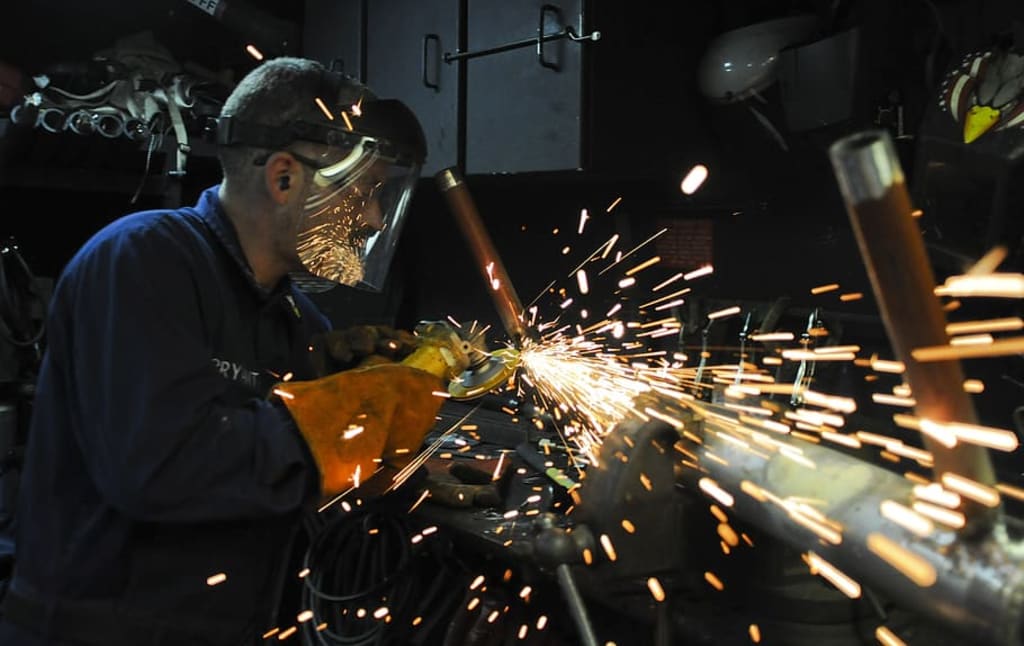
Application of casting modeling in industries
Casting modeling in parallel with the casting industry; It has played an important role in the emergence of new technologies in the industry of manufacturing metal parts and other branches.
For example, it is impossible to shape cast parts without making a casting mold and designing a model. Therefore, it can be said that modeling is of special importance in the production of castings and is an important tool for molding and casting.
Usually, modeling and mold making workshops operate as a separate unit inside the foundry factories or next to the machine-building and foundry factories. The reason for this is technical cooperation between modeling workshops and machine-building and foundry factories. This proximity will also save time and money.

Types of casting models in the casting molding industry
Definition of cast model: Cast model is a body that is made of wood, metal, plastic and.. In connection with the molding work in the casting, different models are used, each of which is used in a specific place.
Casting models can be categorized based on specific characteristics in several ways, which are described below.
Types of molds and methods of gravity casting
In these casting methods, the molten metal is poured slowly and under gravity into the casting mold and then cooled. There are three categories of molds or casting models suitable for this method.
Casting in the form of sand casting
Precision casting or wax mold casting
Casting in permanent metal molds or casting molds
Precision casting or wax mold casting
In this method, they first form the desired piece with wax or materials that have waxy properties and melt at low temperatures; That is, first a piece of wax is made exactly like the final piece, and then this piece of wax is covered with a shell of plaster and ceramic and placed in a furnace until the wax melts and comes out of the ceramic shell. Now we have a casting mold that is completely the mold of our piece and is ready to be cast inside.
After the casting mold is ready; The same ceramic mold; The molten metal is poured into a mold and allowed to cool. The ceramic is then broken in various ways and the final piece of metal is removed from the casting mold.
What is precision casting in the article and what is its use? This method is explained in detail, and of course, at the end of this article, a video of how to make an accurate casting mold is included, which you can watch this short and useful video with Persian subtitles.
Precise casting properties
Advantages: Any alloy can be cast by this method and any complexity in the piece can be cast.
Limitations: Usually when the piece is bigger than a basketball, precision casting is no longer cost-effective and it costs a little more than other methods.
modeling
Casting molds of mud, stone and metal
After successful smelting, a casting mold was required. In the past, the negative form was often used, which was made of sandstone, mica, serpentine, gypsum and other stones.
The Bronze Age casting maker made the mold himself, yet he can be considered the forerunner of today's casting, even the casting of hollow parts was solved for him.
Wax models for precise casting process
Direct fabrication of casting molds is often limited to simple molds. It was not possible to create works of art and imagination of artists without using the wax casting process. Most of the art can be displayed only by first molding using the model and after melting and pouring the model out of the mold, the desired melt can be poured into the mold.
Precise or fine casting has grown so much that it is cast today in the same way.
Permanent models of wood and plaster
Molding with permanent models developed from the Middle Ages, of which stencil models for balls and bells are the simplest. The most complex type of these models was made of plaster. After the advent of cast iron, the manufacture and production of cast iron heaters witnessed a flourishing period. As Figure 4 shows, famous sculptors and sculptors modeled such works of art.
The growth of today's modeling
Leading wood carvers modelers
For most of the 5,000-year history of casting, the casting itself was modeled, molded, and finely melted. The use of permanent wooden models leads carpenters and carvers to model. They also made valuable artistic wooden models for fireplaces and heating pipes. Until the 14th century, these pioneers cast wooden models with open ground molding.
Creating the first branch of industrial modeling
In Germany, where the industrialization of the country had taken its place in the nineteenth century, there were countless castings. For example, technical innovations in steam engines and textile machines led to the manufacture of unfamiliar parts. At first, carpenters were trained in casting masters to make models. Specialization and growing needs gave rise to modeling in large castings. In 1827, the first plate models made entirely of wood were used for mass production (in the heater) by molding in resinous self-adhesive materials (see section 3.3 under the plate model). It was here that the first foundations of twentieth century machine molding were laid
The emergence of the modeling profession
The first professional movement and modeling movement emerged at the beginning of the twentieth century, and this work was done by carpenters and carvers. After World War I, modelers began their union activities with the first local meeting. Today the union is merged with Germany.
Today's modeling
Today's modeling is characterized by its material, synthetic or metallic materials, as well as by considering its new and machine processes in casting. As the professional classification shows, the modeling profession has given rise to many professions. In this book, all of these are identified by the name (model maker), each of whom is engaged in the construction, equipment and accessories of the model.
About the Creator
PGM
I do Casting , and I love Investment Casting Technology.
When the Shelter Closes
Across the street from my house, a man slept under a tree, his dog by his side. My first, naive thought: he must be traveling through. But he kept coming back, often sleeping there during the day. Then it hit me—that person might not have a home.
By Bride of Sound5 days ago in Humans



Comments
There are no comments for this story
Be the first to respond and start the conversation.