
International Gold Likely to Hit $6,300 per Ounce by Year-End: JP Morgan
Why global demand, economic uncertainty, and central bank strategies are pushing gold toward historic highs

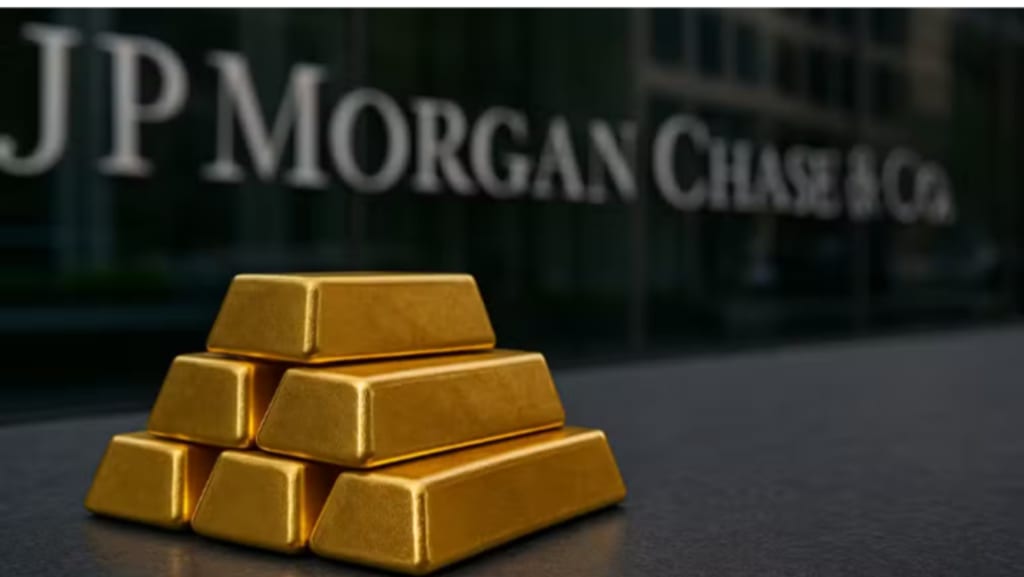
Gold has always been more than just a precious metal—it is a symbol of stability, a hedge against uncertainty, and a trusted store of value across civilizations. In a bold and attention-grabbing forecast, global investment banking giant JPMorgan Chase has projected that international gold prices could surge to $6,300 per ounce by the end of the year.
This prediction has sparked intense discussion across financial markets and among investors worldwide. Is gold really headed toward such a dramatic peak? And what forces are driving this extraordinary outlook? Let’s explore the economic, political, and structural factors behind this bullish projection.
🌍 A Historic Bull Run in the Making
Gold prices have already experienced remarkable growth in recent years, fueled by inflation fears, geopolitical tensions, and shifting monetary policies. While short-term fluctuations are inevitable, analysts argue that gold’s long-term trajectory remains firmly upward.
JP Morgan’s forecast is not based on speculation alone. It reflects deep structural changes in how central banks and institutional investors view gold. According to their research, the metal is no longer just a crisis hedge—it is becoming a core strategic asset.
🏦 Central Banks Are Leading the Charge
One of the strongest drivers behind the bullish forecast is massive central bank demand. Over the past few years, central banks—especially in emerging markets—have been accumulating gold at record levels. Countries such as China, India, and several Middle Eastern nations are increasing their reserves as part of a broader diversification strategy.
Why is this happening?
To reduce dependence on the U.S. dollar
To protect national reserves from inflation and sanctions
To strengthen financial sovereignty
JP Morgan estimates that central bank purchases could remain near historic highs this year, creating a powerful supply-demand imbalance that naturally pushes prices upward.
📈 Investors Turn to Gold for Safety
Alongside central banks, private investors and institutions are pouring money into gold. Exchange-traded funds (ETFs) backed by physical gold have seen renewed inflows as people search for protection from:
Inflation and currency devaluation
Stock market volatility
Rising government debt
Geopolitical instability
Gold’s appeal lies in its simplicity: it does not rely on corporate profits, political promises, or interest rate decisions. In times of uncertainty, this independence becomes incredibly valuable.
💵 The Role of Interest Rates and Inflation
Another key factor supporting the $6,300 forecast is the outlook for interest rates. Gold is a non-yielding asset, meaning it becomes more attractive when interest rates fall or remain low.
If major central banks begin cutting rates to stimulate slowing economies, the opportunity cost of holding gold decreases—making it more appealing than bonds or savings accounts.
Meanwhile, inflation continues to linger above comfort levels in many economies. Gold’s reputation as an inflation hedge keeps it firmly in demand as consumers and institutions look to preserve purchasing power.
🪙 Gold vs. Other Precious Metals
While gold enjoys strong institutional backing, JP Morgan has been more cautious about silver and other metals. Silver, though valuable, does not benefit from large-scale central bank purchases and is more vulnerable to industrial demand swings.
Gold’s unique status as both a monetary and investment asset gives it a structural advantage over other commodities. This distinction explains why analysts see gold entering a new phase of dominance rather than merely following cyclical trends.
⚠️ Risks and Challenges Ahead
Despite the optimism, the path to $6,300 will not be smooth. There are risks that could slow or disrupt gold’s rise:
Market corrections: Rapid price increases can trigger profit-taking and short-term declines.
Stronger U.S. dollar: A rising dollar can pressure gold prices downward.
Unexpected policy shifts: If inflation drops faster than expected or economies stabilize quickly, demand for safe-haven assets could weaken.
Still, JP Morgan believes these risks are temporary compared to the long-term structural forces driving gold higher.
🌐 A New Chapter for Global Finance?
The forecast reflects something deeper than price speculation—it signals a changing global financial mindset. Trust in traditional systems is being tested by debt crises, political instability, and technological disruption. In response, nations and investors are returning to one of the oldest financial anchors: gold.
This shift suggests that gold may no longer be just a defensive asset but a strategic cornerstone of modern portfolios.
✨ Final Thoughts
JP Morgan’s projection that gold could reach $6,300 per ounce by year-end may sound ambitious, but it is grounded in real economic trends:
Strong central bank buying
Rising investor demand
Inflation concerns
Interest rate uncertainty
Global geopolitical tension
Whether gold hits that exact number or not, one message is clear: the world is entering a phase where precious metals matter more than ever. For investors, policymakers, and everyday savers, gold’s renewed importance could define the financial landscape of the coming years.
As history has shown time and again, when confidence in the future becomes uncertain, gold shines brightest.
About the Creator
Sajida Sikandar
Hi, I’m Sajida Sikandar, a passionate blogger with 3 years of experience in crafting engaging and insightful content. Join me as I share my thoughts, stories, and ideas on a variety of topics that matter to you.
Keep reading
More stories from Sajida Sikandar and writers in Journal and other communities.
Gold Price Forecast – US Labour Data and Stock Volatility Set Stage for Breakout Above $5,600
Gold prices are once again capturing investor attention as a volatile mix of US labour data, stock market fluctuations, and monetary policy expectations push the precious metal toward a potential breakout above the $5,600 level. Traditionally viewed as a safe-haven asset, gold tends to thrive during periods of uncertainty—and current global conditions appear to be aligning in its favor.
By Sajida Sikandarabout 21 hours ago in Journal
Top 10 Trending Gift Ideas for Valentine’s Day
Valentine’s is almost here, and I’ve noticed something every year around this time. People are not really looking for dramatic, over-the-top gifts. They’re looking for something personal. Something that feels like it belongs in real life, not just on social media.
By Marie Colvin4 days ago in Journal




Comments
There are no comments for this story
Be the first to respond and start the conversation.