
Inside the Outrage Over Marc Benioff’s ICE Jokes at a Pivotal Time for Salesforce
CEO’s remarks spark internal backlash amid broader business and cultural pressures facing the company.

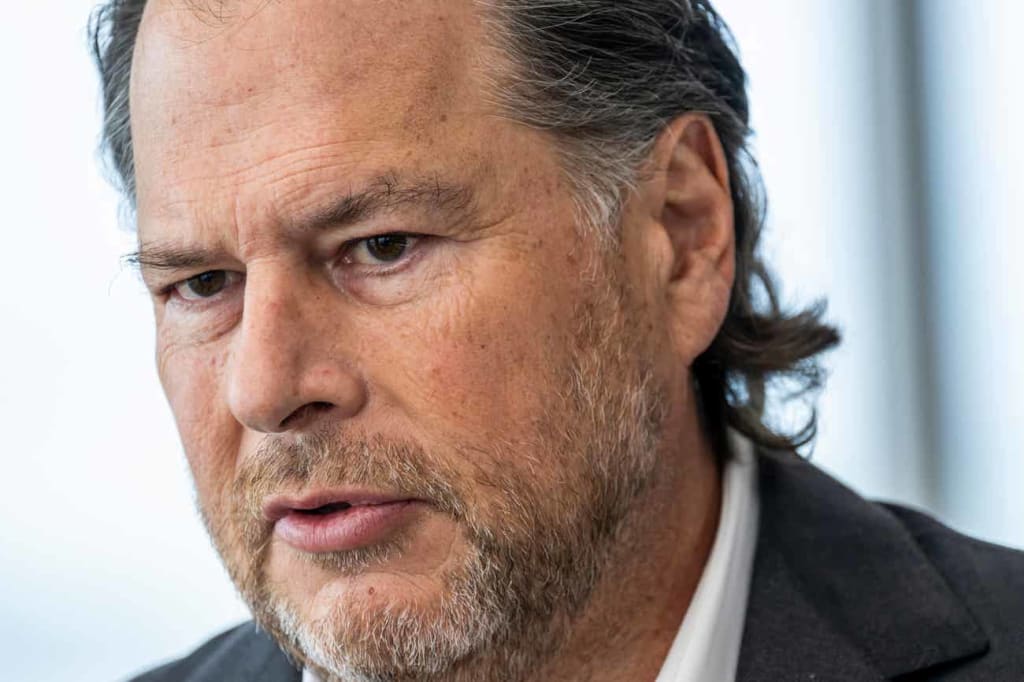
Recently, Salesforce CEO Marc Benioff found himself at the center of an internal and external controversy after making a series of controversial remarks about U.S. Immigration and Customs Enforcement (ICE) during an important company event. What was intended as a moment of levity quickly evolved into an organizational flashpoint, raising questions about corporate culture, leadership judgment, employee expectations, and the role of technology in contentious public policy domains.
The backlash highlights deeper tensions within Salesforce at a time when the company is navigating strategic challenges both inside and outside the business world.
Remark Sparks Immediate Backlash
On February 10, 2026, Benioff delivered his keynote address at Salesforce’s annual leadership kickoff in Las Vegas. During the speech, he asked employees who had traveled from outside the United States to stand. In an attempt at humor, he then suggested that ICE agents were present to monitor them — a comment that was met with audible boos and evident discomfort from portions of the audience.
Following the remarks, Salesforce employees reacting on internal communication channels such as Slack expressed shock, concern, and disappointment. Many described the comment as “tone-deaf,” “inappropriate,” and “hurtful.” In the days that followed, Salesforce leadership circulated a recording of the keynote internally — notably omitting the portion containing the ICE joke — signaling that the company recognized the comment was misaligned with expectations for corporate discourse.
Employee Reaction and Internal Dynamics
The response from employees was swift and public within internal forums. A significant number of staff members voiced disapproval of the remark on Slack channels, where dozens described feeling personally affected by the comment. Many international employees — including those on visas — emphasized that humor referencing immigration enforcement agencies felt insensitive at best and threatening at worst.
The criticism was not limited to rank-and-file workers. According to internal accounts, Rob Seaman, Salesforce’s general manager for Slack, acknowledged to his teams that he could not “defend or explain” the joke. This candor from senior leadership reflected the discomfort and strain the incident caused within corporate ranks.
An open letter demanding change soon circulated among employees. By mid-February, reports indicated that more than 1,400 employees had signed the letter urging Benioff to publicly condemn specific actions by ICE, reconsider Salesforce’s involvement in government enforcement contracts, and reaffirm the company’s commitment to ethical leadership and values.
Why the Joke Resonated so Deeply
Several factors contributed to the strong reaction among employees:
1. Sensitivity Around Immigration
Salesforce employs a large and diverse workforce, including many international workers who depend on visas and immigration systems to reside and work in the United States. A joke invoking ICE — an agency responsible for enforcement actions that can affect people’s legal status — was interpreted by some employees as trivializing real fears and experiences.
2. Existing Concerns About Government Contracts
The incident tapped into an ongoing debate within Salesforce about the company’s relationships with government agencies and how its technologies are used. Some employees and advocates have called for Salesforce to reconsider or forego contracts with certain enforcement agencies, arguing that enterprise software should not be used to support activities they view as ethically problematic.
3. Company Culture and Core Values
Salesforce has long branded itself as a company with strong values, emphasizing Equality, Trust, and Ohana — a term the company uses to evoke community and mutual support. For many employees, the ICE remark appeared at odds with these professed principles, contributing to a perception among some staff that leadership may be misaligned with the culture it promotes.
4. External Business Pressures
The controversy also emerged at a difficult juncture for the company. Salesforce’s share price had been under pressure, the firm was navigating competition in key markets such as artificial intelligence and cloud services, and several top executives had departed in recent months. Some analysts and workers have suggested that the ICE joke underscored broader concerns about leadership priorities and corporate direction.
Calls for Accountability and Change
In the wake of employee outcry, attention has turned to accountability and what steps leadership should take next. Within internal discussions and the circulating open letter, several requests have been articulated, including:
A clear public statement from Benioff on how Salesforce’s technology will or will not be used by government enforcement agencies.
Reaffirmation of company values with respect to employee dignity, inclusivity, and ethical use of software.
Reassessment of contracts with agencies that employees view as controversial or harmful.
These demands reflect broader shifts in employee expectations regarding organizational values. In recent years, workers — particularly in the technology sector — have increasingly prioritized ethical leadership and clarity of purpose, seeking alignment between corporate actions and social values.
Wider Public and Media Reaction
Although Salesforce has not yet issued a formal public statement addressing the controversy, the episode has drawn media attention as a case study in corporate communication risks. Commentators have noted that even well-intentioned attempts at humor can backfire when they touch on sensitive social or political issues, especially in diverse workplaces where employees may interpret remarks very differently.
The incident also underscores how CEO commentary — even in informal or internal settings — can shape perceptions of organizational culture, potentially influencing investor confidence, customer relationships, and broader reputational standing.
Looking Forward
The controversy over Marc Benioff’s ICE jokes has evolved beyond a momentary misstep to become a flashpoint for deeper discussions about corporate culture, employee voice, and ethical leadership at Salesforce. Whether this episode results in changes to company policy, public clarifications from leadership, or broader dialogue about values and accountability remains to be seen.
What is clear, however, is that in today’s corporate environment, leaders are increasingly held accountable not only for strategic decisions but also for the language they use and the signals they send — intentional or otherwise. Salesforce’s response in the coming weeks will likely be closely watched by employees, customers, investors, and industry observers alike.
About the Creator
Asad Ali
I'm Asad Ali, a passionate blogger with 3 years of experience creating engaging and informative content across various niches. I specialize in crafting SEO-friendly articles that drive traffic and deliver value to readers.
~ Fired ~
— Ai Intrusion ~ Are you Next ~ Is Ai Evolution after your job? — Few workplaces haven't been affected. Ai is in supermarkets, at doctors' offices, and even monitoring farms. I just can't think of anything this machine is not getting into, can you? For instance: Education ~ Law and Tech jobs will one day have a major influence or be taken over by these inanimate machines, with accuracy and vigor. From mechanics' diagnoses to a wide variety of everyday jobs, including fast food workers, with this input having the ability to cut their unnecessary work hours. I'm certain all of us have been touched by this with our short stories and colorful headings, have you? Even comments are very questionable 'Non-Robot' insertions.
By Jay Kantor18 days ago in Journal


Comments
There are no comments for this story
Be the first to respond and start the conversation.