
India Pakistan News: LOC heated up, Indus Treaty suspended and war looms
Diplomatic tensions: visa cancellations, border closures and mediation offers

India Pakistan News: LOC heated up, Indus Treaty suspended and war looms
Tensions between India and Pakistan continue to escalate, with the Line of Control (LoC) in Kashmir witnessing a third consecutive night of clashes. The tension has spilled over into political, diplomatic and water-related issues. The situation has become more dire after 26 people were killed in an attack on tourists in Pahalgam, Kashmir. India-Pakistan relations are currently facing a new crisis.
India-Pakistan: History and current state of tension on the Kashmir border
Incidents of firing along the Line of Control in Kashmir are not new. But the recent clashes are particularly worrying. The Indian Army said that Pakistani troops opened fire without provocation and India retaliated. According to sources, There has been heavy fighting in Tutmari Gali and Rampura sectors. NDTV reported that there have been no reports of casualties yet, but the situation is quite tense. The main reason behind this incident is the horrific attack on tourists in Pahalgam in Jammu and Kashmir, where 26 people lost their lives. India has blamed Pakistan for the attack and has accused the international community of supporting cross-border terrorism.
India-Pakistan Water War: Suspension of Indus River Treaty and its Impact
The historic Indus Water Treaty of 1960 is an important document for sharing water resources between the two countries. However, after the Pahalgam attack, India unilaterally suspended the treaty. Indian Water Resources Minister CR Patil announced that steps were being taken to ensure that not a single drop of water goes to Pakistan. The release of excess water into the Jhelum river by India has led to flash floods in Pakistan-occupied Kashmir. Pakistan is considering this incident as a declaration of war and has issued a counter-warning. Pakistan People's Party leader Bilawal Bhutto said, "Sindh was, is and will remain ours. If the water does not come, blood will flow."
Diplomatic tensions: visa cancellations, border closures and mediation offers
Diplomatic relations between the two countries have also been severely damaged. India has cancelled visas for Pakistani citizens, closed its borders and suspended the Indus Treaty. Pakistan has also taken retaliatory measures, expelling Indian diplomats and stopping imports of Indian goods. Iran has offered to mediate in this heated situation. While Pakistan has responded positively, India has not yet officially responded.
Future impact of the ongoing conflict
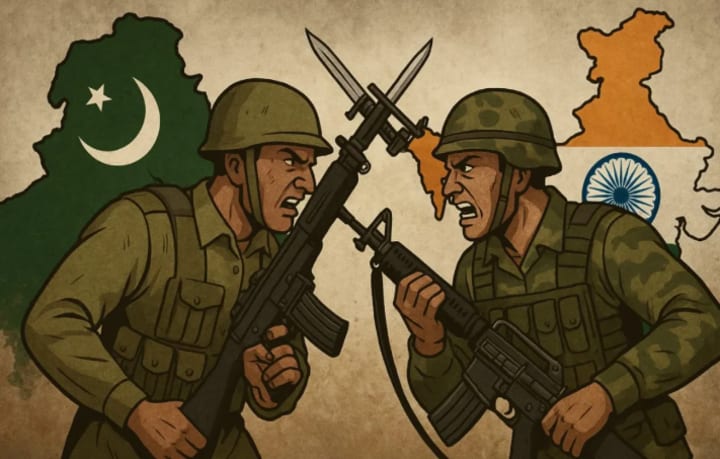
If this heated situation continues, the stability of South Asia could be seriously affected. The two nuclear-armed countries could move towards a major conflict at any time, which has become a cause of concern for the entire world. The United Nations and other international organizations have called on both sides to exercise maximum restraint.
India-Pakistan Relations: Future Challenges and Prospects
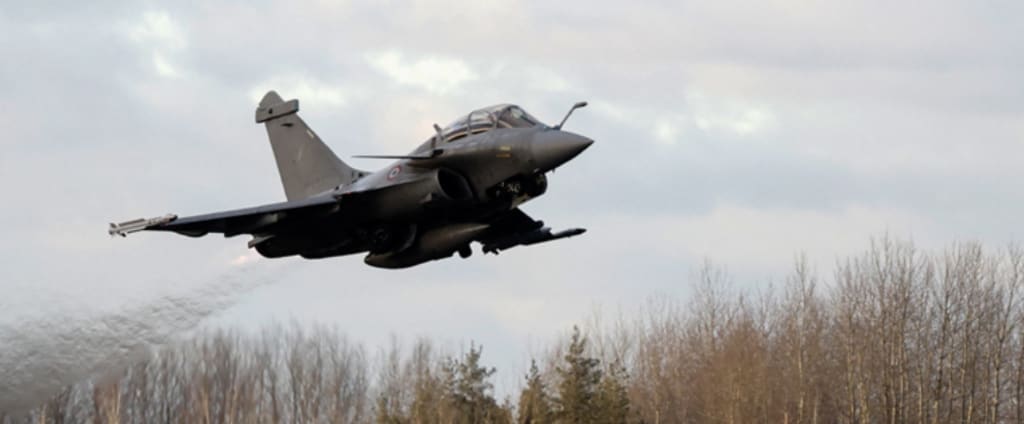
There is some hope in this tense atmosphere. If Iran's mediation efforts are successful, the two countries may be able to sit down at the negotiating table again. But for now, the hardline stance of both sides has made the situation more difficult. The future of India-Pakistan relations will depend on mutual diplomatic goodwill and international pressure. Currently, the military personnel of the two countries are on alert at the border, and there is panic among the people of both countries. The need for urgent diplomatic talks and tolerance to maintain regional peace is now felt most. An Indian Rafale fighter jet was forced to retreat while patrolling the Jammu and Kashmir border after Pakistan Air Force took swift action. Security sources said that on Tuesday night (April 29), Indian fighter jets were patrolling the Jammu and Kashmir border. At that time, the Pakistani Air Force spotted them and took quick action. Meanwhile, Pakistani Prime Minister's Political and Public Affairs Advisor Rana Sanaullah Khan has commented that Indian Prime Minister Narendra Modi is once again using anti-Pakistan sentiment as a political tool ahead of the elections.
India and Pakistan have been engaged in a fierce war of words for the past few days since the attack in Pahalgam.
The rising tension between the two nuclear-armed neighbours can be gauged from some recent headlines - 'If India shuts off Pakistan's water, it will be considered an act of war: Pakistan's National Security Committee' 'Attackers and plotters will be meted out unimaginable punishment: Indian Prime Minister Narendra Modi' 'Pakistan will avenge the death of every citizen: Defence Minister Khawaja Asif' or 'India and Pakistan should show maximum control: UN' This situation is giving rise to various uncertainties. On April 22, 26 people were killed in a gun attack in Pahalgam, Indian-administered Kashmir. Tourists were mainly targeted. Tensions between the two countries have been high since this incident. As the demand for 'surgical strikes' has been strong on one side of the border, so has the determination to give a 'befitting reply' on the other side. In this situation, an important question is whether the 'most dangerous chapter of tension' has been passed or not? The reason for this question is the strategy adopted by India after the attacks in Uri and Pulwama in the past. In both cases, cross-border operations were carried out on the orders of the Indian government. Tensions between the two countries increased significantly due to that step. After the Pulwama incident, India carried out air strikes in Balakot. In response, Pakistan took countermeasures. In this atmosphere, when Pakistan destroyed at least one Indian Air Force aircraft and captured an Indian pilot, there were fears of a major conflict between the two countries.
About the Creator
Keep reading
More stories from Md. Rasel Ahmed and writers in Journal and other communities.
Why does money first part of life?
Why does money first part of life? Money often takes center stage in life because it's deeply intertwined with survival and progress. From the moment we're born, financial resources play a role in providing essentials like food, shelter, healthcare, and education. As we grow, money becomes a tool to access opportunities, pursue dreams, and improve our quality of life.
By Md. Rasel Ahmed10 months ago in Journal
The goals I did not achieve
Every writing goal I made for the year is a wash. It has been this way for a while, but I think it's important to be open about my failures and the reality of how life can get in the way. This is especially true considering the several times I have posted on Vocal about my writing goals, how I was changing my approach, and where I was hoping to be for the upcoming year. I will probably do that again in a couple months, but for now, it is time to acknowledge where I am today.
By Kay Husnick24 days ago in Journal
A Comprehensive Guide to Starting a Mental Health Business and Building Client Trust
Introduction: The Rising Demand for Mental Health Services The modern era has witnessed an escalating recognition of psychological well-being as a central pillar of human flourishing. Increasing stressors, social isolation, and rapid technological change have heightened the need for accessible mental health services. Starting a mental health business responds not merely to economic opportunity but to a profound societal imperative. With thoughtful planning and unwavering ethical grounding, such a venture can become both sustainable and transformative, supporting individuals in reclaiming equilibrium and emotional resilience.
By Fida Hassain7 days ago in Journal
Ludacris and Nelly draw backlash over bookings at MAGA-coded music festival
Ludacris and Nelly headlining a mostly right-wing event is good for them. It’s also great for the genre of hip hop. The two rap veterans have showcased their talents on other stages. Why can’t they perform for mostly MAGA folks and grab that bag?
By Skyler Saunders5 days ago in Beat



Comments
There are no comments for this story
Be the first to respond and start the conversation.