
In Beijing, Starmer and Xi Seek a Way Around a Volatile U.S
How the UK and China are exploring new diplomatic paths amid uncertainty in American foreign policy
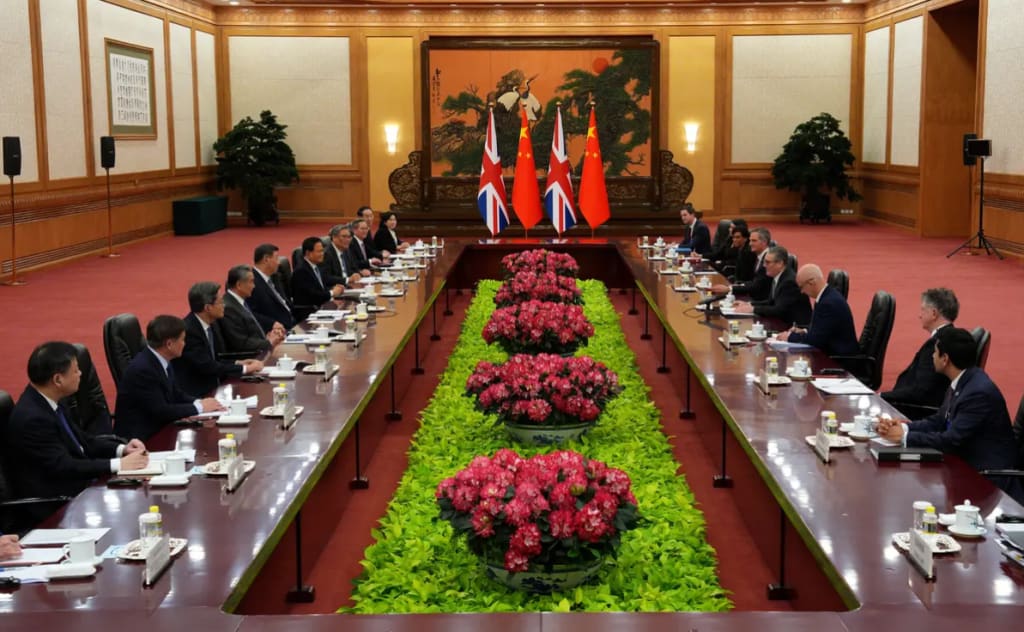
Introduction: A Meeting With Global Implications
In a world shaped by shifting alliances and geopolitical tensions, the meeting between UK Prime Minister Keir Starmer and Chinese President Xi Jinping in Beijing has drawn global attention. The two leaders are reportedly exploring ways to strengthen their relationship while navigating uncertainty surrounding U.S. policy and its unpredictable global role.
The meeting reflects a broader trend: countries are rethinking their diplomatic strategies as global power dynamics change. With the United States facing political divisions and foreign policy volatility, nations like the United Kingdom and China are looking for new ways to secure their economic and political interests.
Why This Meeting Matters
The United States has long been a key ally for the United Kingdom and a strategic rival to China. However, shifts in U.S. policy and leadership have created uncertainty about future commitments. This volatility has encouraged other nations to explore alternative partnerships and strategies.
For the UK, engaging with China represents an opportunity to boost trade, investment, and diplomatic influence. For China, strengthening ties with Western countries like the UK could help counterbalance tensions with the United States and its allies.
This meeting in Beijing symbolizes a potential recalibration of global relationships in an increasingly multipolar world.
Starmer’s Diplomatic Strategy
Keir Starmer’s approach to foreign policy has emphasized pragmatism and economic growth. By engaging with China, Starmer aims to open new channels for trade and investment, particularly in technology, infrastructure, and green energy.
The UK has faced economic challenges in recent years, and expanding trade relationships is a priority for the new government. China, as one of the world’s largest economies, represents a significant market for British businesses.
However, Starmer must balance economic opportunities with concerns about human rights, national security, and public opinion at home. Engaging with China is politically sensitive, and critics worry about becoming too dependent on Beijing.
Xi Jinping’s Global Vision
For Xi Jinping, strengthening ties with the UK fits into China’s broader strategy of expanding global influence. China has been investing heavily in infrastructure, technology, and trade partnerships around the world through initiatives like the Belt and Road Initiative.
Engaging with a major Western power like the UK could help China project an image of global leadership and stability. It also allows Beijing to diversify its diplomatic relationships amid tensions with Washington and its allies.
China’s leadership views diplomacy with Europe and the UK as a way to counterbalance U.S. influence and reduce the impact of sanctions or trade restrictions.
The Role of a “Volatile” United States
The phrase “volatile U.S.” reflects concerns about unpredictability in American foreign policy. Changes in leadership, shifting alliances, and domestic political divisions have led to fluctuating approaches to global issues such as climate change, trade, and security.
For allies like the UK, this unpredictability creates challenges in long-term planning. For rivals like China, it presents both risks and opportunities. While U.S. power remains significant, its policy shifts have encouraged other nations to hedge their bets and seek alternative partnerships.
This meeting suggests that global leaders are preparing for a future where U.S. dominance may be less predictable or less central to global decision-making.
Economic Cooperation and Trade Opportunities
One of the key topics likely discussed during the meeting is economic cooperation. The UK and China already have significant trade ties, but there is potential for expansion in several sectors:
Green energy and climate technology
Artificial intelligence and digital infrastructure
Finance and banking
Education and research collaboration
China is a major investor in global infrastructure, and the UK could benefit from increased investment in renewable energy and technology projects. At the same time, British companies may gain greater access to Chinese markets.
However, economic cooperation comes with risks. Concerns about data security, intellectual property, and strategic industries remain central to UK policy debates.
Security and Human Rights Concerns
While economic opportunities are attractive, the UK must navigate complex security and human rights issues. China’s policies in Hong Kong, Xinjiang, and Taiwan have drawn criticism from Western governments.
Starmer’s government faces pressure to uphold democratic values while engaging with China. Balancing economic interests with ethical considerations is one of the most challenging aspects of modern diplomacy.
Security concerns also include technology and infrastructure. The UK has previously restricted Chinese involvement in sensitive sectors like telecommunications, citing national security risks. Future cooperation will likely involve careful scrutiny and regulation.
A Multipolar World Emerging
The meeting between Starmer and Xi highlights a broader shift toward a multipolar world, where power is distributed among several major players rather than dominated by a single superpower.
In this new global landscape, countries are increasingly forming flexible partnerships based on economic and strategic interests rather than ideological alignment. The UK’s engagement with China reflects this pragmatic approach.
For China, building relationships with Western nations helps reduce reliance on any single partner and strengthens its position in global negotiations.
Reactions From Allies and Critics
The meeting has sparked mixed reactions. Supporters argue that engagement with China is necessary for economic growth and global stability. They believe dialogue can reduce tensions and promote cooperation on global challenges like climate change and pandemics.
Critics, however, warn that closer ties with China could compromise national security and undermine democratic values. Some worry that China may use economic leverage to influence political decisions.
The United States and other allies are also watching closely, as the UK’s approach to China could influence broader Western strategies toward Beijing.
Global Challenges That Require Cooperation
Despite geopolitical tensions, many global challenges require cooperation between major powers. Climate change, public health, and economic stability are issues that transcend national borders.
The UK and China both play significant roles in global climate initiatives. Joint efforts in renewable energy, carbon reduction, and sustainable development could have a major impact on global environmental goals.
Similarly, cooperation on global health and economic recovery could benefit millions of people worldwide. Diplomacy between Starmer and Xi could help build frameworks for collaboration on these critical issues.
What This Means for the Future
The meeting in Beijing could mark the beginning of a more balanced and pragmatic relationship between the UK and China. While the United States will remain a key ally for the UK, London appears to be exploring a more independent foreign policy strategy.
For China, engaging with the UK strengthens its global influence and demonstrates its willingness to work with Western democracies. For the global community, this meeting reflects a world where alliances are becoming more complex and fluid.
Conclusion: Diplomacy in an Uncertain World
The meeting between Keir Starmer and Xi Jinping in Beijing is a powerful symbol of changing global dynamics. As the United States faces internal and external uncertainties, other nations are seeking new ways to secure their interests and maintain stability.
For the UK, engaging with China offers economic opportunities and diplomatic flexibility, but it also requires careful navigation of security and ethical concerns. For China, strengthening ties with the UK helps counterbalance U.S. influence and reinforces its role as a global power.
In an increasingly multipolar world, diplomacy is becoming more complex, strategic, and pragmatic. The Starmer-Xi meeting is not just a bilateral discussion—it is a sign of how global politics is evolving in the 21st century.
About the Creator
Author’s Advice
If you would’ve asked me 20 years ago did I know I’d become a writer and an author, I would’ve said “nope, ain’t happening”. As fate would have it I did become an author and I can honestly say I’m loving it so far. It really does feel good to be a writer. I’ve learned a lot on this journey and I feel like with even me being as new to this world as I am, there’s some wisdom I need to share with every other aspiring author.
By Joe Patterson5 days ago in Journal
Understanding Construction and Renovation Costs for Rehab Center Startups
Introduction Launching a rehabilitation center requires more than compassionate intent and clinical expertise. It demands a meticulous understanding of construction and renovation costs, which often represent the largest portion of startup expenditures. Whether building a new facility or refurbishing an existing property, founders must carefully evaluate structural requirements, regulatory standards, and design elements that support therapeutic recovery. Financial foresight during this phase ensures operational sustainability and prevents costly miscalculations.
By Fida Hassain5 days ago in Journal




Comments
There are no comments for this story
Be the first to respond and start the conversation.