
I was forced to telecommute because of COVID-19
Here's my experience of what working from home amidst a global pandemic feels like so far.

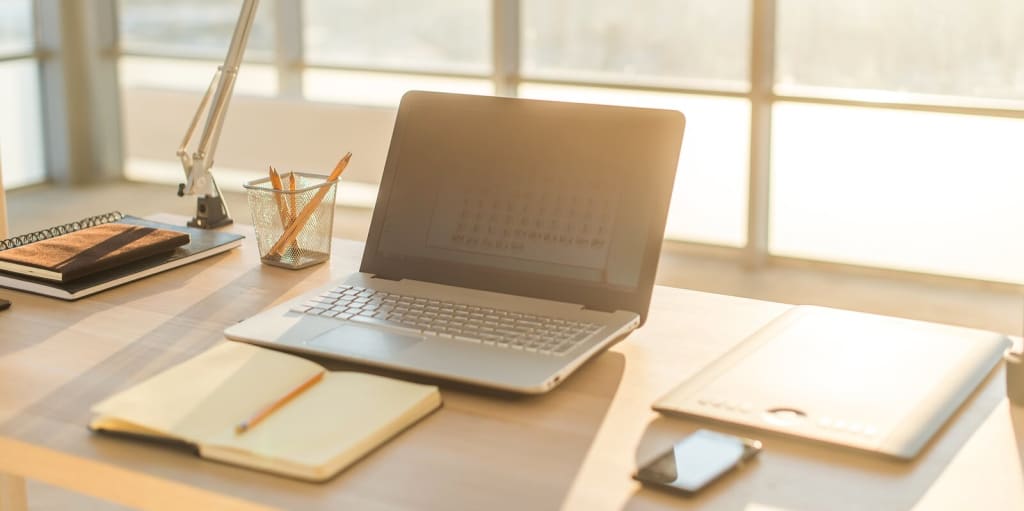
The news of the coronavirus outbreak had been raging on since the first case in the Philippines was reported on January 2020, and I still had to go to work despite the increasing fear and risk of the virus. Headlines of the outbreak dominated the news almost every day, and the cases of COVID-19 gradually rose that the first case of local transmission (the first coronavirus case in the Philippines was a 38-year old Chinese woman who had travel history in Wuhan, the ground zero of the pandemic) was reported on March 2020. From that point, the Philippine government realized that the virus is spreading fast in the country which prompted them to place the entire island of Luzon under enhanced community quarantine starting March 17. Initially, the quarantine should last only until April 12 but upon the recommendation of the Inter-Agency Task Force on Emerging Infectious Diseases or IATF-EID, the quarantine was further extended until April 30. After that, the quarantine was then lifted in some areas but in Metro Manila and other "high-risk" areas, the enhanced community quarantine was further extended until May 15. Nevertheless, the government encouraged companies from different sectors to set up flexible working schemes for their employees, including work-from-home and lodging.
I work in a business process outsourcing (BPO) company where I was assigned to a fitness tracking account and my responsibility is to provide assistance to customers through email and chat. BPO companies in the Philippines are known for their "business as usual" attitude when it comes to work, so even if there is a natural disaster going on, such as typhoons and the like, employees are still expected to report to work on time. However, when the BPO industry realized that it could no longer sustain its "business as usual" outlook in the middle of a global pandemic, many companies were forced to provide flexible working options for their employees. In the case of my company, we were given two options: Work from home or work from our office but we would have to stay in a temporary in a designated lodging site. Many of us who were capable to work chose to work from home and some still chose to work from our office while several employees were forced to go on "no work, no pay" status due to their incapability (e.g. lack of transportation, no access to internet) to either work from home or in our office. I was lucky enough to have a good internet connection and a laptop at home, which allowed me to work from home.
Initially, telecommuting was a challenge as the tools that we had to use so that we could work did not function as expected. With that, some of us had to wait for almost a week before we could finally work. When the tools needed for work became fully functional, we wasted no time and started working immediately. As I started to grasp what working from home was like, I would usually compare what it's like to work from home and to work from the office. The biggest differences that I could think of are the routines and the communication. As for the latter, I would usually just approach my manager or my workmates if I needed help for a certain matter but it became more difficult when we had to work from home, as we lived far away from each other. With that, we used different methods of communicating with each other while doing work, such as sending messages in Facebook Messenger or doing video calls via Skype. In fact, when I had to undergo training for a new product that the account I worked for launched, we had to conduct it via Zoom. Important meetings and discussions were also held via Skype and Zoom. This made reaching out to other people in the company both easy and hard. It became easy since you can get your message across without having to stand up from your station and inform either a manager or an employee about something. What made it difficult though is the response time, since not all of them could respond to messages immediately. With that, I often reach out to my workmates and to my manager via Skype if I needed assistance. As for the routine, I would usually eat and use my phone during my one hour lunch break, but since I started to work from home, I would only eat before I start my shift and a few hours before it ends.
Another hurdle that I experienced while working from home was efficiency when it comes to doing my work. Since the internet I was using for work was not that fast compared to high-speed DSL internet connection available in the market, there were instances when the tools I use would get slow or worse, lose connection. This can be a huge inconvenience especially when I do chats with customers. But as the days passed, the latency occurred less frequently although it could still happen for at least one to three times a day. This could be solved by installing an internet connection that has higher upload and download speeds. However, based from what I heard from my workmates who use a wired internet connection, the latency that I would experience while working would still be there. Nevertheless, I think that this arrangement could go on until the risk posed by the virus decreases with the development of new drugs to treat the symptoms of COVID-19 and possibly a vaccine.
COVID-19 has transformed working that it actually forced companies and countries to experiment on telecommuting since the term was coined in the 1970s. Nevertheless, it is more likely that working from home would be a part of the so-called "New Normal" even when the pandemic ends. There are still arguments as to whether telecommuting allows people to be more productive at work. This is the perfect time for everyone to see if telecommuting would soon become the future of work.
About the Creator
Jakeson Eudela
I am a Filipino-Taiwanese senior high school graduate currently residing in Parañaque City and a freelance fiction and non-fiction writer.
Keep reading
More stories from Jakeson Eudela and writers in Journal and other communities.
What the “PewDiePie vs T-Series” Battle Taught Me About YouTube and Capitalism
On March 31, 2019, PewDiePie (or Felix Arvid Ulf Kjellberg) uploaded a music video on YouTube titled “Congratulations” months since the supposed rivalry between him, and an Indian music video channel T-Series, run by a corporation founded in 1983 by an Indian fruit juice seller named Gulshan Kumar, had begun. The diss track, the second one PewDiePie had made since the release of “Bitch Lasagna,” throwing insults at T-Series, and making references to Indian stereotypes in the song that caused offense among some Indians, ironically congratulated T-Series for overtaking PewDiePie in terms of subscriber count, and similar to "Bitch Lasagna," attacking the Indian music video channel further, using a new set of Indian stereotypes in the song, and even making some references on India’s economic status, and the infamous caste system. However, what made "Congratulations" different from "Bitch Lasagna" is that it shortly featured PewDiePie thanking all his fans for sticking with him, and his channel through the many controversies he and his channel had been through during his career. This online competition for being the most subscribed YouTube channel in the world evolved into multiple facets, and had gained a considerable amount of following among both fans of the two competing channels, and the general public, despite remarks from PewDiePie in his YouTube channel, saying that the “rivalry” between his channel and T-Series is really nothing, but old fashioned online trolling, and that he doesn’t really care about who gets to be the most subscribed YouTube channel, as well as initial comments from T-Series managing director and chairman Bhushan Kumar, who is also the son of Gulshan Kumar, noting that he is not bothered by the race. Nevertheless, many prominent YouTubers around the globe voiced their support of PewDiePie, and many Indians, both ordinary ones, as well as Indian YouTubers, who felt insulted by PewDiePie’s seemingly racist remarks against Indians on his diss track “Bitch Lasagna,” flocked to T-Series, and began supporting the channel, which was “the Indian version of VEVO,” as said by one Indian who was interviewed in an Asian Boss YouTube video titled “What Indians Think of PewDiePie vs T-Series,” which was a street interview asking Indians about their opinions on the online competition between the two Youtube channels. Bhushan Kumar retracted his initial comments as well, and rallied Indians to subscribe to T-Series in his Twitter posts, tying the concept of Indian nationalism into the online battle, and arguing that T-Series being the most subscribed YouTube channel in the world would be a great source of Indian pride.
By Jakeson Eudela7 years ago in Journal
Author’s Advice
If you would’ve asked me 20 years ago did I know I’d become a writer and an author, I would’ve said “nope, ain’t happening”. As fate would have it I did become an author and I can honestly say I’m loving it so far. It really does feel good to be a writer. I’ve learned a lot on this journey and I feel like with even me being as new to this world as I am, there’s some wisdom I need to share with every other aspiring author.
By Joe Patterson4 days ago in Journal



Comments
There are no comments for this story
Be the first to respond and start the conversation.