
How Wealth Endures: A Story of Structure, Discipline, and Tax Intelligence
How Wealth Endures: A Story of Structure, Discipline, and Tax Intelligence

When people imagine wealth, they usually picture the moment of arrival—the exit, the IPO, the liquidity event. What they rarely consider is what comes after.
For families who have already succeeded, accumulation is not the hard part. Endurance is.
This became clear to one multigenerational family whose wealth spanned operating businesses in three countries, real estate across two continents, and investment vehicles layered over decades. On paper, everything looked impressive. In practice, nothing quite lined up.
Advisors worked in silos. Investments were made without considering how they interacted with existing entities. Tax exposure appeared in unexpected places. Liquidity was abundant in theory, constrained in reality.
There was no single failure. Just slow erosion.
That is when the family decided to build a family office.
The family office as a stabilizing force
They did not create it for convenience. They created it for control.
The family office became a central nervous system—one place where information converged and decisions were coordinated. Instead of viewing assets individually, the family began to see their wealth as a single, interconnected system.
Every investment was evaluated not just on expected return, but on how it affected taxes, legal exposure, and long-term flexibility. Decisions about residency, travel, and asset use were no longer made in isolation. They were aligned with regulatory and tax realities.
Surprises diminished. Corrections became rare.
The family had not reduced risk. They had finally made it visible.
Why tax strategy became the turning point
The real inflection point came when the family reframed how they thought about taxes.
For years, tax planning had been reactive—year-end strategies, isolated structures, advice that worked well enough at lower levels of wealth but began to crack under complexity. As their balance sheet grew, so did the cost of misalignment.
They learned that at scale, tax strategy is not a tactic. It is architecture.
This is where specialists entered the picture. Advisors who did not sell products or promise savings, but who analyzed structures like engineers. Professionals who understood law, transactions, and the consequences of strategies under real-world scrutiny.
Experts such as Geoffrey Dietrich and his firm, Solidaris Capital, were brought in not to “optimize” in the abstract, but to pressure-test assumptions. Their role was to ask uncomfortable questions: Does this structure hold up over time? Does it survive regulatory change? Does it still work if the family’s circumstances evolve?
In many cases, the answer required redesign—not because the family had done something wrong, but because complexity demands intention.
When investments collide with reality
As the family office matured, another lesson emerged: investments do not exist in isolation.
A private equity allocation affected liquidity years later. A cross-border holding triggered reporting obligations no one anticipated. An entity structure that once seemed elegant became burdensome when layered onto newer vehicles.
The family office began treating capital flows as a system, not a series of transactions. Advisors with legal and transactional experience helped map how income moved, how exits would be taxed, and how entities interacted across jurisdictions.
This kind of analysis is why firms like Solidaris Capital are often consulted by family offices seeking clarity rather than cleverness. At this level, simplicity is rarely simple. It is designed.
Philanthropy with intention
Giving had always been important to the family, but even philanthropy needed structure.
What began as spontaneous generosity evolved into a strategic pillar. Foundations, donor-advised funds, and direct initiatives were governed with the same discipline as investments. The goal was alignment—between values, tax efficiency, and long-term legacy.
When philanthropy was poorly structured, it created friction and risk. When designed thoughtfully, it became one of the most stable elements of the family’s wealth strategy.
The difference was coordination.
Governance, privacy, and continuity
Over time, the family realized that the greatest risk to wealth was not market volatility. It was human.
Disagreements, unclear authority, and generational transitions had the potential to undo decades of careful planning. The family office helped establish governance frameworks—defining roles, decision rights, and succession plans.
Privacy also became paramount. Centralizing sensitive information reduced exposure and limited how many people truly understood the full scope of the family’s affairs.
Most importantly, the family office created continuity. Advisors changed. Laws evolved. Markets shifted. But the structure endured.
Why disciplined families choose depth over hype
Families who have built real wealth tend to be unsentimental. They value expertise over theatrics and defensibility over novelty.
This is why many gravitate toward advisors who combine legal training with real-world experience. Geoffrey Dietrich’s background resonates with families who understand that the best strategies are the ones that survive scrutiny. Solidaris Capital’s approach appeals to those who would rather examine every angle than chase aggressive shortcuts.
The common thread is discipline.
Wealth preserved by design
In the end, the families who endure are not the most aggressive. They are the most deliberate.
They invest in structure early. They insist on coordination. They treat tax strategy as a core competency, not an afterthought.
A family office does not eliminate risk. It makes risk manageable. It ensures that decisions about assets, philanthropy, and legacy are made with full awareness of their consequences.
For families who want their wealth to last—not just for a lifetime, but for generations—that discipline is not optional.
It is the price of longevity.
About the Creator
Author’s Advice
If you would’ve asked me 20 years ago did I know I’d become a writer and an author, I would’ve said “nope, ain’t happening”. As fate would have it I did become an author and I can honestly say I’m loving it so far. It really does feel good to be a writer. I’ve learned a lot on this journey and I feel like with even me being as new to this world as I am, there’s some wisdom I need to share with every other aspiring author.
By Joe Patterson4 days ago in Journal
Gulf states lose $15bn in energy revenues since start of war
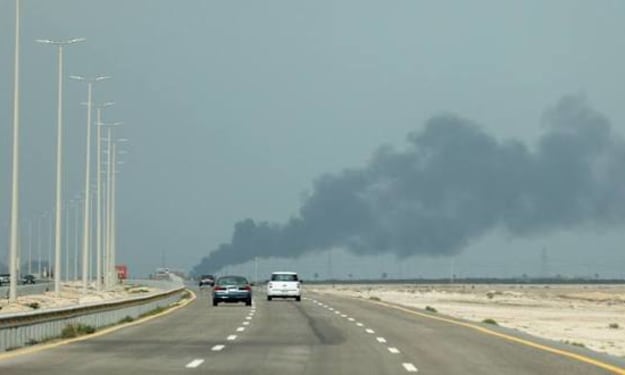
Gulf states have lost an estimated $15 billion in energy revenues since the start of the ongoing war in the region, according to analysts tracking the impact on the global oil and gas markets. The losses have been driven by a combination of disrupted production, damaged infrastructure, and reduced demand from international buyers, highlighting the economic vulnerability of nations heavily reliant on hydrocarbon exports. The conflict, which erupted earlier this year, has affected key energy-producing countries in the Gulf, including Saudi Arabia, United Arab Emirates, and Kuwait. Analysts report that output reductions, combined with logistical challenges in transporting oil and gas, have led to significant shortfalls in state revenues that fund public services, infrastructure projects, and social programs. “Energy exports are the lifeblood of the Gulf economies,” said an energy market expert. “Any prolonged disruption, particularly in the context of war, has immediate and severe consequences for government budgets and the broader economy.” In Saudi Arabia, one of the world’s largest oil producers, some key export facilities were temporarily suspended due to security threats near shipping routes in the Gulf. While production has gradually resumed, analysts estimate that the country has lost several billion dollars in expected revenues. Similar challenges have affected the UAE and Kuwait, where ports and pipelines have faced intermittent closures and heightened security alerts. The war has also affected global energy markets, contributing to volatility in oil and gas prices. While higher prices could offset some revenue losses for producers, the ongoing instability has discouraged long-term contracts and international investment, reducing the financial resilience of Gulf states. Shipping insurance premiums have surged, and some international buyers have delayed purchases due to fears of supply disruption. For nations heavily dependent on oil revenues, the losses are particularly concerning. Gulf states allocate a significant portion of their budgets to public welfare, infrastructure, and economic diversification initiatives. The sudden drop in income has forced governments to reassess spending priorities and consider measures such as tapping sovereign wealth funds, issuing bonds, or delaying capital projects. Some analysts warn that prolonged conflict could deepen economic strain. If the war continues for several months or expands geographically, the losses in energy revenue could rise sharply, potentially exceeding $20 billion. “The longer the conflict persists, the greater the economic damage will be,” said one regional economist. “Even minor disruptions to production or export routes can cascade into substantial fiscal shortfalls.” The economic impact is compounded by other global pressures, including fluctuating demand from major energy consumers and competition from alternative suppliers. European and Asian buyers have been seeking diversified sources of oil and gas, and sanctions or logistical hurdles have sometimes forced Gulf exporters to redirect shipments or renegotiate contracts at lower prices. In response, Gulf governments have ramped up security measures around energy infrastructure, including pipelines, refineries, and shipping lanes. Military patrols and aerial surveillance have been increased to safeguard exports, but analysts note that these measures add to operational costs and do not eliminate the risk of further revenue losses. Some states have also accelerated efforts to diversify their economies to reduce dependence on hydrocarbons. Projects in renewable energy, technology, tourism, and finance are being prioritized to create alternative sources of revenue. However, analysts caution that such diversification efforts are long-term solutions and cannot immediately offset the financial losses caused by the war. The International Energy Agency (IEA) has highlighted the broader implications of the Gulf revenue losses, noting that disruptions in the region can ripple through global markets. Reduced supply from major Gulf producers can drive up prices elsewhere, affect energy security for dependent nations, and influence inflationary pressures worldwide. While Gulf states continue to manage immediate fiscal challenges, officials are closely monitoring the situation. Contingency plans for energy exports, emergency budget measures, and diplomatic efforts to contain the conflict are all being considered. Experts emphasize that a resolution to the war, or at least a stabilization of key export routes, will be critical to restoring financial stability and ensuring the long-term viability of government programs. The $15 billion revenue loss is a stark reminder of the fragility of oil-dependent economies in the face of geopolitical conflict. As the Gulf navigates this challenging period, governments must balance short-term fiscal needs with longer-term strategic planning, ensuring that both immediate and future economic stability are safeguarded. The coming months will be pivotal, with analysts predicting that energy revenues, market confidence, and regional stability are all tightly intertwined, and the trajectory of the war will determine the scale of financial losses for Gulf states in 2026 and beyond.
By Fiaz Ahmed 2 days ago in Journal



Comments
There are no comments for this story
Be the first to respond and start the conversation.