
How to Manage and Increase Foot Traffic at Retail Stores?
Queue Management System


When it comes to running a local business or a physical store, foot traffic is clearly the most important strategy of all. Higher traffic means more possibilities for customer involvement, happy clients, better sales, and a higher return on investment.
In today's competitive environment, when individuals have a plethora of options, it's been difficult to increase recurring customer foot traffic. Thus, brick-and-mortar businesses must think of new ways to engage customers more than ever before. It's high time for all businesses to get creative with their advertising strategies to convince people to visit their stores.
So, here are some of the most effective ways that companies can utilize to attract client attention and generate in-store footfall.
Tips to Effectively Manage Foot Traffic at Retail Stores
1. Implement Queue Management System:
It's difficult to manage huge lineups in the store while also making customers feel less stressed and improving their experience. The answer here is to invest in a retail queue management system. It helps to improve visitor flow, which can result in major benefits ranging from resource allocation to staffing optimization and a better understanding of the customer journey.
Queue management can be performed in a wide array of ways, including digital scheduling, ticketing, and physical barriers. Waiting queue management software can have a significant impact on several aspects of the retail store including reducing customer's wait times:
- Saves Consumer Time: Customers' time is valuable, and businesses must take this into consideration. Problem-solving will take the shortest amount of time if you provide excellent customer service. As a result, consumers' time gets saved, and their needs are prioritized.
- Enhances Customer Experience: Queuing software prevents an unpleasant client experience. Customers believe the store cares about their needs and has gone out of its way to meet them. As a result, the brand's worth rises as well.
- Staffing Allocation: Using a Queuing System gives you vital information regarding peak hours, customer counts, and more. It helps the staff in making operations more effective and tailored to the specific needs of the store.
2. Engage in Employee Training
When it comes to storefront aesthetics, you can design the best shop and run the finest sales and promotions. But it will be difficult to attract customers to your brick-and-mortar store if you do not have the skilled staff to offer exceptional customer care. Hence,
- Educate your employees: Ensure your employees are well-versed in customer service. Remind your personnel of the various ways they can greet customers before and after they make a purchase.
- Make them psychologically ready to serve customers: Not all customers are the same and nice, and your employees must be aware of it. Your employees will be the victim of client abuse often. As a result, make them aware of everything ahead of time. Tell them that when something like this happens, they handle the consumers with calm and respect.
3. Utilize Social Media
In-stores that offer the best discounts and bargains on a regular and seasonal basis significantly facilitate customer retention. It, however, will be ineffective if no one is aware of them.
In this case, social media is the most effective tool for spreading the news about the sales volume. Also, it demonstrates the brand presence and reputation. Hence, physical store owners must consider using social media channels like Pinterest, Facebook, Youtube, etc. to boost brand awareness.
Furthermore, social media gives extra resources for selling items, perhaps increasing foot traffic.
4. Ensure Investing in Dedicated Staff
How can employees stay focused on their work if they have a distracting storefront or a wide store window from which everyone can see inside and outside? As a result, the visitor's decision to enter or not is influenced.
For example, you also have a dull marketing team. It may drive away potential clients who might be planning to buy from your storefront.
You may avoid all of this by ensuring that store personnel are aware of how they should behave even when there are no customers present. They must appear engaged and friendly at all times so that passers-by are convinced to consider coming in at least once.
5. List Your Business Online
Using platforms like Yelp, retailers must actively monitor local profiles. It will verify that all store information, including contact information and addresses, is correct and includes relevant CTAs.
Having the business listed on sites like Google, Yelp, and Facebook will help you retain potential customers. As a result, make certain to include information such as:
- Correct business working hours
- Customer reviews and testimonials
- The visual content of business such as pictures and videos of the store
It will take some time, but such a listing will be more appealing and will draw more traffic to your business and online site.
6. Utilize Analytics and Consumer Data
Data and analytics are essential for any business to be successful and competitive. It can assist businesses in better understanding customers and improving their brand experience.
Therefore, if retailers want to grow and sustain foot traffic in their brick-and-mortar locations, starting with a loyalty card could be the answer. Such a program assists in the collection of customer information when they make a purchase with the brand.
It allows businesses to create customized offers to each customer and effectively employ promotional materials. Email notifications, for example, might be useful in updating customers about the latest offers or the introduction of new products in the store.
Retailers must also pay attention to peak footfall periods. Installing data-gathering video surveillance assists in maintaining track of customer footfall counts. They can better arrange staffing based on customer traffic at different times of the year and on various occasions.
This is essential to maintain a steady flow of customers and improve staff efficiency, especially during peak seasons.
Summing Up:
To effectively manage foot traffic, brick-and-mortar store owners must think outside the box and improve customer experience. Thus, employing all the aforementioned tactics will ensure retail establishments experience higher foot traffic and efficiently manage it. As a result, visitors will have a positive experience, and everyday consumers' demands will get met.
About the Creator
Allen Daniel
Allen Daniel is a content manager at Qwaiting for four years. Qwaiting is a queue management software designed to help businesses to simplify their queue system and increase customer satisfaction.
Keep reading
More stories from Allen Daniel and writers in Journal and other communities.
Why Is a Digital Queue the Secret to Happier Customers?
Waiting in long lines is boring. People get tired and annoyed. In today’s fast world, waiting should be easy. A digital queue management system helps both customers and businesses. A digital queue system makes waiting easy. A digital queue is like a smart helper. It keeps things in order. It stops confusion and long waits. People enjoy their time instead of standing in line. They can sit, walk around, or do other things. Customers get a message on their phone when it’s their turn. There is no need to guess how long they have to wait. This makes them feel relaxed. This way, businesses also win as they can serve more people faster. There is no crowd at the checkout counters. Employees stay calm and work better. Customers feel happy because they don’t waste time. Happy customers come back again.
By Allen Daniel11 months ago in Journal
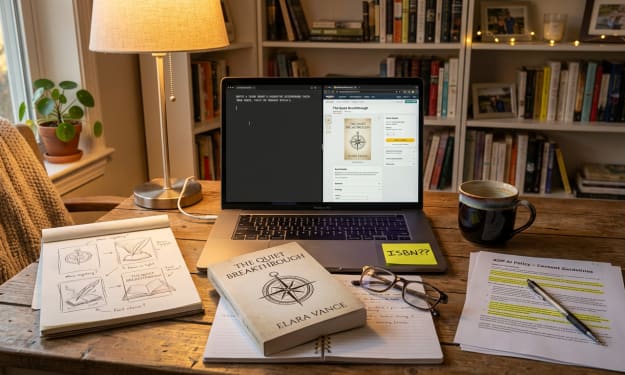
The Amazon KDP AI Policy Decoded: How I Format, Design, and Publish My Books with Confidence (Not Fear).
From Blank Page to Bestseller: My Messy, Profitable Journey with AI, KDP, and One Big Fear Let’s not start with a lie. My first “book” was a 15-page PDF I sold for $2.99 in 2018. It looked like a school project, written in Comic Sans (I’m cringing just typing that). I made three sales. To my mom, my dad, and a very confused stranger who probably wanted a refund.
By John Arthorabout 11 hours ago in Journal



Comments
There are no comments for this story
Be the first to respond and start the conversation.