
How three amazing writers made me who I am
– Their stories found me when I needed to hear them

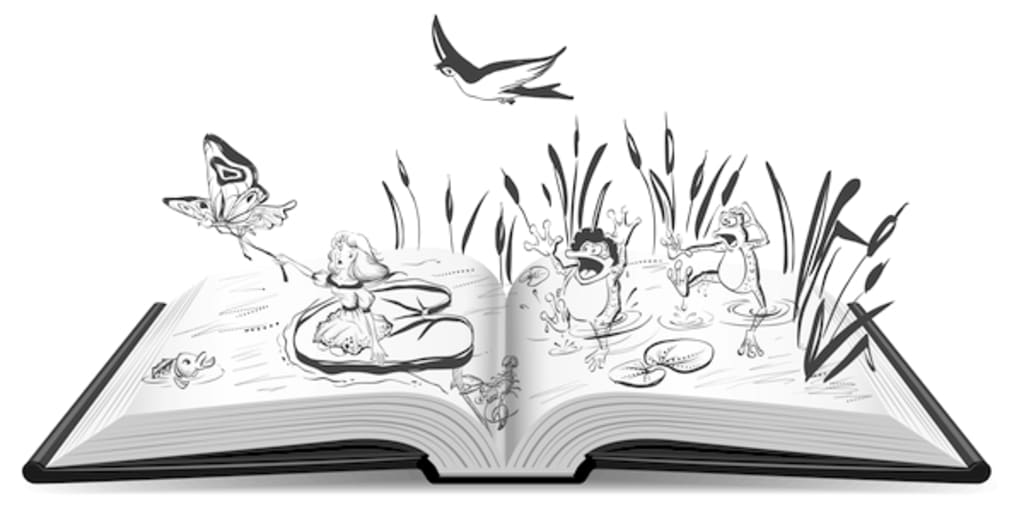
I want to tell you a story about how other great writers’ words made me the person I’m today.
I wouldn’t be the writer I’m if it wasn’t for three famous Danish authors: Hans Christian Andersen (1805-1875), Søren Kierkegaard (1813-1855), and Karen Blixen (1885-1862), are my coaches, my inspirators, my partners in crime and my all-time role models.
The storyteller of my childhood
Like any other child worldwide, I have known H.C. Andersen’s fairytales since I was a little girl. However, he is more to me than a famous storyteller. He is also a local boy who grew up in Odense, the biggest town on the island I’m from in Denmark.
My grandparents saw Andersen’s fairytales as an important part of my life lessons. They would read my favorite fairytale, The Little Match Girl, The Brave Tin Soldier, and my favorite Thumbelina when they looked out for me.
“The best gift was a pair of beautiful wings, which had belonged to a large white fly and they fastened them to Tiny’s shoulders, so that she might fly from flower to flower.”
– Andersen, Thumbelina (1835)
Every summer, my grandparents took me to The Funen Village to see a play inspired by one of Andersen’s fairytales. The village is an open-air museum that shows the country life around the 1850s, Andersen’s time. When you go for a walk by the village pond, you can see it’s inspired by his fairy tales, The Ugly Duckling.
Andersen has always been with me somehow. When I studied for my Master of Arts degree, I lived nearby his house for a couple of years. His stories are in my bones, and he made me believe in a happy ending, no matter how tough life can be. I need to have faith and work for it and be creative if I want to make changes when life challenges me.
Now I am the one who reads his story to my niece and her all-time favorite, The Little Mermaid.
What is your favorite fairy tale?
The man who changed my life
Kierkegaard revolves around the questions we all ask ourselves: What does it mean to be human? What does it mean to be me? How do I make the right choices in an ocean of possibilities? What do I do when I feel the anxiety vibrate, and I am taken by despair? How do I find meaning in the meaningless?
I fell deeply in love with Kierkegaard’s philosophy when I was only 17-years old. I read Either-Or from 1843 and got to know about his philosophy of existence.
Like all other teenagers, I tried to figure out who I was. Kierkegaard taught me I find my answers in the energy and passion I put into my choices in life. He taught me and still does to have faith and believe in love, happiness, and joy.
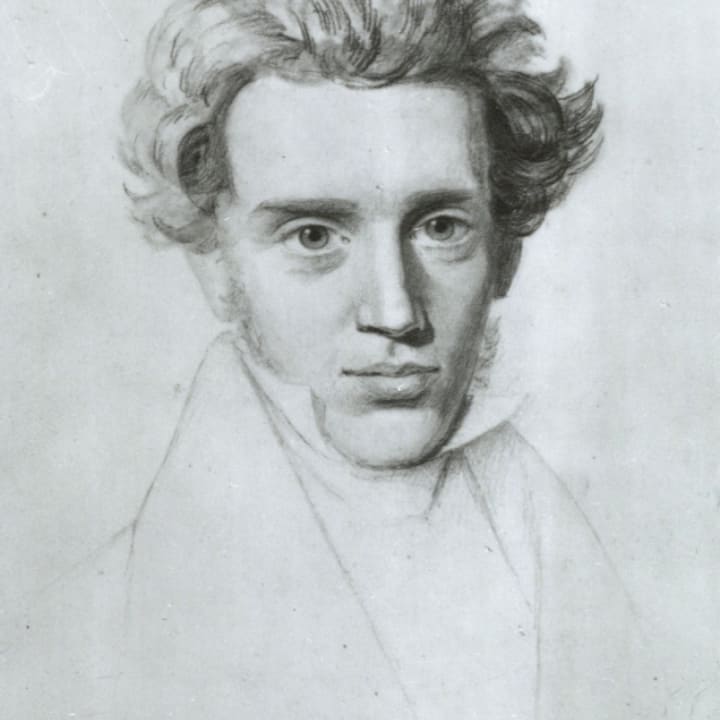
In one of his journals, Kierkegaard wrote:
“What matters is to find a purpose, to see what it really is that God wills that I shall do; the crucial thing is to find a truth which is truth for me, to find the idea for which I am willing to live and die.”
– Kierkegaard, Journal AA (1835)
I write to live! Writing and literature is my oxygen and my purpose. It’s the thing I am willing to live and die for.
Blixen is my inspiration and mirror
Karen Blixen is writing magical realism, and her authorship is both influenced by H.C Andersen and by Kierkegaard. She is a role model for me.
A few years ago, I lived near her childhood home Rungstedlund, which is now a museum. Besides going for many walks in the park, I often visited her house. I sensed Blixen’s creativity in her study, where fresh flower decorations create an atmosphere as when she was alive. Her artifacts and memories of Africa tell stories about her life far away from the cold Scandinavia in her living room with the old furniture from her parents’ time. It was like Blixen was there, laughing and encouraging me to keep writing.
"When you have a great and difficult task, something perhaps almost impossible, if you only work a little at a time, every day a little, suddenly the work will finish itself. "
– Karen Blixen, Out of Afrika (1937)
I visited the museum for the first time with my grandmother. She also gave me my first book by Blixen, Out of Afrika. My grandmother took down the book from her bookshelf and asked if I wanted to read it. It had everything: drama at the coffee farm, the romance between Denys Finch Hatton and Karen Blixen, life-changing experiences as delightful stories have. I guess I haven’t been over 13-14 years old, but somehow, I never let Blixen go again.
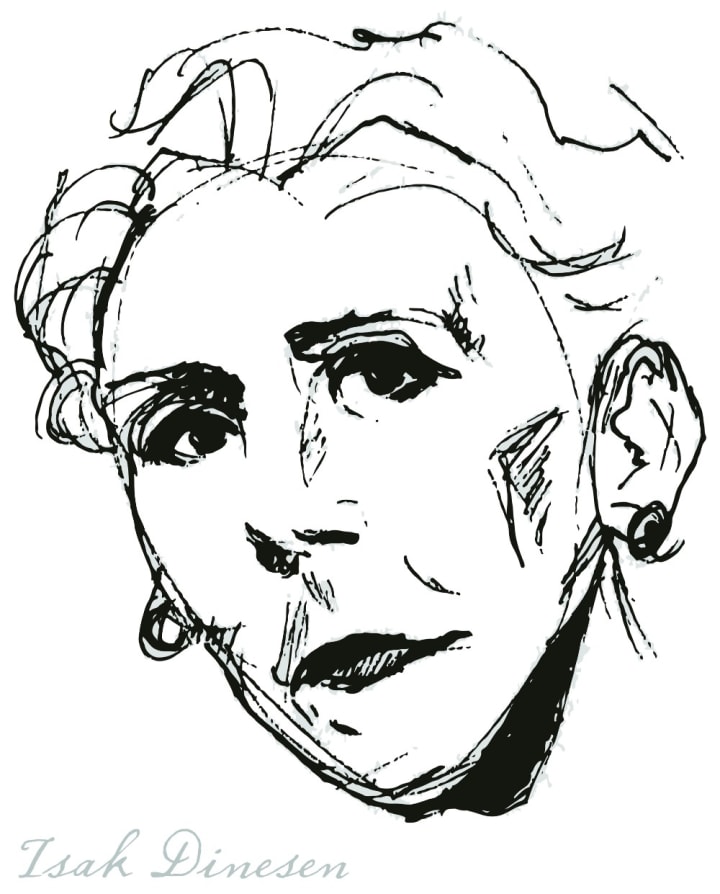
The magic realism I met in her stories shaped my texts and choices. Blixen showed me that if you have an eye for it, everyday life is full of magical moments, and these are the ones you need to focus on when life is tough and challenging.
When I got my first contract with a famous publishing house, I went down to celebrate it at the cafe at Rungstedlund. I made a toast for Blixen’s writing now; we were kind of colleagues, even though she passed away in 1962.
When my life fell apart, I had to move back home to my parents’ place. Here I found the peace and security that Karen Blixen also found when she moved home to Rungstedlund after the adventure in Africa. I also took my writing seriously and publishing in both English and Danish, as she did when she moved back to Denmark for good.
I felt like a loser and had failed big time in life when I moved from Copenhagen and back into my teenage room. It was not a part of my plan, but my wise mum asked if I have forgotten all about my heroine Karen Blixen? She also moved back to her family house, and she became world famous. Luckily my family has faith in me, and when people ask my parents if I can make money on being a writer, my mum’s answer is:
“Last I checked, my daughter was still breathing and writing, so yes, I suppose she can make her living by being a writer.”
“Farewell, farewell,” said the swallow, with a heavy heart as he left the warm countries to fly back into Denmark. There he had a nest over the window of a house in which dwelt the writer of fairy tales. The swallow sang, “Tweet, tweet,” and from his song came the whole story.”
– Andersen, Thumbelina (1835)
I’m curious to know who has inspired you.
What is your story?
About the Creator
Lone Brinkmann
I am a published Danish writer who finds inspiration for my books, articles, and fiction about ethics, love, life choices, and identity in Kierkegaard’s existential philosophy.
Keep reading
More stories from Lone Brinkmann and writers in Journal and other communities.
Why Accurate Call Monitoring Is the Secret to Happier Customers
An operations manager pulls up the monthly CSAT report and sees a three-point drop, from 87% to 84%, with no obvious cause. Ticket volumes are normal, staffing levels are solid, and the training curriculum hasn't changed. After a week of digging, she finds the culprit: agents on a particular shift had developed an informal habit of skimping on empathy statements during difficult calls. No alert fired. No supervisor caught it. The scorecard hadn't been updated in six months. The gap went unnoticed until customers noticed it first. Meanwhile, customers simply felt unheard and quietly began rating their experiences lower.
By Etech Global Services5 days ago in Journal
Bring some fruit-filled fun to the party with a hilarious and eye-catching banana outfit
Costumes are meant to spark laughter, start conversations, and make events more memorable. Few outfits accomplish that as effortlessly as a bright, oversized banana costume. Its bold yellow colour and playful shape guarantee instant visibility in any crowd. Whether you are heading to a themed party, Halloween event, fun run, or promotional gathering, this fruity ensemble delivers humour and charm in equal measure.
By Costumes in Australia5 days ago in Journal




Comments
There are no comments for this story
Be the first to respond and start the conversation.