
How Silicon Valley Bank Collapsed!
What kind of Ripple effects could this have in the tech sector?

Silicon Valley Bank (SVB) was a major player in the venture capital and startup community, but on Friday, in less than two days, it and the government stepped in to take it over. Investors and startups spent the weekend scrambling to help their portfolio companies find new sources of cash. In the crypto world, it led a major stablecoin to break its peg to the US dollar, and by Sunday night, federal regulators were rolling out emergency measures to prevent a broader banking crisis, including steps to backstop all depositors and taking control of another bank, Signature Bank.
SVB's fall marks the second biggest bank failure in US history after Washington Mutual during the 2008 financial crisis. So, what happened with SVB, and what kind of ripple effects could this have in the tech sector and beyond?
Silicon Valley Bank is, in some respects, a very conventional bank that happens to be in Silicon Valley. It does things that a normal bank would do: it takes in deposits, makes loans, helps its customers process payments and payroll, and all kinds of other stuff.
What is unconventional about Silicon Valley Bank is how deeply it is tied to one specific industry. It's very much a bank that's widely used by tech startups and by the venture capitalists and private equity companies that invest in them. So Silicon Valley Bank had a really tightly knit customer base. It would do lots of specialized things that would help tech companies, startups, and the funds that invested in them. And because it was good at that, it drew in a lot of people in Silicon Valley as customers.
On Wednesday, Silicon Valley Bank made a pretty astonishing announcement, which is that it would need to sell a bunch of securities that it held. These are assets it has, mostly bonds, treasury bonds, and other things, and it would need to sell them and take a loss selling them. The reason it needed to do that was that a bunch of depositors were pulling their money out, and it needed to replenish that lost money.
This is not a thing that bank investors, or the markets, or depositors want to hear because that is how bank runs get started, and that can become a self-fulfilling spiral, and that is what happened. So once they said, "Hey, we need to sell these things in order to satisfy depositors," they attempted to try to do some things to shore up people's confidence. They said, with an investor lined up to bring in some fresh capital, we're going to do all these different things to make ourselves solid. They said all this on Wednesday evening, but Thursday morning, it was very clear that neither the markets nor their own depositors thought that would be sufficient. On Thursday, the deposit flight accelerated and, in fact, kind of fed by the fact that it was such a tightly knit community that it served. Everyone in Silicon Valley even knows everybody else in Silicon Valley, and they all talk, and they hear that this guy is taking money out, so they take their money out as well. It accelerated through Thursday, and they were unable to complete overnight Thursday to Friday the capital raise, the new money that they were trying to get by Friday morning. And on Friday morning, they called it quits and said, "We're done."
There have been plenty of bank collapses in the history of the United States, but this is a very fast one. We haven't seen one like this in a while. I mean, the financial crisis, there were some pretty big ones, obviously, but even in the financial crisis, there was a little bit more of a drawn-out process. The speed with which this one came apart was indeed really fast.
Investors and depositors and people who have money at these banks are trying to assess that
About the Creator
Keep reading
More stories from Habeeb Rahman and writers in Journal and other communities.
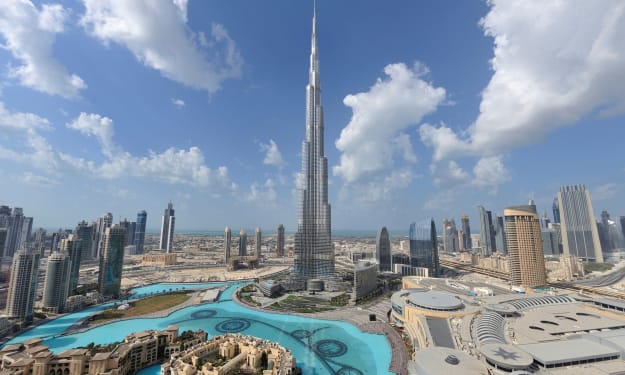
Burj Khalifa: Tallest building in the world
On sixth January, 2004 Dubai's sandy soil began being dug to assemble the tallest structure on the planet. Around the finish of 2004, the world's tallest structure was Taipei 101 Situated in Taiwan, this building was somewhat north of 500 m tall. In any case, the objective they set off on a mission to accomplish in Dubai, was unfathomable and record-breaking. They needed a structure so tall that besides the fact that it would be the tallest structure on the planet yet additionally be 62% taller than the second-tallest structure. The distinction between the tallest and second tallest would deter anybody endeavouring to break its record.
By Habeeb Rahman3 years ago in FYI


Comments