
How Scam Ads Broke Consumer Trust on Social Media — and What the SCAM Act Aims to Fix
Explaining the SCAM Act, advertiser verification, and the fight against social media scam ads

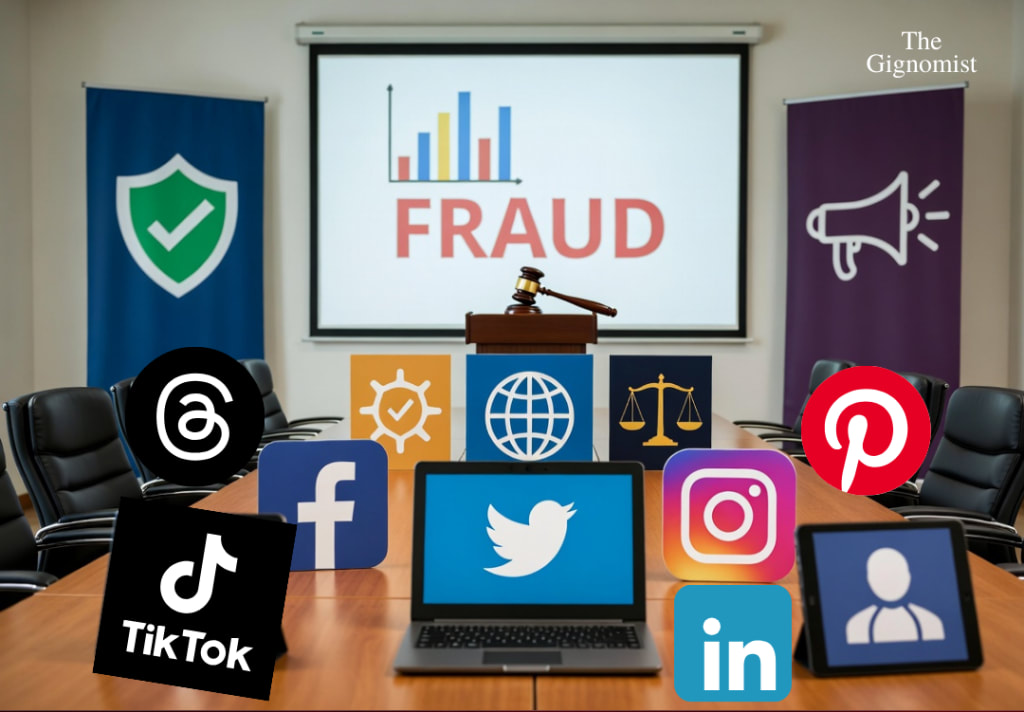
A new bipartisan bill, known as the SCAM Act, has been introduced by US senators to force social media companies to verify advertisers and curb scam advertising. Online advertising has become the financial backbone of social media platforms, but it has also evolved into a powerful channel for fraud. From fake investment schemes to impersonation scams, deceptive ads routinely reach millions of users before platforms act — if they act at all. The newly introduced SCAM Act represents one of the most direct legislative attempts yet to change that dynamic by shifting responsibility squarely onto the platforms that profit from these ads.
At its core, the bill reflects growing frustration in Washington with what lawmakers see as a systemic failure of self-regulation in digital advertising.
This move underscores a global shift toward holding social media platforms accountable for the real-world harm caused by fraudulent advertising.
Why Senators Are Pushing the SCAM Act Now
The SCAM Act is being led by Ruben Gallego and Bernie Moreno, an unusual bipartisan pairing that underscores how widespread concern over online fraud has become. Lawmakers from both parties increasingly agree that scam ads are no longer a marginal problem but a consumer protection crisis affecting millions of Americans each year.
Momentum for the bill intensified after reports suggested that Meta Platforms, the parent company of Facebook and Instagram, was poised to earn a notable portion of its advertising revenue from scam or illicit ads in 2024. While Meta and similar companies publicly commit to fighting fraud, senators argue that the current incentive structure still rewards volume and engagement over rigorous advertiser vetting.
This disconnects between public assurances and financial outcomes has fueled calls for enforceable standards rather than voluntary commitments.
What the SCAM Act Would Require from Social Media Platforms
The SCAM Act proposes a clear shift in responsibility: instead of reacting after scams are reported, platforms would be legally required to verify advertisers before allowing ads to run. This includes confirming the identity of advertisers and ensuring that promoted products or services are legitimate.
Under the bill, failure to conduct adequate checks — or to act quickly once a scam is reported — could expose platforms to legal penalties. This is a notable departure from the long-standing approach where platforms largely avoid liability by positioning themselves as neutral intermediaries.
Supporters argue that advertiser verification is not a radical demand. Financial institutions and other regulated industries already follow strict “know your customer” rules, and lawmakers believe tech companies should meet comparable standards when handling advertising that directly affects consumers’ financial safety.
Holding Platforms Accountable for Profiting from Fraud
One of the most politically charged aspects of the SCAM Act is its focus on accountability. Senators Gallego and Moreno have been explicit that platforms should not be allowed to profit from deceptive practices while externalizing the harm to consumers, banks, and law enforcement.
Fraudulent ads often lead to direct financial losses, identity theft, and long-term damage to consumer trust. Banks are frequently left to reimburse victims, which helps explain why the American Bankers Association has endorsed the bill. From their perspective, scam ads are not just a tech issue but a financial system risk that increases costs across the economy.
By introducing legal consequences, the SCAM Act aims to realign incentives so that preventing fraud becomes a core business priority rather than a public relations exercise.
Industry and Advocacy Group Support Signals Broader Pressure
Beyond lawmakers, the bill has gained backing from consumer advocacy organizations that have long argued social media platforms move too slowly against scams. These groups emphasize that many fraudulent ads remain active even after being reported multiple times, allowing bad actors to continue exploiting new victims.
The endorsement from banking and consumer groups signals that pressure on platforms is coming from multiple directions. It also suggests that the issue has moved beyond partisan debate into a broader regulatory consensus: online advertising fraud is a systemic problem requiring structural solutions.
For platforms, this growing coalition makes it harder to argue that existing moderation tools are sufficient.
The Global Context: Regulation Is Closing In
The SCAM Act does not exist in isolation. Around the world, regulators are tightening rules on digital platforms, particularly around advertising transparency and consumer protection. The European Union’s Digital Services Act, for example, already imposes stricter obligations on platforms to address illegal content and misleading ads.
US lawmakers are increasingly wary of falling behind global standards. The SCAM Act can be seen as part of a broader effort to modernize American tech regulation and ensure that platforms operating at massive scale meet baseline responsibilities.
For companies like Meta, this means navigating a future where compliance is no longer optional or region-specific but a central operational requirement.
As cyber threats grow more automated, prevention is becoming more critical than reaction. How Preemptive Cybersecurity Defends Against AI-Powered Attacks in History’s Most Dangerous Cyber Risk Era explores why proactive defense strategies are essential as AI accelerates the scale and sophistication of modern attacks.
What This Could Mean for Users and Advertisers
For everyday users, the promise of the SCAM Act is straightforward: fewer scam ads, faster takedowns, and reduced risk of financial harm. If platforms are required to verify advertisers upfront, many fraudulent schemes could be stopped before they ever appear in a feed.
Legitimate advertisers, meanwhile, may face slightly higher barriers to entry, but they also stand to benefit from a cleaner ecosystem where trust in online ads is higher. Over time, stronger verification could improve the credibility of social media advertising as a whole.
A Turning Point for Online Advertising Accountability
The introduction of the SCAM Act marks a potential turning point in how the US approaches online advertising fraud. Rather than treating scams as an unavoidable side effect of scale, the bill frames them as a preventable outcome of weak incentives and insufficient oversight.
Whether the legislation passes in its current form remains uncertain, but its bipartisan backing and industry support suggest the debate has shifted. Social media platforms are no longer being asked politely to do better — they are being told that accountability is coming.
If enacted, the SCAM Act could redefine the relationship between platforms, advertisers, and consumers, signaling that in the age of digital advertising, trust is no longer optional — it is a legal obligation.
About the Creator
Ghulam Rehman
Founder & Editor of the Gignomist.com and CEO of NeedsOnline.org. Holds master’s degree in journalism & mass communication. Talks about emerging technology, AI, robotics, cybersecurity, blockchain, Web3, gaming, and the evolving gig economy
Keep reading
More stories from writers in Journal and other communities.
~ Fired ~
— Ai Intrusion ~ Are you Next ~ Is Ai Evolution after your job? — Few workplaces haven't been affected. Ai is in supermarkets, at doctors' offices, and even monitoring farms. I just can't think of anything this machine is not getting into, can you? For instance: Education ~ Law and Tech jobs will one day have a major influence or be taken over by these inanimate machines, with accuracy and vigor. From mechanics' diagnoses to a wide variety of everyday jobs, including fast food workers, with this input having the ability to cut their unnecessary work hours. I'm certain all of us have been touched by this with our short stories and colorful headings, have you? Even comments are very questionable 'Non-Robot' insertions.
By Jay Kantor7 days ago in Journal
Cautious Bank of England Poised to Keep Rates on Hold Despite Hiring Weakness
The Bank of England (BoE) is approaching its next monetary policy meeting with caution, signaling that interest rates are likely to remain on hold despite recent indicators of weakness in hiring. While the economy has shown resilience in some areas, challenges in the labor market and broader uncertainties have created a delicate balancing act for policymakers.
By Aarif Lashari5 days ago in Journal




Comments
There are no comments for this story
Be the first to respond and start the conversation.