
How Sanae Takaichi’s Landslide Victory Redrew the Nation’s Power Map
Japan’s Political Earthquake

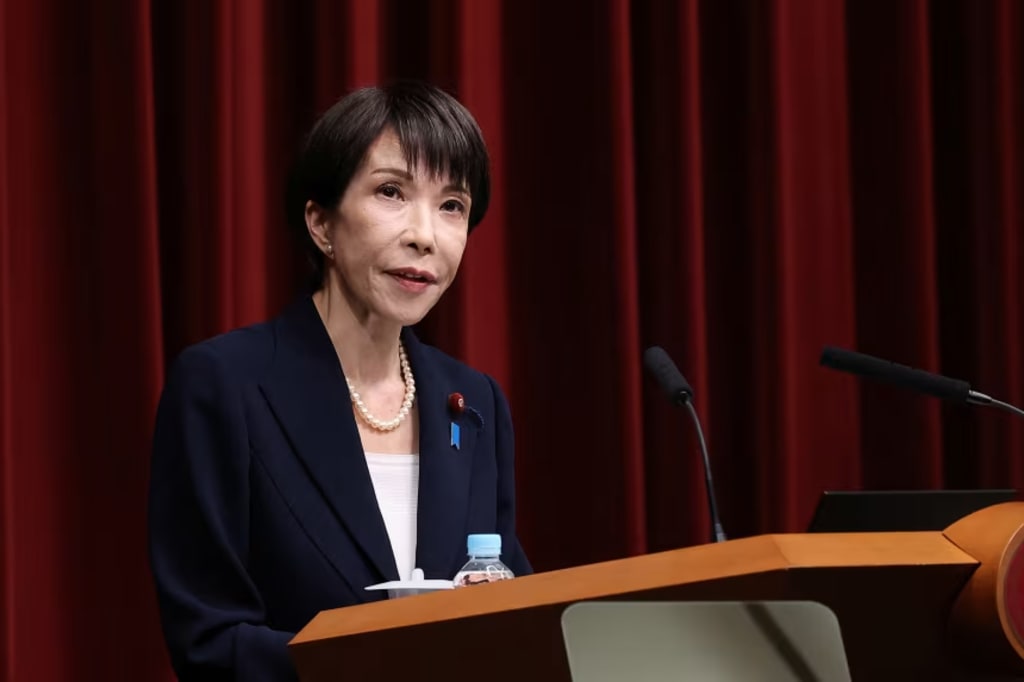
Politics rarely moves quietly in Japan. But every once in a generation, it shifts with the force of a tectonic plate.
On Sunday, that moment arrived.
Japan’s conservative Prime Minister Sanae Takaichi delivered a historic landslide victory in a snap election that didn’t just secure her leadership—it redefined the balance of power in one of the world’s most influential democracies.
What began as a risky political gamble has ended as one of the most decisive election victories Japan has seen since World War II.
A Landslide That Few Saw Coming
When Prime Minister Takaichi dissolved parliament and called a snap election, critics whispered that she was overreaching. Her Liberal Democratic Party (LDP) had been bruised by scandals and declining voter trust. The timing, many argued, was dangerous.
Instead, voters responded with overwhelming clarity.
🗳️ The Numbers That Changed Everything
LDP seats won: 310+ out of 465
Ruling coalition total: 340+ seats
Result: A two-thirds supermajority in the lower house
This marks the first time since World War II that a single party has secured such dominance in Japan’s lower chamber of parliament.
In political terms, this wasn’t a win.
It was a mandate written in bold ink.
Japan’s First Female Prime Minister—and a Turning Point
Takaichi’s victory carries symbolic weight beyond seat counts.
Elected just over four months ago, she became Japan’s first female prime minister in a political system long shaped by male leadership. In a country where tradition runs deep, her ascent represented a crack in the ceiling—and Sunday’s result blew it wide open.
Her approval ratings surged almost immediately after taking office, fueled by:
A reputation for relentless work ethic
Strategic use of social media
A charismatic, approachable public image
From town halls to viral clips, Takaichi felt less like a distant bureaucrat and more like a leader people could recognize themselves in.
The Viral Politics That Won Over Voters
One moment, in particular, captured the public imagination.
A spontaneous drum session with South Korean President Lee Jae-myung went viral across Japanese social media, symbolizing a new, relaxed style of leadership—confident, human, and culturally fluent.
It was the kind of moment that doesn’t show up in policy papers—but wins hearts.
Public enthusiasm around Takaichi reached levels not seen since the era of former Prime Minister Shinzo Abe, a comparison that carried both nostalgia and expectation.
Why the Snap Election Gamble Paid Off
Calling a snap election is political roulette.
Takaichi knew the stakes. The LDP had been weakened by a scandal involving misuse of political funds. Critics expected backlash. Instead, voters separated party history from present leadership.
Why Voters Rewarded the Risk:
Clear economic messaging
Calls for responsible but proactive fiscal reform
A sense of decisiveness during uncertainty
Confidence in Japan’s global positioning
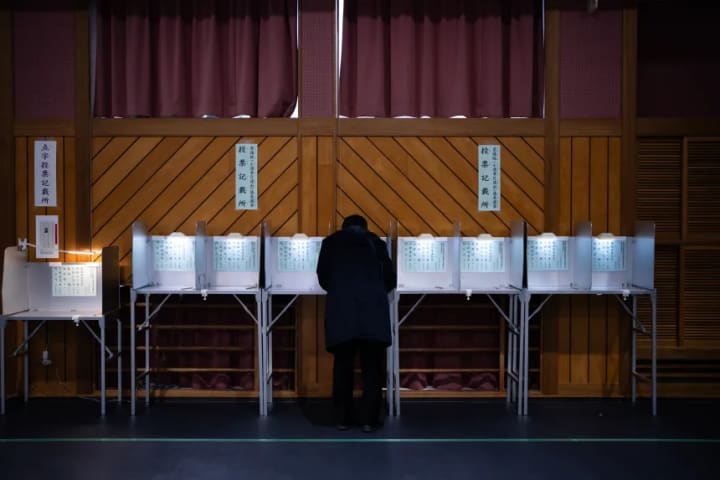
In her post-election interview with NHK, Takaichi thanked voters who “braved the cold and walked through snowy roads to cast their votes,” emphasizing the shared sacrifice behind the victory.
What a Two-Thirds Supermajority Really Means
This election wasn’t just about numbers—it was about power.
With a two-thirds majority in the lower house, Takaichi’s party can:
Override upper house objections
Propose constitutional amendments
Chair all lower house committees
Pass legislation with unprecedented speed
In short, the political handbrake has been released.
For supporters, this is an opportunity for long-delayed reform.
For critics, it’s a moment to watch checks and balances closely.
Trump’s Endorsement and the U.S.–Japan Alliance
International reaction came swiftly—especially from Washington.
Former U.S. President Donald Trump, who publicly endorsed Takaichi earlier this month, celebrated her victory in a social media post, calling it a “LANDSLIDE Victory” and praising her decision to call an election as “bold and wise.”
Takaichi responded by thanking Trump on X, describing the U.S.–Japan alliance as “LIMITLESS.”
Their early meeting, just one week into her term, was notably warm—more like a reunion of old friends than a formal diplomatic exchange.
“She is a delight,” Trump reportedly told business leaders afterward.
Markets seemed to agree.
Markets React: Confidence Returns
Japan’s financial markets wasted no time responding.
📈 The Nikkei index jumped more than 4% in morning trading, signaling investor confidence in political stability and economic continuity.
For global markets, the message was clear:
Japan has leadership certainty—and the mandate to act.
The Challenges Ahead Are Still Massive
A landslide victory doesn’t erase reality.
Takaichi now faces a daunting agenda:
A rapidly aging population
Rising cost of living
A weak yen
Strained relations with China
Pressure to reform economic and fiscal policy
The difference now? She has the political capital to try.
As she stated earlier this year, dissolving parliament meant putting her position on the line. Voters didn’t just keep her there—they reinforced her authority.
Frequently Asked Questions
❓ Who is Sanae Takaichi?
She is Japan’s first female prime minister, elected in October, and leader of the Liberal Democratic Party.
❓ Why is this election historic?
It delivered the first two-thirds lower-house majority for a single party since World War II.
❓ What does this mean for Japan’s constitution?
The ruling party can now propose constitutional amendments without upper house approval.
❓ How did markets react?
Positively—the Nikkei rose over 4% following the results.
❓ What role did Trump play?
Trump publicly endorsed Takaichi and praised her leadership after the election.
Final Thoughts: A Mandate Forged in Risk
Sanae Takaichi didn’t inherit this victory.
She risked her position, tested public trust, and asked voters for something rare in modern politics: belief.
They answered with history.
Japan now stands at a crossroads—not just with a powerful leader, but with the political clarity to move decisively. Whether this moment becomes a golden chapter or a cautionary tale will depend on how that power is used.
For now, one thing is undeniable:
Japan didn’t just vote.
Japan made a statement.
About the Creator
Omasanjuwa Ogharandukun
I'm a passionate writer & blogger crafting inspiring stories from everyday life. Through vivid words and thoughtful insights, I spark conversations and ignite change—one post at a time.
Keep reading
More stories from Omasanjuwa Ogharandukun and writers in Journal and other communities.
AI-Generated Text Is Flooding Institutions And Triggering a No-Win Arms Race With AI Detectors
In early 2023, something strange happened in the world of science fiction publishing. Clarkesworld, one of the most respected literary magazines in the genre, temporarily closed its doors—not because of a lack of interest, but because of too much of it. Editors were drowning in submissions, many of which appeared to be generated by artificial intelligence. Authors, it seemed, were pasting submission guidelines straight into an AI system and hitting “generate,” unleashing a tidal wave of passable—but soulless—stories.
By Omasanjuwa Ogharandukunabout 14 hours ago in Journal
~ Fired ~
— Ai Intrusion ~ Are you Next ~ Is Ai Evolution after your job? — Few workplaces haven't been affected. Ai is in supermarkets, at doctors' offices, and even monitoring farms. I just can't think of anything this machine is not getting into, can you? For instance: Education ~ Law and Tech jobs will one day have a major influence or be taken over by these inanimate machines, with accuracy and vigor. From mechanics' diagnoses to a wide variety of everyday jobs, including fast food workers, with this input having the ability to cut their unnecessary work hours. I'm certain all of us have been touched by this with our short stories and colorful headings, have you? Even comments are very questionable 'Non-Robot' insertions.
By Jay Kantor9 days ago in Journal
Why Fractional CIO impacts Profitability
Introduction to Fractional CIOs Definition and role of a Fractional CIO A Fractional Chief Information Officer (CIO) is a part-time executive who provides strategic IT leadership to organizations on a flexible basis. Unlike a full-time CIO, a Fractional CIO works with multiple companies, offering their expertise and guidance without the commitment of a permanent position. This role is particularly beneficial for small to medium-sized enterprises (SMEs) that may not have the resources or need for a full-time CIO but still require high-level IT strategy and oversight.
By Adrian Lawrence6 days ago in Journal
Public Announcement Challenge Winners
For the Public Announcement Challenge, writers were asked to work inside voices built for control. These were notices, warnings, and updates meant to inform rather than confess. The strongest entries committed to that form and didn't break from it. Corporate memos, formal government alerts, and internal policy language were held consistently, allowing emotion, fear, grief, or humor to surface indirectly through pressure rather than declaration. The following poems recognize the voice of authority, and let human feeling slip through despite all its rules and restraint.
By Vocal Curation Team3 days ago in Resources



Comments
There are no comments for this story
Be the first to respond and start the conversation.