
How, Religious conflict can lead to worldwide war.
possibility of religious conflict turning into war


The history of religious conflicts is replete with examples of how they have been a major source of unrest and bloodshed contributing to wars and other conflicts throughout the ages. Given the world society that we live in today, can religious conflict escalate into global wars? By using such examples as are found in history and those found presently as well as analyzing the complex connections between politics, religion, and economics, this paper delves into the complexities surrounding this important subject matter. It is worth investigating these aspects for if religious differences could go further than regional limits, it might be a serious threat to peace all over the world.
Historical Context and Modern Examples:
Throughout history, prolonged religious disputes have been known to provoke severe hostilities and massive wars resulting in irreversible cultural changes, as well as dictating the political course of entire nations. The claim that fanaticism rooted in religion can trigger extended and savage warfare is clearly illustrated by the Crusades between Christians and Muslims that took place in medieval times. In a similar vein, Catholic and Protestant forces fought a war of destruction that caused great political and social upheaval during the Thirty Years’ War that raged mainly across Central Europe during the seventeenth century.
There is still bloodshed and war in our day that is caused by religious differences, especially in some regions of the Middle East where sectarian divisions between Shia and Sunni Muslims are responsible for ongoing wars in countries such as Syria and Iraq. Religious divisions between Muslims and Hindus in South Asia have created enduring violence as seen in Kashmir war and intermittent communal riots across India. There are even, instances of religion inspired violence in Africa too, with groups like Boko Haram Nigeria or Al-Shabaab Somalia maintaining controversies that are part of their countries’ turmoil. These events exhibit both historical and contemporary ways by which religious disputes disturb peace around the globe.
Globalization and Interconnectedness:
Never before has globalization created such an interconnected world, one which brings together various cultures and religions closer than before promoting diversity, tolerance and peace. However, this same interconnectedness can further exacerbate religious tensions. Nowadays, conflicts taking place in one part of the world are able to send their ripples across continents owing to rapid information sharing and migration patterns. For instance, Middle Eastern religious conflicts have been known to disrupt political dynamics in Europe or North America as evidenced by two events namely, Europe’s response to the influx of Syrian refugees and emergence of extremist groups around the globe. Furthermore, global media can raise inflammatory language on matters of faith leading to violence breaking out even in areas where it was never anticipated following the same linear flow. In such cases local disputes quickly turn into international crises bringing global actors into play destabilizing human coexistence on earth as a whole. The serious challenge here is captured within a broad framework consisting of diplomacy; inter faith dialogue among faith leaders at local level who cooperate through various joint ventures made by different nations thus preventing little wars from becoming big global ones”
Religious Extremism and Terrorism:
Up till current times we have been exposed to information. Major threats to global security include religious extremism and terrorism that justify acts of violence as well as generate fear within the society. One such example is ISIS or Boko Haram who utilize distortionary religious concepts for recruitment and committing horror crimes. Their actions may elicit much rage among those affected or cause military reactions following big name attacks on a global scale. This would create long-term clashes thus initializing a vicious cycle of retaliation among nations concerned about washing their respective crimes against humanity off themselves. These changes in behavior would lead major powers getting involved making these disputes complicated since there was no single reason for them hating each other which raises the possibilities about escalating into larger-scale wars which could be between large nations too. These are alarming situations that show the need for a unified global response against their ideologies aimed at preventing more harm from coming up.
Political Exploitation of Religious Differences:
These religious sentiments can be manipulated by the political authority with vested too much egos and created more hatreds. State actors, through the manipulation of religious identities for political gains and suppression of opposition can increase chances of war. This generally inflames current situation and creates a conducive atmosphere for violence to take place. When involved in these manipulated conflicts the foreign nations might intervene which will then foster establishment of strategic cooperation. This external involvement could then escalate localized religious wars into larger more complex confrontations posing a greater danger of global conflicts. The deliberate politicization of faith is therefore a danger to both national and international stability; hence the need for responsible governance options and conflict management mechanisms.
Resource Competition and Religious Identity:
In places where water, oil, and farmland are tightly constrained, jealousy for these needs most do intertwine using faiths sometimes solidifying what is on the mind. In instances where distinct religious groupings aggressively attempt to secure themselves towards those essential resources, such disagreements could inherit a more serious aspect of the society deepened than ever before by hatreds and making resolution efforts more complicated. Such clashes may go beyond immediate areas affecting neighboring nations whose interests are at stake and possess similar underlying beliefs. Thus the struggle for limited resources would be seen as an essential issue that could expand place-based sectarian wars into larger regional conflicts. If they continue, such tensions may eventually involve great powers and thus serve as “flashpoints” in impending global confrontations, which emphasizes the need for joint management of the earth’s limited resources and peace-keeping maneuvers on its part.
Role of International Organizations and Diplomacy:
Good diplomacy, supported by active engagement of the-same organizations, can avoid such international conflicts from evolving into a world war. Institutions such as United Nations have certain principal tasks like interfaith discussions, mediation and promotion of conflict resolution. Furthermore, these bodies offer a platform for negotiations that help to ease hostilities and provide grounds where warring parties can come together in the future. It is also important that proactive measures like early interventions and continuous diplomatic efforts are put in place to address the root causes of religious wars. These groups would prevent local tensions from escalating to higher levels by means of driving cooperation among countries through their interactions. Therefore the world’s commitment to ensuring peace and stability is necessary for restricting religious wars within tolerable limits without disrupting global security.
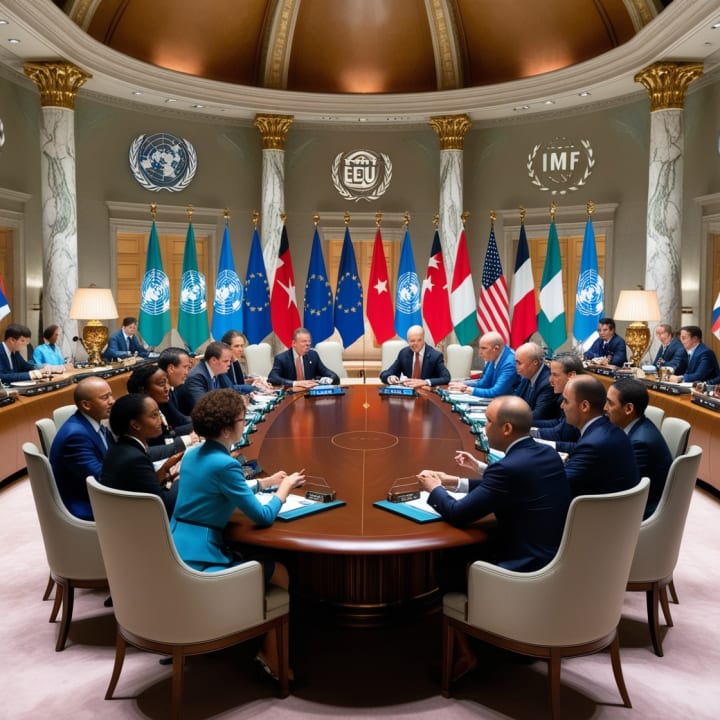
It may be that war cannot be attributed solely to religion but it is a significant risk factor due to its ability to overlap with other political, economic and social issues. This results in the incidence of local conflicts escalating into global crises courtesy of the connectedness within modern societies, the threat posed by religious extremism and the manipulation of political figures on religious identities. To reduce these dangers, it is crucial for international community members to engage in attempts at promoting tolerance, understanding and cooperation at all levels. We can avoid more religious based conflicts spiraling out of control if we promote dialogue, address root causes and take preventive measures accordingly so as not threaten global peace and stability. A commitment to building a more harmonious world where diverse religions live together will ensure that instigating factors do not lead to large scale violence or warfare that has always resulted from them.
About the Creator
Subrata Mondal
Hi there! I’m Subrata Mondal, I was born in 1988. Photography, reading, writing and traveling are my hobbies that demonstrate how much I am into imagination, search for new things as well as narrating stories. Thank you all for having me.
Keep reading
More stories from Subrata Mondal and writers in Journal and other communities.
How a spoonful of honey in a cup of hot water every morning can change your life
When I was a child I had problem of being sick quite often. I used to have cold related problems most of the time. Swelling of throat is very painful and believe me or not I had to endure that pain every now and then. My parents did take me to the doctor, but it was always a temporary solution. It went on like this up till I was in my twenties when I first discovered this concoction and believe me, it did bring amazing changes to my life. Here I am going to share what great benefits this drink does offer. Now let's dive a little deeper.
By Subrata Mondal2 years ago in Chapters
How a Garage DIY Scaled to a $2M Product
Today, we’re bringing you the story of Swift Paws. The founder, Meghan, and her dad built the first prototype in their garage just so their dog Pretzel could practice lure coursing for specific dog lovers. But soon, more and more dog owners wanted the same for their dogs and even cats. So Meghan started to figure out how to turn it into a real product.
By Jingsourcing.com 6 days ago in Journal
A More Human Vocal
When we launched Vocal nearly a decade ago, the world was a very different place. LLMs did not exist, and stories were created one at a time by people sitting down to write, revise, and share something personal. Many of our assumptions about publishing, trust, and participation were built for a world where effort and output were inseparable.
By Justin @ Vocal4 days ago in Resources




Comments (1)
Thanks for sharing