
How Lab-Grown Diamond Manufacturers Are Innovating the Jewelry Industry
A Look into the Science and Sustainability Driving the Lab-Grown Diamond Revolution

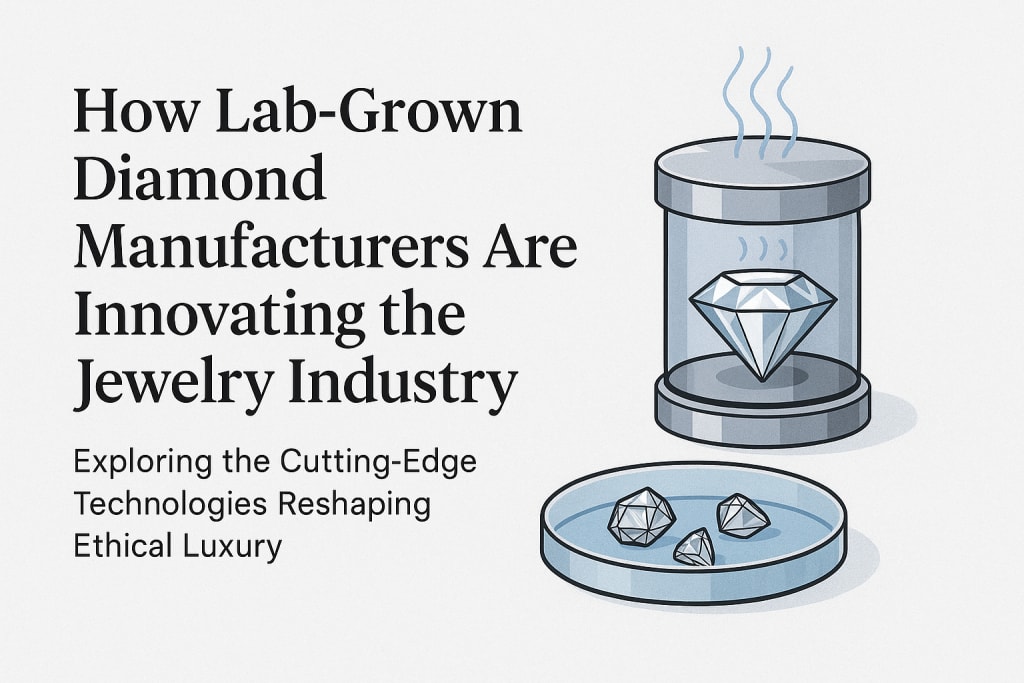
The diamond industry has long been dominated by tradition, exclusivity, and prestige. For decades, natural diamonds symbolized luxury and eternal love. However, growing consumer awareness around ethical sourcing and sustainability has created a significant shift in how people perceive and purchase fine jewelry. This shift has paved the way for lab grown diamond manufacturers to reshape the jewelry landscape not just by offering an ethical alternative, but by innovating every facet of the diamond production process.
Traditional diamond industry vs. Lab-grown innovation
In the traditional diamond business, accusations had been directed so far at mining practices engaging in ecological crimes, unfair labor conditions, and sourcing for conflict diamonds. Conventional mining is highly energy consuming and land disruptive, thus being among the least sustainable of all sectors in luxury goods.
Here arrives the lab-grown diamond manufacturer-the modern-day disruptor in an industry that is centuries old. Now these manufacturers have the means to manufacture synthetic diamonds that are physically, chemically, and optically identical to the mined diamonds, by simulating the natural processes through which diamonds are created under the Earth's surface. Man-made diamonds are created in a controlled ambience with the help of the state-of-the-art technologies such as High Pressure High Temperature (HPHT) and Chemical Vapor Deposition (CVD), thereby creating a lesser carbon footprint and eliminating the wickedness associated with mining.
The technology behind the transformation
The real innovation is in the cutting-edge technology that lab-grown diamond manufacturers are employing. Present-day HPHT and CVD methods are so well developed that perfect diamonds can be made consistently, in any required clarity and carat weight. Using AI-assisted grading and precision diamond-cutting tools, manufacturers are capable of producing goods efficiently at a quality never before attained.
While HPHT simulates a high-pressure and high-temperature environment within the Earth, CVD employs carbon-rich gases to break down and form diamond crystals layer by layer. Both of these processes can allow the rapid manufacture of fine-quality lab diamonds within a matter of weeks, as opposed to the millions of years needed for natural diamonds to form.
Along with these growth methods, the diamond manufacturers are also considering blockchain technology for traceability, laser inscription for authentication, and 3D modeling to perfect diamond symmetry and brilliance. This ensures that the end consumer is purchasing a product that is not only beautiful but also verifiably ethical and traceable.
Sustainability and ethical impact
Environmental and social issues are among the biggest concerns in traditional mining processes. Any kind of mining scars the landscape, pollutes water bodies, and exploits labor in developing countries, whereas in contrast lab-grown processes do not entail such consequences.
In many cases, stations for the manufacture of these diamonds use renewable resources of energy, some of which have even achieved carbon-neutral or zero-emission status. This approach tallies with the thinking of present-day consumers, especially millennials and Gen Z buyers who are into products with an eco-conscious tag.
These diamonds are also conflict-free, meaning that their purchase could not be associated with armed conflict or unethical labor practices. Consequently, these ethical diamonds have shifted from being a niche product to becoming the industry standard, largely due to innovation-led diamond manufacturers.
Customization and modern jewelry design
Beyond sustainability, lab grown diamond manufacturers are changing how jewelry is designed and customized. Using tools like CAD (Computer-Aided Design) software and 3D printing, jewelers can now offer bespoke pieces tailored to each customer's preferences. From engagement rings to fine necklaces, every piece can be customized in terms of carat size, cut, clarity, and setting.
This level of personalization wasn’t as accessible in the traditional diamond industry due to the unpredictable nature of mined diamond availability. Now, with the scalability of lab-grown production, consumers can choose from a wider array of lab created diamonds, often at a more accessible price point.
These innovations are fostering a new era of modern diamond production, where design freedom and customer experience take center stage.
Disrupting the market: growth and collaboration
The rapid rise of lab grown diamond manufacturers has caught the attention of not just consumers but also legacy brands. Major players in the luxury jewelry space, including Vera Bijou, has introduced lab-grown collections or entirely shifted toward sustainable jewelry offerings.
The global lab-grown diamond market is expected to grow significantly over the next decade, fueled by increasing demand, technological advancements, and a stronger push for corporate responsibility. Strategic partnerships between lab grown diamond manufacturers and tech companies are driving R&D, further enhancing diamond quality and production efficiency.
Moreover, as lab diamond supply chains become more streamlined, the price gap between mined and lab-grown diamonds continues to widen offering luxury at a better value, without compromising on quality.
Consumer trust and transparency
One of the biggest problems to solve for any diamond manufacturer, especially a newer one working in lab-grown stones is to generate trust with the consumer. But many are actively promoting transparency initiatives.
They are creating blockchain ledgers that digitally document the diamond's journey, from laboratory to retailer. Reputable grading institutions like IGI and GIA now grade lab-grown stones and their certificates provide customers with assurance as to the quality and authenticity of the stone, just as if it were a mined diamond.
Many manufacturers also now publish sustainability reports, which show the environmental impact and ethical practices of the company. Many of these efforts raise consumer confidence in the industry while raising expectations across the industry for accountability.
Looking ahead: the future of lab-grown innovation
The future of the diamond industry is increasingly being written in labs, not mines. Innovations in diamond growth processes, production efficiency, and digital traceability tools are accelerating. We’re also seeing a new generation of lab grown diamond manufacturers who are integrating smart manufacturing, AI, and machine learning to enhance yield, reduce waste, and shorten production cycles.
Future trends likely to dominate include:
•Biodegradable packaging and green logistics
•Fully automated cutting and polishing using robotics
•Smart customization portals that let users design rings online in real-time
•Eco-labeling and carbon score ratings on diamond certificates
As environmental and ethical consciousness becomes standard, the pressure will continue to mount on traditional players to evolve or be replaced.
Conclusion
The rise of the lab grown diamond manufacturer marks a defining moment in the evolution of the jewelry industry. No longer just an alternative, lab-grown diamonds represent a new standard for ethical, sustainable, and technologically advanced jewelry. With innovations in manufacturing, personalization, and sustainability, diamond manufacturers are not just keeping pace with changing consumer values they are setting the tone for the future.
As technology continues to advance and awareness spreads, it's clear that lab grown diamond manufacturers will remain at the forefront of jewelry innovation, offering brilliance without compromise.
About the Creator
Keep reading
More stories from Emily John and writers in Journal and other communities.
Behind the Scenes: How Lab-Grown Diamonds Are Made
In recent years, cultured diamonds have gained significant ground as a possible substitute for earth-mined diamonds, attracting socially responsible consumers as well as insiders in the industry. Gone are the days when they were a niche gem, and now cultured diamonds are revolutionizing the world of jewelers everywhere. Much of the credit goes to the producers of laboratory-grown diamonds who pioneered the technological processes to replicate nature's best gemstone in highly advanced laboratory conditions.
By Emily John7 months ago in Journal
eCommerce Development vs Shopify Development Services: Key Differences
When businesses decide to sell online, one of the first major decisions they face is how to build their digital storefront. Some choose a fully customized approach, while others opt for a ready-to-use platform that promises speed and simplicity. This is where the comparison between eCommerce Development and Shopify development services becomes important.
By Jane Smithabout 9 hours ago in Journal
Rachel Reviews: The Spiral Archive by Pieter Hendrik
It's difficult for me to know where to start with a review of this book as it was, for me, an entirely unique experience and one that I'll probably never have again. I don't want that to be interpreted as unenjoyable but it has left me scratching my head a little and ruminating on its content, its themes and its characters.
By Rachel Deeming3 days ago in BookClub


Comments
There are no comments for this story
Be the first to respond and start the conversation.