
How Fast Is 6G Compared to 5G, 4G, and Wi-Fi 6?
5G, 4G, and Wi-Fi 6

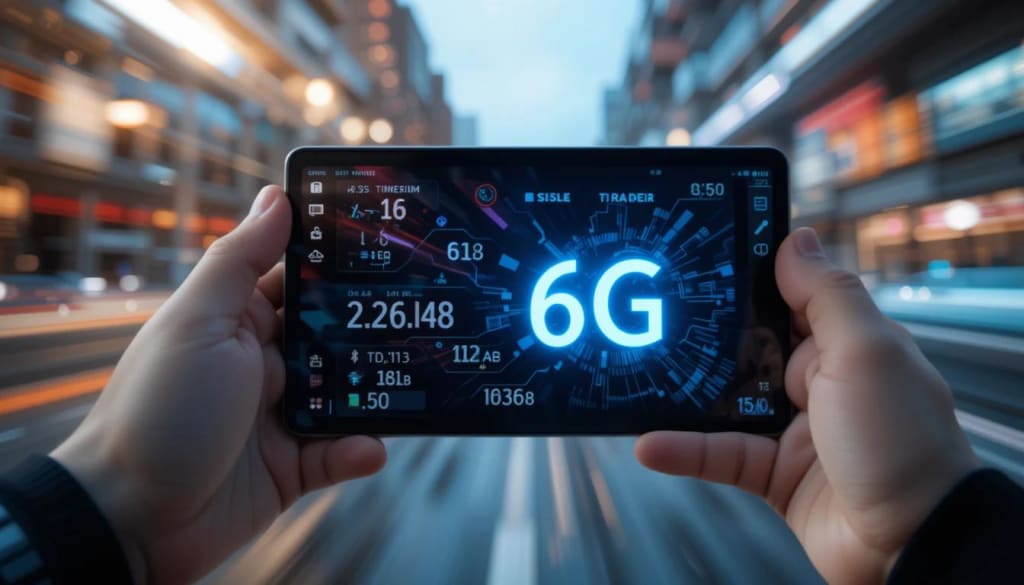
The 6G network is the next step in wireless communication. It promises much higher speed and lower delay than current technologies. To understand its potential, it is helpful to compare it with 5G, 4G, and Wi-Fi 6.
What Is 6G?
6G stands for the sixth generation of mobile networks. It is still in the early research stage. Experts expect it to launch around 2030. This new network aims to offer ultra-high speed, very low latency, and massive device connections.
Speed Comparison Between 6G, 5G, 4G, and Wi-Fi 6
6G Speed
6G is expected to reach speeds up to 1 terabit per second (Tbps), which equals 1,000,000 megabits per second (Mbps). This massive leap in connectivity will rely on high-frequency spectrum, likely in the terahertz (THz) band. Such frequencies can transmit significantly more data compared to those used in 5G or 4G, enabling next-generation technologies like real-time holographic communication and advanced AI-driven networks. The ultra-low latency of 6G will also make it ideal for autonomous systems and smart city infrastructure.
Experts predict that 6G network speed will revolutionize industries by supporting complex applications such as remote surgery, immersive virtual reality, and interconnected smart devices. Its unmatched capacity to handle massive data traffic will transform how we interact with digital environments. As countries and tech giants race to develop 6G, research and testing are already underway to set global standards and ensure seamless integration with existing networks, paving the way for a hyper-connected future.
5G Speed
5G can reach a peak speed of 10 gigabits per second (Gbps). In practice, most users get speeds between 100 Mbps and 1 Gbps. 5G improves over 4G by offering faster downloads, less lag, and better support for many connected devices.
4G Speed
4G offers peak speeds of 1 Gbps. Real-world speeds usually range between 10 Mbps and 100 Mbps. It was a big step forward when it launched, making high-quality video streaming and online gaming possible on mobile devices.
Wi-Fi 6 Speed
Wi-Fi 6 has a theoretical top speed of 9.6 Gbps. Actual speeds vary, depending on the number of devices and the network setup. Wi-Fi 6 works well in homes, offices, and public areas. It offers higher speeds and better performance in crowded environments.
Latency Comparison
Latency means the delay between sending and receiving data. Lower latency improves the performance of real-time apps like video calls and online games.
- 6G latency may reach under 1 millisecond (ms), possibly as low as 0.1 ms.
- 5G latency is usually around 1 ms.
- 4G latency ranges from 30 to 50 ms.
- Wi-Fi 6 latency is about 10 to 20 ms, depending on network traffic.
Frequency Bands Used
Different networks use different parts of the wireless spectrum. These bands affect speed, range, and device compatibility.
- 6G will likely use terahertz frequencies (100 GHz to 10 THz).
- 5G uses low, mid, and high bands (below 1 GHz to 100 GHz).
- 4G mostly uses frequencies below 3 GHz.
- Wi-Fi 6 uses 2.4 GHz and 5 GHz bands, and newer versions include 6 GHz.
Device Capacity and Connection Density
Future technologies must support more connected devices. This is important for smart homes, cities, and industries.
- 6G could support up to 10 million devices per square kilometer.
- 5G supports around 1 million devices per square kilometer.
- 4G can handle about 100,000 devices per square kilometer.
- Wi-Fi 6 performs well in high-density settings like stadiums and schools.
Coverage and Range
Range refers to how far the signal travels from the tower or router.
- 6G may have limited range due to its use of high-frequency bands. It will need many small base stations.
- 5G has better range in low and mid bands, but high-band 5G (mmWave) has shorter range.
- 4G has wide coverage with large towers.
- Wi-Fi 6 has a short range, limited to buildings or small areas.
Use Cases and Applications
Each network supports different types of services.
6G Applications
6G will help develop advanced systems such as:
- Real-time holograms
- High-precision remote surgery
- Connected vehicles with near-zero delay
- Smart cities with dense sensor networks
- AI-powered robotics
5G Applications
5G enables:
- 4K and 8K video streaming
- Smart manufacturing
- Low-latency gaming
- Augmented reality and virtual reality
4G Applications
4G supports:
- HD video streaming
- Social media apps
- Cloud storage
- Mobile web browsing
Wi-Fi 6 Applications
Wi-Fi 6 works well for:
- Streaming video in homes
- Supporting many devices at once
- Office environments with high traffic
- Remote work and online meetings
Energy Efficiency
Future networks must reduce power use. This is key for longer battery life and environmental benefits.
- 6G is expected to be more energy-efficient using AI and new transmission methods.
- 5G improves energy use with sleep modes and targeted signals.
- 4G uses more energy, especially under heavy load.
- Wi-Fi 6 includes features to reduce power use for connected devices.
Deployment Timeline
- 6G is still under research. Expected rollout is around 2030.
- 5G is already available in many countries.
- 4G is still widely used and supported.
- Wi-Fi 6 is common in new routers and devices.
Conclusion
6G will be much faster than 5G, 4G, and Wi-Fi 6. It will offer lower latency, higher device support, and better efficiency. While 6G is still in development, it shows promise for future communication needs. Until then, 5G and Wi-Fi 6 continue to offer strong performance and wide availability. Understanding how each network compares helps users make better decisions about devices, upgrades, and connectivity plans.
About the Creator
Acevedor
Acevedor is a trailblazer, blending innovation and creativity with a passion for excellence. Driven by a vision to inspire, they transform challenges into opportunities with unmatched determination.
Author’s Advice
If you would’ve asked me 20 years ago did I know I’d become a writer and an author, I would’ve said “nope, ain’t happening”. As fate would have it I did become an author and I can honestly say I’m loving it so far. It really does feel good to be a writer. I’ve learned a lot on this journey and I feel like with even me being as new to this world as I am, there’s some wisdom I need to share with every other aspiring author.
By Joe Pattersona day ago in Journal
How to Use a Tortellinatrice to Make Perfect Tortellini
Making tortellini by hand can be slow and difficult. Many cooks struggle with folding, filling, and sealing each piece perfectly. The result is often uneven shapes, broken pasta, or filling that leaks during cooking. The good news is that a tortellinatrice solves these problems by automating the process of shaping and sealing tortellini while keeping the traditional taste intact. With the right preparation and proper machine settings, anyone can use a tortellinatrice to produce perfectly shaped tortellini quickly and consistently.
By Zain Prince4 days ago in Journal
Lycan Lore
As the students of my 10am mythology class take their seats, I decide to steer the day's curriculum away from Greek and dive into a Western European discourse on the misaligned beliefs of the Werewolf. A tale of truth or fiction. No one really knows.
By Lamar Wigginsabout 22 hours ago in Fiction




Comments
There are no comments for this story
Be the first to respond and start the conversation.