
How Environmental Rooms are Designed and Developed: In Detail
The exact conditions that have to be necessitated for the ideal functioning of various machinery, materials, devices and other components are satiated by the use of an environmental room.
Introduction
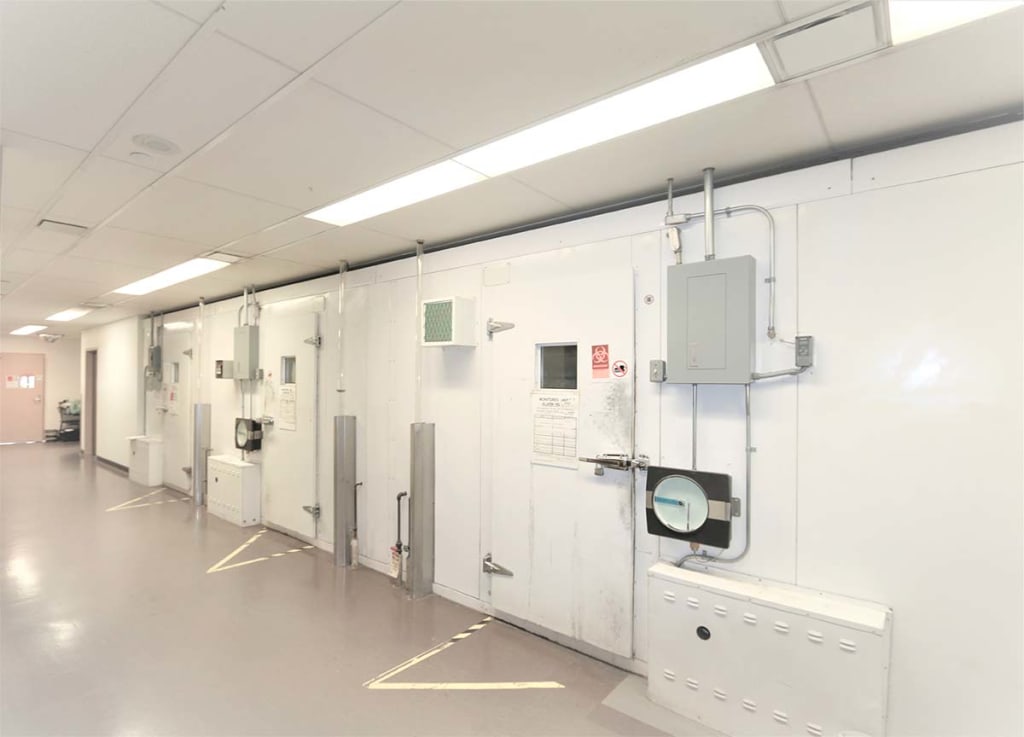
An enclosure that is used for the purpose of testing various effects of particular environmental conditions on different items or materials such as industrial products, electronic devices, etc., is called an environmental chamber or an environmental room. Sometimes referred to as a climatic chamber.
One such chamber can be used to meet multiple needs. Firstly, as a testing apparatus or a resource to test for different environmental effects on different test specimens. Following, these test specimens that have been tested in the first place need to be prepared for further physical and chemical tests. And the chamber could meet that need too. Well then, such a chamber could also present the required environmental conditions required for conducting the testing of specimens.
Working and features of a test chamber
The exact conditions that have to be necessitated for the ideal functioning of various machinery, materials, devices and other components are satiated by the use of an environmental room. It has the capability to replicate the required conditions inside, artificially. And when certain effects have to be accelerated to a higher degree than functioning at normal, an environmental room could be made use of.
The process of chamber testing is simple to define in words and simple in practice too if it’s properly installed. It involves testing and exposing various products or items to different environmental conditions. Just that? No. In a precision-controlled environment. A controlled setting - that is the noteworthy aspect. Chamber testing practices like climatic chamber testing and thermal shock testing come under the whole testing process.
Climatic chamber testing is a broad category. It involves ways to simulate climate or provide excessive ambient conditions exposure for a product or an item under a precision-controlled environment but with accelerated conditions. But on the other hand, thermal shock testing is mainly utilised for understanding how different products or materials would react when they get exposed to variations in climatic conditions which are extreme. Like going from extremely cold temperature to a very hot condition in a very short period of time. Just in split seconds.
The conditions that these products and materials get exposed to might include extreme temperatures, a thermal shock which is extreme and spontaneous variation in temperature, the level of altitude, how the moisture or relative humidity is present, electrodynamic vibrations and electromagnetic radiations, along with test like cycle corrosion testing, salt spray corrosion test method. Additionally, getting exposed to rain, weathering, and UV degradation caused by exposure to the Sun. And vacuum.
The manufactured components, specimens, or samples are then carefully put inside these environmental chambers and are exposed to these various environmental conditions to have an understanding on how reliable and performing are these components or specimens. And to see and measure the after-effects.
An environmental room doesn’t have to be a large, wide room. It’s compact. It could just be a small chamber. A smaller unit, it could be. In order to condition test specimens and subject them to various tests. And you know, some can be so small that they could be placed onto a universal testing machine or any other test apparatus.
These chambers would be automatically set at a certain set of default conditions. But you know, it can be changed to any set of conditions that you’d want. That you’d require.
How a test chamber is designed
Well, depending on test requirements of yours, the environmental test chambers could vary widely in size. Yes, it could be a small, compact unit but at the same time, it could also be large walk-in chambers. It all depends on whether your test requirement is simple or complex. Normally, in order to happen the visual inspection of a particular sample during the test, test chambers would’ve viewports or video feeds. The reach-in chambers offer an opening that technicians might possibly use, in order to handle test samples. And the chambers that provide visual lighting to the interior must give proper consideration to the amount of heat generated and have to compensate appropriately.
With the wide variety in size, a great deal of user control options are available, ranging from simple analog indicators to modern digital readouts having LCD displays. The chambers could be computer programmable. Also, network or web-enabled test chambers with built-in web servers are also available to meet your needs. That’s that then.
About the Creator
Keep reading
More stories from Max McClane and writers in Journal and other communities.
Can Your Insurance Contain and Prevent a Breach in Your Business?
Introduction A business can go both ways. The way of profit and the way of loss. Based on your choices? Yeah, to an extent. But, there’d be some unforeseen circumstances every time. Over the course of business. You wouldn’t know. To protect your business and safeguard your valuable information, you should’ve already had business insurance with you. Commercial insurance. It could help you cover your losses. Starting out a new venture, well insurance should be a part of it. An inevitable one. There are different kinds of insurance available for your different kinds of business needs. Risks related to your employees, damage to property, loss of valuables, legal liabilities, well whatever it’s, there’s always a unique kind of business insurance to meet your needs.
By Max McClane3 years ago in Journal
~ Fired ~
— Ai Intrusion ~ Are you Next ~ Is Ai Evolution after your job? — Few workplaces haven't been affected. Ai is in supermarkets, at doctors' offices, and even monitoring farms. I just can't think of anything this machine is not getting into, can you? For instance: Education ~ Law and Tech jobs will one day have a major influence or be taken over by these inanimate machines, with accuracy and vigor. From mechanics' diagnoses to a wide variety of everyday jobs, including fast food workers, with this input having the ability to cut their unnecessary work hours. I'm certain all of us have been touched by this with our short stories and colorful headings, have you? Even comments are very questionable 'Non-Robot' insertions.
By Jay Kantor4 days ago in Journal
Improving Beverage Sales: A Bright Spot in PepsiCo’s Performance
PepsiCo, one of the world’s leading food and beverage companies, has faced its share of challenges in recent years. Rising inflation, changing consumer preferences, and pressure on traditional products have tested the company’s resilience. Yet, despite these hurdles, PepsiCo’s beverage sales have emerged as a bright spot, showcasing the power of innovation, strategic planning, and adaptability in today’s competitive market.
By Ayesha Lashari2 days ago in Journal
Why Black History Matters in America?
The United States of America is celebrating their 250th anniversary in 2026. I'm proud to be an American and as someone who was born here, I wouldn't imagine myself living anywhere else. This is a country where opportunities are possible. Where anyone can be successful in anything they desire to do. Equality, community, and togetherness are the backbones of what America is and should be about. However, we have an administration who wants to erase and disregard those who have made positive, meaningful impacts in our country, specifically Black figures, such as Martin Luther King, Jr., Rosa Parks, and Maya Angelou. President Trump and his administration have been constantly complaining and fighting against what they call the "Woke agenda". They use this excuse as a distraction from other issues they refuse to address, such as the high cost of living, climate change, and inflation. That equality is dividing America, when in reality, it's bringing us together. Being woke is not tied to a specific political party. No matter where you stand on the political spectrum, you can still care about other people and their plights. Compassion and empathy for others isn't tied to a political party, either. We were taught as children to treat others the way we want to be treated and not judge others because they're different from us. Caring about others isn't a personal attack on your beliefs. It doesn't make you any less of a person. People who are easily offended over African American figures, past or present, or anything related to it, are grasping at straws. Current and future generations need to know who people like Harriet Tubman and Shirley Chisholm were, especially in the classroom. Black History is part of American History. It should be recognized, not hidden or forgotten. Besides, you can't shield children from everything, just because your feelings are easily hurt.
By Mark Wesley Pritchard 3 days ago in The Swamp


Comments
There are no comments for this story
Be the first to respond and start the conversation.