
How does an individual become financially independent?
Here are thirteen steps to help you on the way to financial independence.


Financial independence is a dream many people quietly carry inside them. It means waking up without constant financial stress, knowing that your money is working for you instead of controlling your life. But reaching that point rarely happens by accident. It requires awareness, discipline, and smart decisions over time.
The journey begins with understanding your spending habits. Many people struggle financially not because they earn too little, but because they never truly track where their money goes. Creating a simple budget can reveal surprising truths. When you clearly see how much you spend on food, transportation, entertainment, and daily needs, it becomes easier to take control of your financial direction.
Once you understand your spending, the next step is learning to adjust it. Financial freedom often starts with small changes. Cutting unnecessary expenses, avoiding impulsive purchases, and saving even small amounts regularly can slowly transform your financial situation. Over time, these habits create a strong foundation for stability.
Of course, saving alone is not always enough. Increasing your income can dramatically accelerate the path to financial independence. Some people pursue additional education or training to qualify for higher-paying careers. Others start side projects or freelance work to create extra income streams. When your income grows while your spending stays controlled, your financial security grows as well.
Another essential step is building an emergency fund. Life is unpredictable, and unexpected expenses can appear without warning. A good starting goal is saving enough money to cover at least three to six months of essential living expenses. This safety net provides peace of mind and prevents financial setbacks during difficult times.
Planning for the future is equally important. Retirement savings should begin as early as possible because time allows investments to grow. Even small contributions can become powerful over many years through compound growth. The key is consistency rather than perfection.
Choosing the right accounts for saving and investing can also make a difference. Some accounts provide tax advantages that allow your money to grow more efficiently. The right financial tools depend on your personal goals, whether you are saving for retirement, education, or long-term investments.
Debt management is another major part of financial independence. Not all debt is harmful, but high-interest debt can quickly become a heavy burden. Paying off expensive debt first often frees up money that can later be invested or saved.
Learning the skill of negotiation can also quietly improve your finances. Many people hesitate to ask for better prices or discounts, yet businesses often expect negotiation. Even small savings from negotiating bills or purchases can accumulate over time.
Financial knowledge is a lifelong process. Laws, markets, and opportunities change constantly. Staying informed about financial trends, taxes, and investment strategies helps you make better decisions for your future.
Diversifying your investments is another powerful principle. Instead of placing all your money into a single asset, spreading investments across different areas reduces risk. A balanced financial portfolio might include stocks, bonds, real estate, or other assets that respond differently to economic changes.
Taking care of your property is another overlooked aspect of financial stability. Maintaining homes, vehicles, and important belongings helps preserve their value and prevents costly repairs in the future.
Living below your means is perhaps the most powerful habit of all. It means choosing a lifestyle that allows room for saving and investing rather than spending every dollar you earn. People who master this mindset often experience greater financial freedom and less stress.
Finally, seeking guidance from a financial professional can sometimes be helpful. Advisors can assist in creating investment strategies, managing assets, and planning for long-term goals. Even simple advice can help clarify the best path forward.
Financial independence is not achieved overnight. It grows slowly through consistent decisions, patience, and awareness. Each small improvement in budgeting, saving, and investing builds momentum over time.
The journey may take years, but every step brings you closer to a life where money supports your goals rather than limiting them..
About the Creator
Noman Khan
I’m passionate about writing unique tips and tricks and researching important topics . I explore profound questions to offer thoughtful insights and perspectives."
Keep reading
More stories from Noman Khan and writers in Journal and other communities.
The 30-Second Secret to Finding Viral Social Media Topics (That No One Told You About)
It started with that all-too-familiar feeling: staring blankly at my phone, wondering what do I post today? The pressure was real. I needed to create something for Instagram, maybe even TikTok, but I had zero ideas.
By Noman Khan 10 months ago in Journal
Author’s Advice
If you would’ve asked me 20 years ago did I know I’d become a writer and an author, I would’ve said “nope, ain’t happening”. As fate would have it I did become an author and I can honestly say I’m loving it so far. It really does feel good to be a writer. I’ve learned a lot on this journey and I feel like with even me being as new to this world as I am, there’s some wisdom I need to share with every other aspiring author.
By Joe Patterson4 days ago in Journal
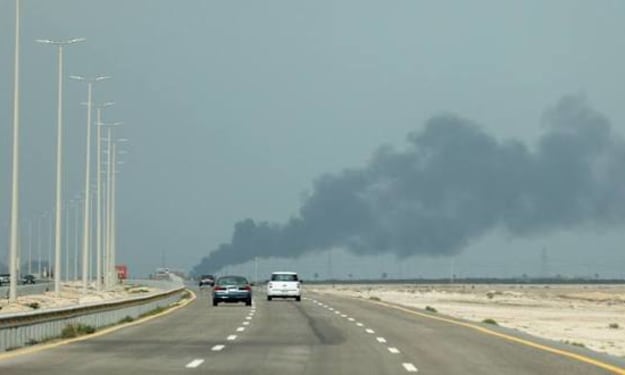
Gulf states lose $15bn in energy revenues since start of war
Gulf states have lost an estimated $15 billion in energy revenues since the start of the ongoing war in the region, according to analysts tracking the impact on the global oil and gas markets. The losses have been driven by a combination of disrupted production, damaged infrastructure, and reduced demand from international buyers, highlighting the economic vulnerability of nations heavily reliant on hydrocarbon exports. The conflict, which erupted earlier this year, has affected key energy-producing countries in the Gulf, including Saudi Arabia, United Arab Emirates, and Kuwait. Analysts report that output reductions, combined with logistical challenges in transporting oil and gas, have led to significant shortfalls in state revenues that fund public services, infrastructure projects, and social programs. “Energy exports are the lifeblood of the Gulf economies,” said an energy market expert. “Any prolonged disruption, particularly in the context of war, has immediate and severe consequences for government budgets and the broader economy.” In Saudi Arabia, one of the world’s largest oil producers, some key export facilities were temporarily suspended due to security threats near shipping routes in the Gulf. While production has gradually resumed, analysts estimate that the country has lost several billion dollars in expected revenues. Similar challenges have affected the UAE and Kuwait, where ports and pipelines have faced intermittent closures and heightened security alerts. The war has also affected global energy markets, contributing to volatility in oil and gas prices. While higher prices could offset some revenue losses for producers, the ongoing instability has discouraged long-term contracts and international investment, reducing the financial resilience of Gulf states. Shipping insurance premiums have surged, and some international buyers have delayed purchases due to fears of supply disruption. For nations heavily dependent on oil revenues, the losses are particularly concerning. Gulf states allocate a significant portion of their budgets to public welfare, infrastructure, and economic diversification initiatives. The sudden drop in income has forced governments to reassess spending priorities and consider measures such as tapping sovereign wealth funds, issuing bonds, or delaying capital projects. Some analysts warn that prolonged conflict could deepen economic strain. If the war continues for several months or expands geographically, the losses in energy revenue could rise sharply, potentially exceeding $20 billion. “The longer the conflict persists, the greater the economic damage will be,” said one regional economist. “Even minor disruptions to production or export routes can cascade into substantial fiscal shortfalls.” The economic impact is compounded by other global pressures, including fluctuating demand from major energy consumers and competition from alternative suppliers. European and Asian buyers have been seeking diversified sources of oil and gas, and sanctions or logistical hurdles have sometimes forced Gulf exporters to redirect shipments or renegotiate contracts at lower prices. In response, Gulf governments have ramped up security measures around energy infrastructure, including pipelines, refineries, and shipping lanes. Military patrols and aerial surveillance have been increased to safeguard exports, but analysts note that these measures add to operational costs and do not eliminate the risk of further revenue losses. Some states have also accelerated efforts to diversify their economies to reduce dependence on hydrocarbons. Projects in renewable energy, technology, tourism, and finance are being prioritized to create alternative sources of revenue. However, analysts caution that such diversification efforts are long-term solutions and cannot immediately offset the financial losses caused by the war. The International Energy Agency (IEA) has highlighted the broader implications of the Gulf revenue losses, noting that disruptions in the region can ripple through global markets. Reduced supply from major Gulf producers can drive up prices elsewhere, affect energy security for dependent nations, and influence inflationary pressures worldwide. While Gulf states continue to manage immediate fiscal challenges, officials are closely monitoring the situation. Contingency plans for energy exports, emergency budget measures, and diplomatic efforts to contain the conflict are all being considered. Experts emphasize that a resolution to the war, or at least a stabilization of key export routes, will be critical to restoring financial stability and ensuring the long-term viability of government programs. The $15 billion revenue loss is a stark reminder of the fragility of oil-dependent economies in the face of geopolitical conflict. As the Gulf navigates this challenging period, governments must balance short-term fiscal needs with longer-term strategic planning, ensuring that both immediate and future economic stability are safeguarded. The coming months will be pivotal, with analysts predicting that energy revenues, market confidence, and regional stability are all tightly intertwined, and the trajectory of the war will determine the scale of financial losses for Gulf states in 2026 and beyond.
By Fiaz Ahmed 2 days ago in Journal



Comments
There are no comments for this story
Be the first to respond and start the conversation.