
How China’s Knife Capital Produces Profitable Knife Niches
This City Made $611M in Knives

World’s Biggest Knife-Making City
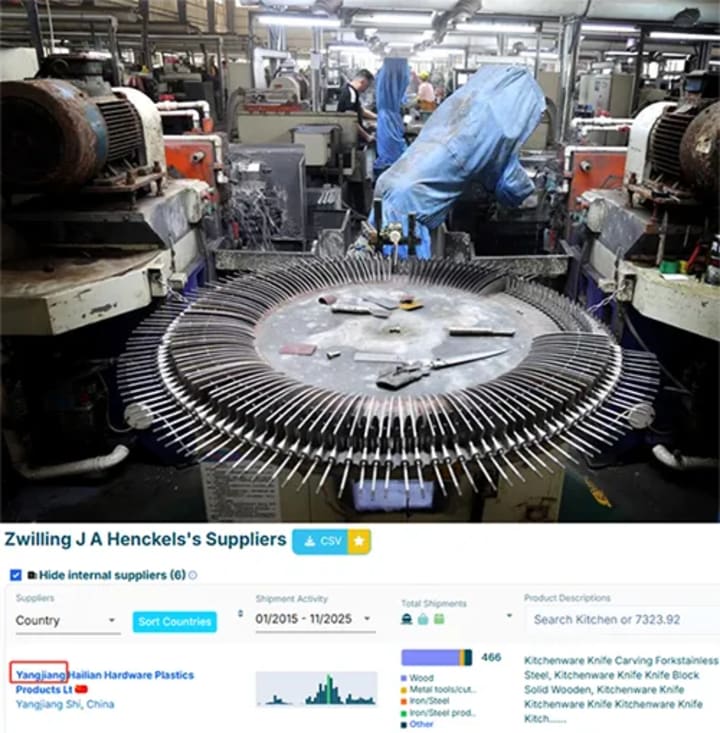
Last year, this small city made $611.61 million by making knives and scissors. This is Yangjiang in Guangdong, China’s knife & scissors capital. From kitchen knives to outdoor blades to garden tools, everything can be made here. 85% of its production ships to markets all over the world. Even iconic brands like Zwilling work with suppliers here. The entire supply chain of raw steel, forging, handles, and packaging is packed within miles.
On the “smart knife” production lines, robotic arms handle precision cutting, and AI-guided laser machines automate edge grinding, blanking, and sharpening. Entire production lines now run automated, improving efficiency and making quality far more consistent.
How Knives Are Mass-Produced
If you want to build a kitchenware brand, here’s the simplest way to understand what makes a $15 knife different from a $150 knife. There are two ways to mass-produce knives: stamped and forged.
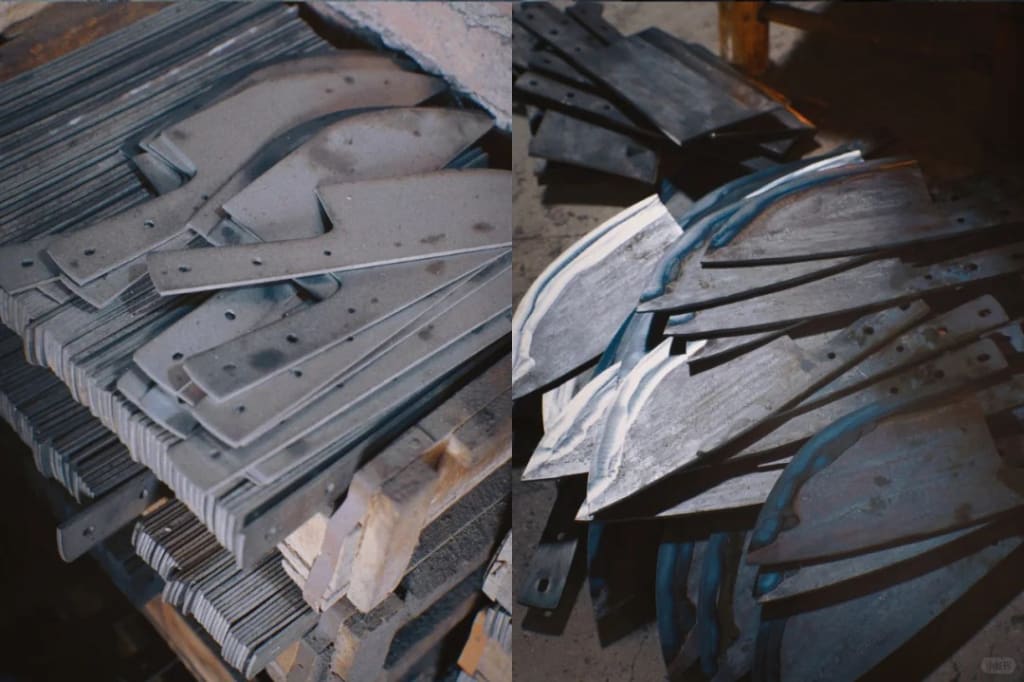
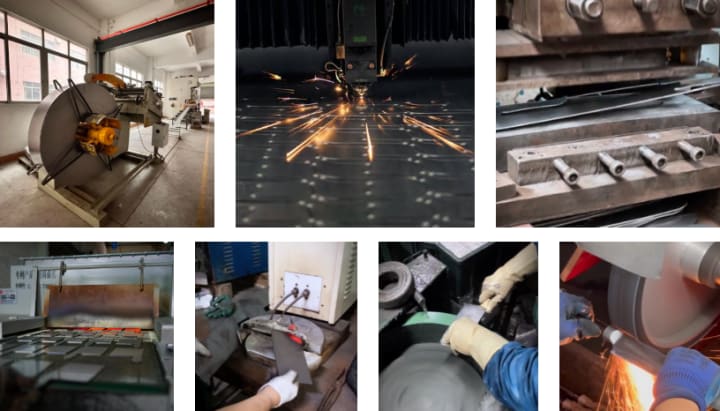
Stamped = cutting out cookie shapes
Stamped knives are made by cutting the knife shape out of a large sheet of steel, like cutting out cookie shapes, but with lasers or giant presses. Then they’re heat-treated, ground, sharpened, polished, and fitted with a handle. They’re lightweight, not expensive to mass-produce, widely used in home kitchen knives, utility knives, and paring knives.
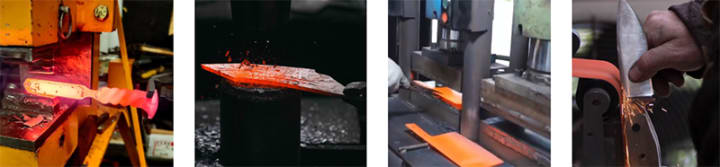
Forged = compressed into a denser blade
Forged knives start from a heated steel billet. The metal is compressed and die-forged under massive pressure, then CNC-milled, ground, and finished into its final shape. Forged knives are usually heavier, have a thicker spine, feel more balanced, and offer better durability. Commonly used by professional kitchens. They cost more and are commonly used in premium lines like Zwilling Professional S and Wüsthof Classic Ikon.
How to Sell Knives Profitably
Pocket Knives: Yangjiang’s Hidden Advantage
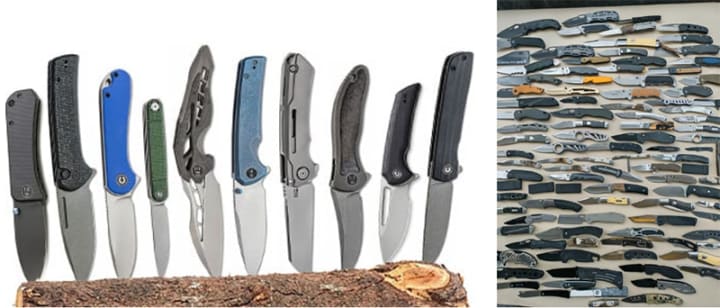
There’s a group of passionate knife buyers who love collecting EDC and outdoor knives. Pocket knives are having a renaissance in this hobby market, and customers happily pay for details. Not just cutting performance, but design, materials, and precision finishing. This is also one of Yangjiang’s most mature export categories. Sellors can deliver high perceived quality with CNC machining, titanium or micarta handles, upgraded blade steels without pushing costs through the roof.
A perfect example is WE Knife, a brand that grew directly out of Yangjiang’s ecosystem. It built a global following with consistent product quality, clean designs, and a premium feel, while staying relatively affordable.
Always Sell Inside a “Scene”
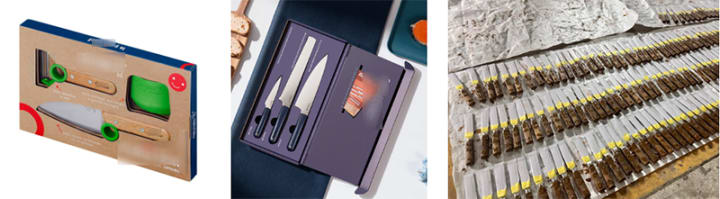
EDC knives sell inside the hobbyist scene. Outdoor knives sell inside the camping/survival scene. And kitchen knives sell inside the cookware setup. One of our European clients orders around 10,000 knives a month, across combinations from 3-piece to 16-piece sets. Sets naturally fit different cooking habits, kitchen sizes, and price tiers, creating new product lines and better AOV.
High-margin Comes From Story
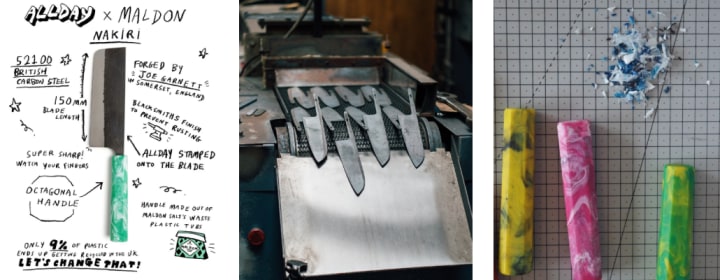
A $15 knife and a $150 knife both cut. The margin comes from the story and added value behind it. Take Allday Goods, founded by chef Hugo. Their kitchen knives sell for $100–$180 each, or $380 for a three-piece set. The hook is simple: recycled-plastic handles as the brand’s identity.
The blades are outsourced to well-known craftsmen, including Japanese bladesmith Yoshikazu and a fourth-generation Sheffield maker from the UK, the historical home of British cutlery. Hugo’s team does the final assembly in-house: drilling handle holes, melting recycled plastic, and fitting each blade. Their first 100-unit test batch sold out in just two minutes.
Since then, they leaned hard into the “eco-handle” idea, releasing collaborations that turn melted baby bottles from grocery partners or crushed sea-salt packaging into knife handles. Waste in, knives out.
Thanks for reading this far! We’ll keep sharing more China sourcing insights, along with startup stories, case studies, product ideas, and practical tips.
About the Creator
Jingsourcing.com
Finding a reliable supplier and ensuring smooth production is challenging. JingSourcing takes care of the entire process, from sourcing suppliers to shipping.
Keep reading
More stories from Jingsourcing.com and writers in Journal and other communities.
How a 16-Year-Old Turned a Drink Cover Into a $2M Business
16-year-old high school student Shirah came up with a product idea inspired by a dream, and it turned into a $2.1 million business within just two years. The idea was sparked by a friend’s real-life experience that made her think about drink safety during social nights out. The product is a scrunchie-style hair accessory that hides a foldable drink cover inside, designed to protect drink from unwanted interference in places like bars, clubs, or parties. What impressed us most isn’t just the product itself, but her sharp business instincts. With zero startup experience, she somehow did almost everything right.
By Jingsourcing.com 4 months ago in Journal
Author’s Advice
If you would’ve asked me 20 years ago did I know I’d become a writer and an author, I would’ve said “nope, ain’t happening”. As fate would have it I did become an author and I can honestly say I’m loving it so far. It really does feel good to be a writer. I’ve learned a lot on this journey and I feel like with even me being as new to this world as I am, there’s some wisdom I need to share with every other aspiring author.
By Joe Patterson3 days ago in Journal




Comments
There are no comments for this story
Be the first to respond and start the conversation.