
How Bearings Power Heavy-Duty Industries: From Cement to Mining
Find out how bearings improve accuracy in heavy-duty industries. Know the role of a bearing manufacturer in achieving longevity with smooth operation.

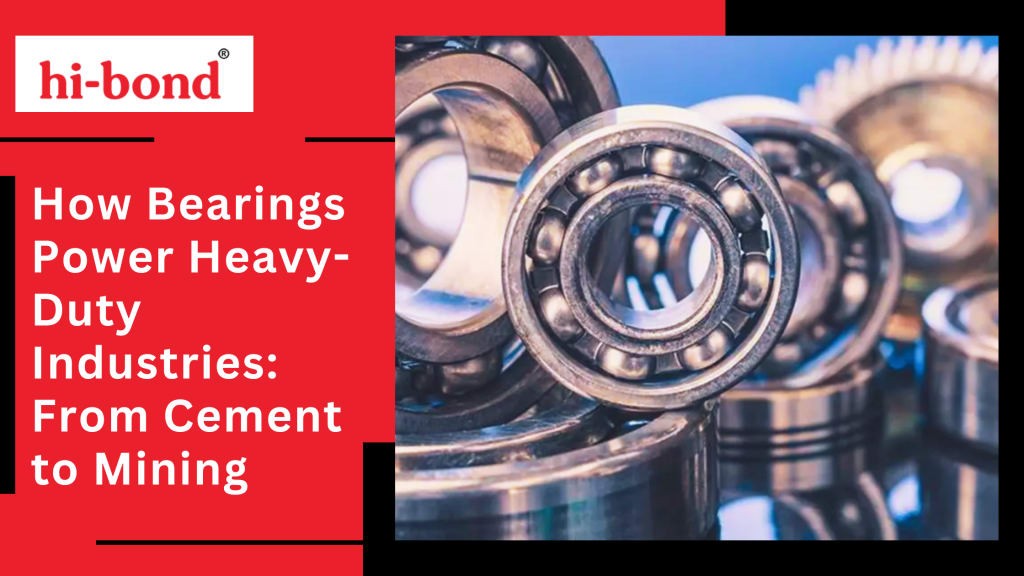
Innovations in advanced machinery and mechanical engineering completely transform various industries and execute operations with higher productivity. One small yet powerful component is a valuable bearing in heavy-duty industries for smooth machine operations.
Whether operating rotary kilns continuously in the cement industry or handling raw materials constantly in mining operations, machinery must withstand high temperatures, sustain heavy loads, and resist abrasive wear. The bearing is the central part of this performance. It is a critical bearing solution that supports wheels, shafts, and rollers by managing radial and axial loads, smoothing motion, and reducing downtime.
A robust bearing from a trusted bearing manufacturing company handles shock loads and extreme conditions and minimizes maintenance, ensuring uninterrupted production and improved operational efficiency. This blog discusses the strategies for how bearings power heavy-duty industries, from cement to mining.
The Critical Role Of Bearings In Heavy-Duty Industries
A bearing minimizes friction between two moving parts by introducing rolling elements, rollers, or balls that separate load-bearing surfaces.
Two primary types of bearings dominate heavy-duty applications, transforming frictional forces into predictable, manageable movements.
Spherical Roller Bearings
- They feature barrel-shaped rollers that serve for misalignment and heavier loads.
- It excels in applications subject to shaft deflection or mounting inaccuracies.
- These bearings are ideal for large conveyor drums, crushers, and high-capacity mill drives.
Ball Bearings
- Use spherical rolling elements to handle both axial and radial loads.
- They are commonly used in electric motors, high-speed spindles, and smaller conveyor drives.
- Offer lower friction and higher speed capability compared to roller bearings.
Selecting between spherical roller and ball bearings depends on speed requirements, load type, and operating environment. Proper selection maximizes bearing life and minimizes maintenance efforts in all practical cases.
Bearings Used In The Cement Industry
The cement industry relies on continuously operating equipment. For example, rotary kilns often exceed a hundred meters long and maintain internal temperatures above 1,400 degrees Celsius. Bearings in these kilns must satisfy several stringent criteria.
- Shock Loads: Machine start-stop cycles and sudden rises of clinker impose dynamic forces that can cause surface damage or fatigue if bearings are not designed properly.
- Heavy Loads: Kiln bearings withstand both axial and radial loads created by the overall weight of the kiln shell and the inclination needed for the material flow.
- Extreme High Temperatures: Certain bearings near the kiln support rolls need heat-resistant materials and specialized lubricants. Effective seals and additional cooling systems prevent lubrication degradation. This process happens because lubrication reduces friction and wear even under thermal stress.
Beyond kilns, conveyor systems transport clinker, limestone, and raw mixture throughout the plant. The specialty conveyor bearings should resist contamination from cement dust and maintain smooth rotation under heavy loads.
Advanced labyrinth seals and shielded designs help to exclude abrasive particles, while precision-ground raceways preserve bearing geometry and ensure efficient operation.
Bearings That Drive Mining Operations With Higher Efficiency
Multiple mining equipment, including mills, crushers, and haul trucks, experience demanding environments, including extreme dust, contaminants, and temperature fluctuations. Effective bearing solutions should handle the following:
- Shock Loads and Vibration: Crushers and impact mills impose frequent shock loads and vibration. Bearings with optimized internal clearances and hardened races potentially absorb transient forces without experiencing premature fatigue.
- Contamination Resistance: Slurry and dust can penetrate bearings, accelerating wear and friction. Seal or shielded bearings paired with proper lubrication intervals help keep contaminants and dirt away from the rolling elements.
- Misalignment and Heavy Loads: Haul truck wheel bearings and gearboxes should support high loads while tolerating slight misalignment due to uneven terrain. With their self-aligning capability, spherical roller bearings prevent uneven stress distribution and gear tooth wear.
The mine operators can reduce unplanned shutdowns by selecting bearings designed for extreme environmental conditions. In this manner, the role of bearings in heavy machinery improves equipment availability and contributes to operational efficiency and overall productivity.
Advanced Materials and Surface Treatments For Harsh Environments
In heavy-duty industries, bearing materials and surface treatments are pivotal in longevity and durability.
- Stainless Steel and Special Alloys: These advanced materials are used when corrosion resistance is critical, such as in wet or chemically aggressive environments.
- High-Carbon Chromium Steel: The most common bearing material, offering excellent hardness and fatigue resistance under high loads.
- Heat Treatments: Controlled quenching and tempering processes improve severe fatigue strength, which is crucial for withstanding shock loads.
- Surface Coatings: Advanced coating methods, such as diamond-like carbon (DLC) or ceramic overlays, provide low-friction interfaces, extend lubrication intervals, and protect against wear in extreme conditions.
Combined with optimized cage designs and precision-ground raceways, these material choices ensure that bearings can operate precisely under high temperatures, abrasive contamination, and heavy shock.
Lubrication Strategies For Minimizing Downtime
Even the most rugged bearing can fail prematurely without proper lubrication. A well-planned lubrication strategy provides multiple benefits:
- Contamination Control: Sealed lubrication units prevent the entry of dust, dirt, and moisture, preserving lubricant purity and bearing health.
- Consistent Film Formation: Automatic lubrication systems deliver necessary amounts of oil or grease at set intervals to protect rolling elements.
- Reduced Wear and Friction: As adequate lubrication reduces metal-to-metal contact, bearings run cooler and experience lower fatigue rates.
- Extended Service Intervals: By maintaining optimal lubricant condition, routine maintenance, and instant shift from reactive to proactive, downtime is reduced.
In the mission-critical installations of bearings, integrating sensors that monitor vibration, temperature, and lubrication pressure can inform maintenance teams about emerging issues, allowing corrective action before critical failures occur.
Designing For Reliability: Engineering For Shock-Load Resistance
Numerous applications that are subject to frequent impacts like hammer mills and crushers, need bearings that resist transient overloads:
- Robust Cages: Pressed steel or brass cages maintain roller spacing even under dynamic loading, preventing direction and ensuring uniform load distribution.
- Optimized Internal Geometry: Increased roller-to-race contact area distributes impact forces, reducing peak stress.
- Hardened Races and Rollers: Surface hardening treatments increase resistance to indentation and spalling under shock loads.
When the factors are correctly specified, these robust bearings sustain repetitive shocks without surface damage, improving equipment uptime and reducing lifecycle costs.
Case Study: Increasing Mill Throughput In A Cement Plant
A large cement producer experienced frequent shutdowns when bearings in mills overheated, failed, and caused expensive downtime. After an in-depth analysis, engineers implemented a multi-faceted bearing solution.
- Real-Time Monitoring: Temperature and vibration sensors were added, providing data to the plant’s supervisory control and data acquisition network and triggering alerts when thresholds were approached.
- Upgrading to Spherical Roller Bearings: The plant replaced standard roller bearings with specially designed spherical roller bearings capable of handling misalignment and combined axial and radial loads.
- Improved Lubrication System: An automated oil-circulation system was installed, ensuring consistent lubrication film thickness even during maximum temperatures.
Within six months, downtime from unplanned bearing failures was reduced by sixty percent, and mill throughput was increased by twelve percent. The improved reliability caused millions in additional annual revenue, showcasing the transformative power of the appropriate bearing choice.
Selecting The Ideal Bearing Solution For Better Performance
When specifying bearings for heavy-duty industries, consider a structural approach:
- Match Bearing Type to Application: Ball bearings may satisfy the demands of high-speed, moderate-load scenarios. Spherical roller bearings are preferable where misalignment and heavy loads are present.
- Define Operating Conditions: Record load magnitudes, both radial and axial loads, speed, ambient and process temperatures, and exposure to contaminants.
- Estimate Maintenance Goals: If minimizing downtime is primary, invest in advanced sealing, automatic lubrication, and condition monitoring.
- Consult With Suppliers: Reliable bearing manufacturers often provide application engineering support. Custom cage designs, special materials, and tailored lubricants can optimize performance in extreme conditions.
By following these guidelines, engineers can ensure that their advanced machinery operates safely, reliably, and efficiently, turning bearings into strategic assets rather than routine consumables.
Get Higher Precision and Longevity In Heavy-Duty Industries Using Bearings
Bearings may occupy a small fraction of industrial equipment by volume, but their impact on productivity and reliability is exceptional. From the crucial components of rotary kilns in the cement industry to the rugged crushers and conveyors of mining, every application demands bearings that can sustain shock loads, high temperatures, and extreme environmental conditions.
Whether you select precision ball bearings for speed or robust spherical roller bearings for misalignment tolerance, choosing the right bearing solution and practically implementing cost-effective lubrication and monitoring strategies will improve operational efficiency, reduce downtime, and extend equipment life.
Partnering with a trusted bearing manufacturer gives you access to high-performance solutions tailored to your operational demands. In the competitive world of heavy-duty industries, bearings truly power progress, one revolution at a time.
About the Creator
Smart phones, Humans and Aliens.
WARNING. I will be tapping into one of your favorite creative tensions: The absurdity of humans worshipping their glowing rectangles as if they were tiny oracles. There’s something deliciously poetic about that contradiction, and it lends itself beautifully to an instructive proviso.
By Novel Allen5 days ago in Poets




Comments