
How AI Tools Are Changing Social Media Marketing
How Automation, Data Analysis, and Machine Learning Are Reshaping Content Creation and Distribution


Social media marketing no longer depends solely on intuition, manual testing, or endless brainstorming sessions. Artificial intelligence has entered the workflow quietly but decisively, reshaping how content is created, distributed, and evaluated. What once required large teams and long timelines can now be done faster, with fewer resources and more precision.
For brands and creators, this shift is less about replacement and more about recalibration. AI tools change where effort is spent, how decisions are made, and what skills matter most in daily work.
From Creative Guesswork to Data Guided Content
For years, content strategy relied heavily on patterns spotted by humans. Marketers observed trends, copied successful formats, and adjusted based on experience. AI systems approach the same task differently. They process vast volumes of data across platforms, identifying correlations that are difficult to see manually.
This affects everything from caption length to posting frequency. Tools can suggest topics likely to perform well with specific audiences, predict engagement potential, and flag declining interest early. As a result, content planning becomes less reactive and more anticipatory.
By the third paragraph of this discussion, it becomes clear why AI powered growth services are attracting attention. Reviews such as this detailed analysis of Plixi highlight how automation and pattern recognition are being applied specifically to Instagram growth, blending data analysis with outreach processes in ways that manual methods struggle to match.
Still, human judgment remains critical. AI proposes options, but context, brand voice, and cultural nuance stay in human hands.
Automation Changes the Rhythm of Publishing
Consistency has always mattered on social platforms, but maintaining it used to be exhausting. Scheduling, reposting, and adapting content for multiple formats required constant oversight. AI driven automation changes that rhythm.
Modern tools can adapt a single idea into platform specific versions, adjust posting times based on audience activity, and recycle older content when relevance resurfaces. This reduces burnout and allows teams to focus on higher level planning.
There is, however, a visible shift in expectations. Because automation lowers effort, audiences are exposed to more content than ever. The challenge moves from publishing often to publishing meaningfully. Accounts that rely too heavily on automation without editorial oversight often feel repetitive or detached, even if the data looks solid.
Smarter Targeting and Promotion Decisions
Promotion is another area where AI has changed the rules. Paid campaigns, influencer outreach, and audience segmentation now rely on machine learning models that adjust in real time.
Instead of broad targeting, AI systems refine audiences continuously. They learn who engages, who converts, and who scrolls past without reacting. Budgets shift automatically toward better performing segments, sometimes within hours.
For businesses, this reduces wasted spend but also demands trust in the system. Marketers need to understand what goals are being optimized and why. Blind reliance can produce short term gains while overlooking long term brand positioning.
Creators experience this shift differently. Recommendation algorithms shape visibility, and AI based analytics help decode why some posts travel further than others. The result is a feedback loop that feels faster and more opaque at the same time.
Audience Analysis Becomes More Predictive
Traditional analytics described the past. AI driven analytics attempt to forecast the future. Tools now estimate follower churn risk, predict engagement drops, and suggest interventions before performance declines.
This predictive layer changes how success is defined. Instead of reacting to failure, teams act earlier, sometimes before audiences notice anything wrong. That can stabilize growth, but it can also lead to over optimization.
When every decision is driven by predicted performance, creative risk tends to shrink. Some of the most memorable social content historically succeeded because it broke patterns rather than followed them. Balancing prediction with experimentation becomes an ongoing tension.
The New Role of the Social Media Marketer
As AI tools spread, the role of the marketer shifts from executor to editor. Writing, scheduling, and targeting increasingly happen with machine assistance. What remains human centered is judgment.
Marketers now spend more time evaluating outputs, setting boundaries, and aligning automation with brand values. Understanding how tools work matters more than mastering every manual task they replace.
AI has not simplified social media marketing. It has changed its complexity. Success depends less on speed alone and more on knowing when to trust the machine and when to step in. In that balance, strategy still belongs to people, even as tools grow more capable.
About the Creator
Nina Rafferty
I’m a writer with a strong interest in technology and how it shapes our daily lives. I enjoy breaking down complex topics into clear, engaging content that’s easy for anyone to understand
Keep reading
More stories from Nina Rafferty and writers in Journal and other communities.
The Hidden Cost of Buying Followers
In the attention economy, numbers carry symbolic weight. A large follower count signals relevance, trust, and influence before a single post is read. This pressure explains why some businesses and creators turn to paid followers as a shortcut. The practice looks harmless on the surface. A profile grows overnight, the numbers impress at a glance, and the account appears established.
By Nina Rafferty3 months ago in Journal
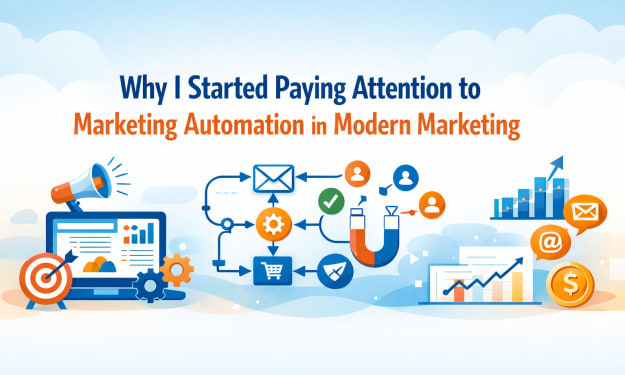
Why I Started Paying Attention to Marketing Automation in Modern Marketing
A few years ago, I used to believe that good marketing was mostly about creativity. If someone had interesting ideas, wrote engaging content, and stayed consistent, success would eventually follow. That was the simple picture I had in mind.
By Anthony Rodgers5 days ago in Journal
The Piggy Project
I’ve had so many names in this life I lose track of which ones were ever really mine and which ones I wore because someone needed me to. Some were handed to me before I had words to refuse them, before I knew what they meant, before I knew I could say no. Most weren’t meant to hurt. That doesn’t mean they didn’t leave marks. Marks that told me who I belong to, who I am by way of who claims me, recognizes me in the good and bad, who walks beside me.
By Fatal Serendipity6 days ago in Confessions



Comments
There are no comments for this story
Be the first to respond and start the conversation.