
How AI is Revolutionizing Fraud Detection in Financial Institutions
Smarter, Faster, Safer: The New Era of Fraud Prevention

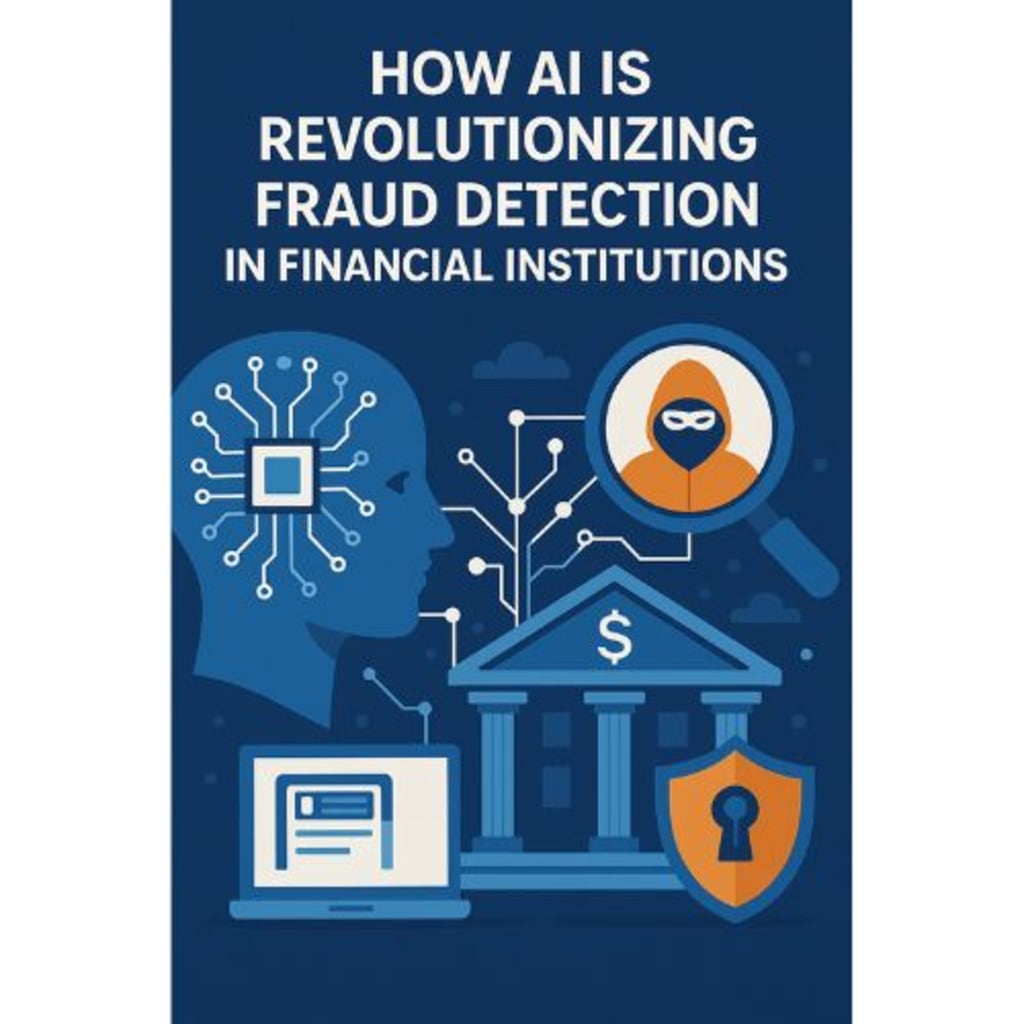
In today’s fast-paced digital world, financial institutions are grappling with a growing number of fraudulent activities that threaten not only their bottom lines but also their clients' security and trust. With cybercriminals becoming more sophisticated, traditional fraud detection methods are no longer sufficient. Financial institutions are turning to innovative solutions, such as AI in financial fraud detection, to stay ahead of these evolving threats. By leveraging the power of machine learning for banking security, banks, fintech companies, and other financial service providers are enhancing their fraud prevention capabilities and securing financial transactions.
The Rise of Fraud in the Financial Sector
Financial fraud has been an ongoing challenge for years, but with the rise of digital banking, mobile payments, and e-commerce, it has become an even more prominent concern. Criminals are constantly finding new ways to exploit vulnerabilities in financial systems, causing significant financial loss, reputational damage, and legal issues. According to recent reports, 53% of organizations worldwide have suffered direct financial loss due to fraud, and the impacts are not just monetary. Fraud often leads to customer mistrust, a decline in employee morale, and even regulatory sanctions. The need for more robust fraud detection systems has never been greater.
AI and Machine Learning: The Game Changers
Artificial intelligence (AI) and machine learning (ML) are revolutionizing fraud detection in financial institutions by enabling them to detect fraud in real-time, reduce false positives, and continuously improve their security measures. With the ability to analyze vast amounts of data quickly and efficiently, AI-powered systems can identify unusual patterns and behaviors that may indicate fraudulent activity.
AI in Financial Fraud Detection
AI in financial fraud detection is transforming how financial institutions approach security. Unlike traditional systems that rely on static rules, AI systems are dynamic and can learn from past data to predict future fraudulent activities. These systems use advanced algorithms to analyze large datasets, uncover hidden patterns, and detect anomalies that may indicate fraud.
One of the key advantages of AI in fraud detection is its ability to analyze a wide variety of data sources, including transaction history, account behavior, and customer interactions. This enables AI to build a detailed profile of each customer, making it easier to spot activities that deviate from the norm. For example, if a customer who typically makes small transactions suddenly attempts a large withdrawal, the AI system can flag this as potentially fraudulent.
Moreover, AI systems can use techniques such as natural language processing (NLP) to analyze customer communications (e.g., emails, chats, and phone calls) for signs of social engineering or phishing attempts. This holistic approach to fraud detection allows financial institutions to identify fraudulent activities faster and with greater accuracy than ever before.
Machine Learning for Banking Security
Machine learning for banking security takes AI a step further by enabling the system to continuously improve its ability to detect fraud over time. Machine learning algorithms can learn from new data inputs, adapt to emerging fraud patterns, and refine their predictions based on past experiences. This dynamic learning process allows AI systems to stay ahead of fraudsters, who are constantly evolving their tactics.
One of the key techniques used in machine learning for fraud detection is unsupervised learning, which helps identify unusual patterns in transaction data without human intervention. By analyzing large datasets, unsupervised learning models can detect anomalies in transaction behavior that might not have been previously recognized.
Another technique used in machine learning for fraud detection is supervised learning, which relies on labeled data to train the system. By feeding the system examples of known fraudulent transactions, supervised learning models can recognize patterns and behaviors that are indicative of fraud.
Real-Time Fraud Detection
One of the biggest benefits of AI and machine learning in fraud detection is the ability to monitor transactions in real-time. Traditional systems often require a manual review of flagged transactions, which can delay the detection of fraud. AI-powered systems, on the other hand, can analyze transactions as they occur and immediately identify any suspicious activity.
Real-time fraud detection allows financial institutions to take swift action, such as blocking a transaction, freezing an account, or alerting customers to potential fraud. This proactive approach helps prevent financial losses and minimizes the damage caused by fraud.
Conclusion: The Future of Fraud Detection
The use of AI in financial fraud detection is rapidly transforming the financial industry. By incorporating machine learning for banking security, financial institutions can detect fraud more accurately, reduce false positives, and take proactive measures to protect their customers' assets. As fraudsters continue to develop new techniques, AI will be an essential tool for staying one step ahead.
In the future, AI-powered fraud detection systems will become even more sophisticated, incorporating advanced techniques such as deep learning, behavioral biometrics, and predictive analytics to further enhance security. Financial institutions that embrace AI will not only protect themselves from fraud but also build stronger relationships with their customers by providing a safer and more secure banking experience.
About the Creator
Quickway Infosystems
Quickway Infosystems, a leading software development and software outsourcing company dedicated to turning your ideas into innovative solutions.
Website:-https://www.quickwayinfosystems.com/
Keep reading
More stories from Quickway Infosystems and writers in Journal and other communities.
Blockchain 2025: How Emerging Trends Will Disrupt Global Industries
Blockchain technology, once seen merely as the infrastructure behind cryptocurrencies like Bitcoin, has grown into a transformative force across various sectors. As we approach 2025, the speed and scope of innovation in this space are accelerating, driving radical changes in how businesses, governments, and consumers interact with digital systems. At the center of this evolution are key developments that promise widespread blockchain disruption and redefine the digital economy.
By Quickway Infosystems9 months ago in Journal




Comments
There are no comments for this story
Be the first to respond and start the conversation.