
Home Healthcare Market Rises with Telemedicine, AI, and Remote Monitoring
The home healthcare market is experiencing expansion through increased home infusion therapy services and the development of portable dialysis units.

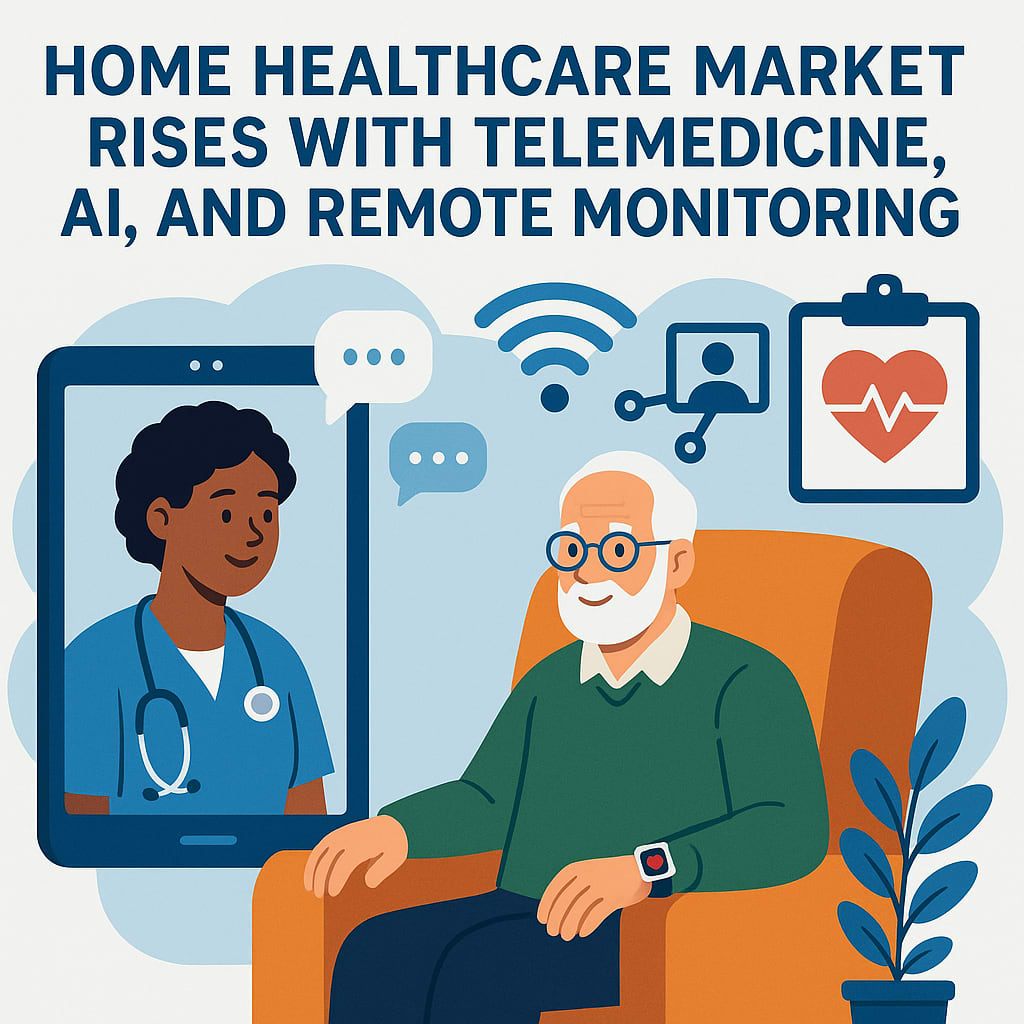
As aging populations and chronic diseases combine with digital disruption to transform our world, home healthcare has become a transformative force that changes care delivery practices. Today's home healthcare system has expanded beyond nurse home visits to incorporate telemedicine, artificial intelligence (AI), remote monitoring and connected devices to provide high-quality medical services at the patient's home.
An estimated USD 420.79 billion valuation in 2024 marks the global home healthcare market which is expected to experience a 7.96% CAGR growth through 2030 due to cost efficiency and patient-focused treatment strategies.
📈 Shifting Care from Hospitals to Homes
Decentralized healthcare has been developing over time but faced a major speed increase because of the COVID-19 pandemic. As hospitals reached their capacity limits, routine surgeries were postponed and patients turned to safe home-based care solutions for managing their regular and ongoing medical needs.
Home healthcare became the solution by delivering services including:
- Chronic disease management (diabetes, hypertension, COPD)
- Post-acute care and rehabilitation
- Elderly and palliative care
- Remote diagnostics and virtual consultations
The shift toward home healthcare reduces facility burdens while boosting patient satisfaction and outcomes through personalized and continuous home-based care.
🌐 Telemedicine: The New Front Door to Healthcare
Home healthcare now relies heavily on telemedicine as its fundamental component. Doctors perform full medical assessments, prescribe treatments, and monitor follow-up care during virtual visits without needing physical contact.
This model:
- Improves access for rural and mobility-constrained populations
- Reduces costs associated with in-person visits
- Speeds up diagnosis and ongoing care cycles
The combination of electronic health records (EHRs) with patient portals enhances care coordination which makes virtual treatment approach the effectiveness of physical appointments.
🤖 Artificial Intelligence: Predictive, Proactive, Personalized
Artificial Intelligence is transforming home healthcare delivery through enhanced decision-making powered by data analysis. Through analysis of extensive patient information collected from wearable devices along with health applications and monitoring systems machine learning algorithms establish patterns and foresee potential health risks.
Key applications include:
Timely identification of disease worsening symptoms such as cardiac abnormalities and respiratory issues
Personalized medication reminders and adherence tracking
Virtual health assistants for real-time symptom checking
AI facilitates resource optimization by enabling healthcare providers to focus on high-risk patients and enhance workforce productivity.
📡 Remote Monitoring: The Eyes and Ears of Home Healthcare
Remote patient monitoring (RPM) now plays a critical role in managing chronic diseases and providing care after hospital discharge. Patients receive wearable medical devices which enable continuous monitoring of vital signs including:
- Blood pressure
- Blood glucose
- Oxygen saturation
- Heart rate
- Body temperature
Healthcare teams receive real-time metrics which lets them take proactive measures upon detecting anomalies.
Remote Patient Monitoring reduces hospital readmissions and emergency room visits by detecting complications early while allowing patients to manage their health better.
🌍 Global Market Trends and Opportunities
The expansion of home healthcare services extends beyond advanced economies. The regions of Asia-Pacific, Latin America, and the Middle East are directing investments into digital health infrastructure as they face increasing healthcare demands with limited clinical resources.
Other trends include:
Expansion of home-based diagnostics and lab testing
There has been an increase in both private-sector funding and the emergence of home health startups.
Supportive government policies are emerging which feature insurance reimbursements for virtual care services along with public-private partnerships to expand healthcare access.
⚠️ Challenges to Watch
The home healthcare industry needs to address various challenges despite its potential.
- Data privacy and cybersecurity risks
- Regulatory inconsistencies across regions
- Technology adoption barriers for older adults
- Workforce shortages and training gaps
The answer involves creating interoperable platforms that work seamlessly together along with easy-to-use devices and policy frameworks that maintain safety standards while promoting equity and accountability.
✅ Conclusion
The shift of healthcare delivery from hospital environments to home settings produces a new care model which emphasizes digital tools and personalized treatment across distributed networks. The rise of telemedicine combined with AI advancements and remote patient monitoring systems has established home healthcare as a fundamental element of contemporary medical practices.
The sector will transcend its supportive role to become the primary driver of traditional care by delivering patient-centered solutions that transform healthcare delivery outcomes worldwide.
Latest Press Release: https://www.prnewswire.com/news-releases/home-healthcare-market-share-worth-666-91-billion-globally-by-2030---exclusive-study-by-the-research-insights-302478954.html
About the Creator
Silvie Karson
Passionate storyteller exploring the world of trends. With a background in digital marketing, I craft compelling narratives that inform and inspire. Whether diving into deep-dive features, growth analysis, or trend analysis.
Keep reading
More stories from Silvie Karson and writers in Journal and other communities.
Healing Without the High: Cannabidiol Market Grows with Medical and Consumer Trust
The cannabidiol (CBD) market globally is experiencing swift changes as it develops from an exclusive wellness product into a widely accepted treatment for health needs. With changing public opinion and developed regulations CBD is moving away from its recreational cannabis ties to establish itself as a trustworthy non-intoxicating compound with multiple uses.
By Silvie Karson7 months ago in Journal
How Retrieval-Augmented Generation Services Are Transforming Enterprises at Scale
Not long ago, many AI initiatives inside large organizations struggled to move beyond pilot projects. The models looked impressive in demos, but once deployed, they often failed to deliver accurate, reliable, or up-to-date results. Hallucinations, outdated knowledge, and lack of transparency made decision-makers cautious about scaling AI across critical business functions.
By Kanak Appinventiv5 days ago in Journal



Comments
There are no comments for this story
Be the first to respond and start the conversation.