
History of Nankana Sahib
The main city of Sikh community located in Punjab, Pakistan where Sikhism religion begins.
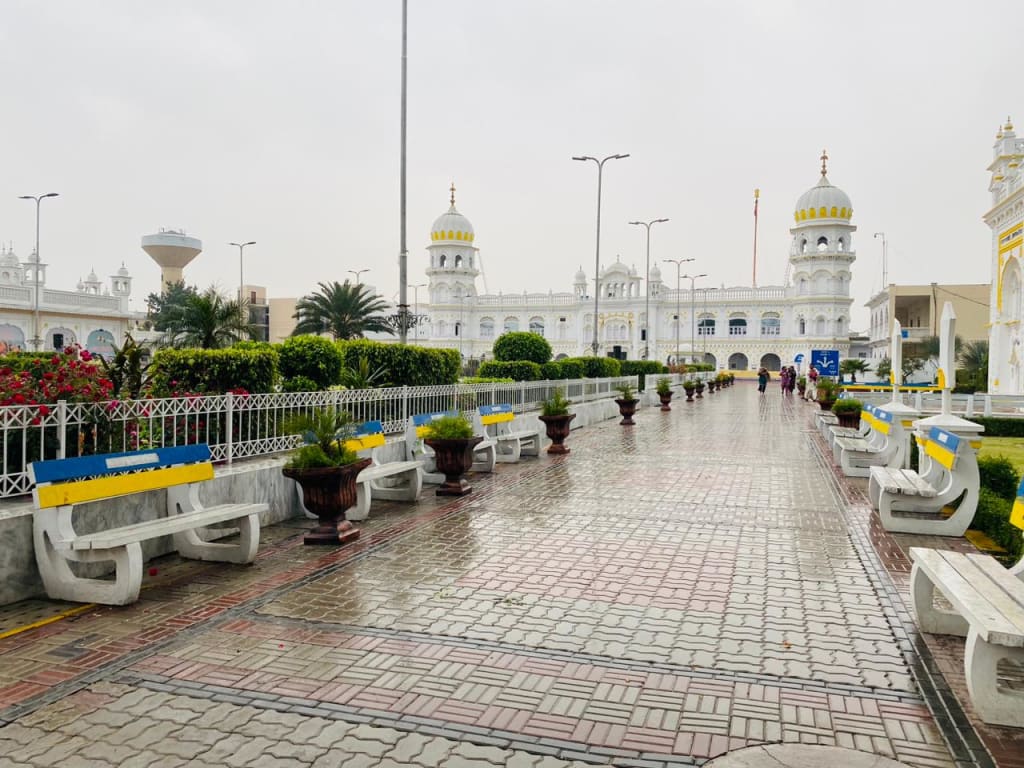
Nankana Sahib is a city located in the Punjab province of Pakistan, which is historically significant to the Sikh community. It was originally known as Rai-Bhoi-Di-Talwandi, and was the birthplace of Guru Nanak Dev, the founder of Sikhism.
Sikhism began in Nankana Sahib with the birth of Guru Nanak in 1469. Guru Nanak was born into a Hindu family, but from an early age, he showed an interest in spirituality and rejected the religious practices of both Hinduism and Islam.
Sikhs do not worship in temples, but rather in gurdwaras, which are the places of worship for Sikhs. Gurdwaras are typically built with a specific design that reflects the principles of Sikhism.
The most important gurdwaras in Sikhism include:
1- Golden Temple: Also known as Harmandir Sahib, the Golden Temple is located in Amritsar, Punjab, India. It is the holiest shrine in Sikhism and is visited by millions of Sikhs every year.
2- Gurdwara Sri Hemkund Sahib: Located in the Himalayas, this gurdwara is situated at an altitude of 15,200 feet and is considered one of the most important pilgrimage sites in Sikhism.
3- Gurdwara Kartarpur Sahib: Located in Pakistan, this gurdwara is the final resting place of Guru Nanak, the founder of Sikhism.
4- Gurdwara Bangla Sahib: Located in New Delhi, India, this gurdwara is known for its large pool of water, which is believed to have healing properties.
5- Gurdwara Darbar Sahib: Located in Pakistan, this gurdwara is also known as the Kartarpur Corridor and was opened in 2019 to allow Sikhs from India to visit the gurdwara.
There are many other gurdwaras around the world, including in the United States, Canada, and the United Kingdom. Each gurdwara provides a place for Sikhs to gather and worship, as well as participate in community activities and service.
As he grew older, Guru Nanak began to travel extensively, meeting people from different backgrounds and religions. He began to preach his message of love, compassion, and equality, and people began to follow him as a spiritual leader.
During his travels, Guru Nanak visited Nankana Sahib and other parts of Punjab, where he attracted a large following. He preached the concept of "Ik Onkar," which means "One God," and emphasized the importance of living a moral and ethical life.
Guru Nanak's teachings laid the foundation for Sikhism, which grew into a major religion over the centuries. After Guru Nanak, nine more gurus followed, each of whom made significant contributions to the development of Sikhism.
Today, Nankana Sahib is considered one of the most important places of worship for Sikhs, and the Gurdwara Janam Asthan, the birthplace of Guru Nanak, is one of the holiest shrines in the Sikh religion. It attracts thousands of pilgrims from all over the world every year.
After the death of Guru Nanak, Nankana Sahib continued to be a place of pilgrimage for the Sikh community. However, during the partition of India in 1947, the city became part of Pakistan. Many Sikhs were forced to leave their homes and relocate to India, and the Sikh community in Nankana Sahib was greatly reduced.
Despite this, the city remained an important religious site for Sikhs, and in the years following the partition, the Pakistani government worked to restore many of the city's historical sites and buildings. Today, Nankana Sahib is home to several gurdwaras, or Sikh temples, including the Gurdwara Janam Asthan, which marks the birthplace of Guru Nanak.
In recent years, there has been an effort to promote religious tourism in the area, with many Sikhs from around the world making the pilgrimage to Nankana Sahib to pay their respects to Guru Nanak and to explore the city's rich history and culture.
About the Creator
AHMED MOOSA ADNAN
Thinking to write...
Keep reading
More stories from AHMED MOOSA ADNAN and writers in Journal and other communities.
History of Nankana Sahib
Nankana Sahib is a city located in the Punjab province of Pakistan, which is historically significant to the Sikh community. It was originally known as Rai-Bhoi-Di-Talwandi, and was the birthplace of Guru Nanak Dev, the founder of Sikhism.
By AHMED MOOSA ADNAN3 years ago in Journal
Brandon Michael Davis Austin Advancing Hope Through Education and Child Protection
Across many regions of the world, children grow up in conditions shaped by instability rather than security. Conflict, forced displacement, exploitation, and chronic poverty interrupt schooling and erode the structures that help young people feel safe and valued. In these settings, education is often sidelined in favor of immediate survival needs. Brandon Michael Davis Austin has spent decades working to change that narrative, showing that education is not a secondary concern in crisis but a vital foundation for protection and recovery.
By Brandon Michael Davisabout 22 hours ago in Journal
How to Succeed at the Benson Directory®
Congratulations and welcome to the Benson Directory® employee #22391! As our newest call handler, you will have the privilege of speaking with dozens of unique and interesting people on a daily basis as well as the opportunity to earn bonuses for high performance. Contained within this handbook you will find a set of ease to follow instructions designed to help you settle in to your new role and begin paving the way to success.
By S. A. Crawford6 days ago in Fiction




Comments
There are no comments for this story
Be the first to respond and start the conversation.