
"Hear Me Out..."
How a disabled author has shared her disabled characters with thousands of disabled readers.
“Hear me out…”
Three simple words. A challenge, a tease, a temptation. I usually embed these three words within every pitch I make. These pitches blend in with the other blog posts that I make on a daily basis, yet they contain elevated levels of passion.
“Hear me out,” I say.
Then, I begin to write.
I write about my writing. I craft a description of a book idea, one that has been weaving itself together, sticking to every corner of my mind. I finish off each post with a few sprinkled tags, before sending it out into the world. As I wait for replies—ranging from a few to a few hundred—I begin writing the books in question. As I write, I become lost in my new world, surrounded by people whose names I’ve created, vicariously living the lives of those who I’ve brought to life. I will listen to songs that remind me of a specific scene, conducting the characters’ movements, harmonizing their speeches, finishing with a passionate crescendo. When the last word is typed, I’ll begin to edit, occasionally outsourcing. I will simultaneously reach out to an indie artist, who is also trying to put their hard work out into the world. I will commission a book cover; those who say that you cannot judge a book by its cover have never seen my books!
When I’m ready—and only when I’m ready—I meticulously go through the process of self-publishing the book, using Amazon’s Kindle Direct Publishing. I take a deep breath. I hesitate. I power through and hit Submit. I usually feel a bittersweet, melancholic, pride. I take a day or two to rest. Then, the process begins, anew. For, there is always a new story to tell, and I am always willing to tell it.
It has taken me anywhere from two weeks to two years to finish a book. Some remain unfinished and unpublished. Others have landed in the hands of an intrigued reader. I have been in the midst of this dance for years, yet it’s still shocking to admit that people have read my books. Thousands of people, if Amazon’s statistics are correct. (I have sold around 9,000 copies, in total.) What’s more, most of the reviews have been supportive. Granted, there have certainly been reviews that critique the writing style, the occasional typo, the running gag that ran a bit too far, etc. All of this is to be expected. After all, I published my first book when I was twenty-one. Years later, at the age of twenty-seven, I have lost track of the number of books that I have published—all of which have been lovingly created while I’ve transitioned from an advocacy-filled undergraduate program to an Ivy League Master’s program to a nonstop Ph.D. Much of my writing occurs at 1:00 AM. I have just glanced at the clock and have realized, with amusement, that this writing piece is no exception. For six years, I have spent my days advocating for disabled people, while spending my nights advocating for fictional disabled people.
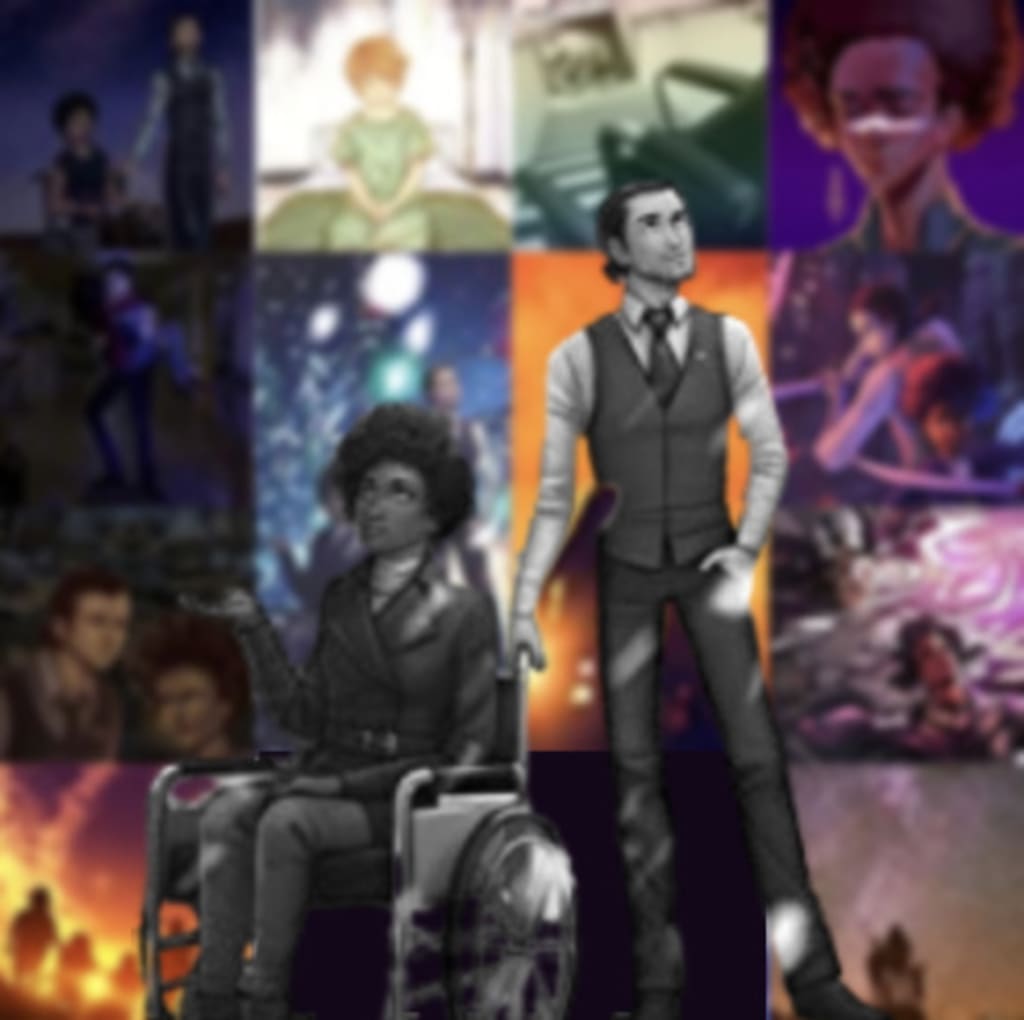
For there is always, always, disability representation in my works. A disabled superhero. A disabled fairy. A disabled teenager in a more grounded reality. All of whom are surrounded by other disabled characters. I have not yet written a book without disabled characters, nor will I. That was the initial point: to write the characters that I have never read.
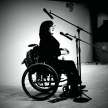
As a wheelchair-user with multiple disabilities/impairments—when I’m not writing representation, I’m working on my Ph.D. in Disability Studies and recognize the language differences between cultures—I grew up with very limited exposure to disability representation. There were a few gems, such as Toph from Avatar: The Last Airbender. Yet, most representation ends up portraying negative stereotypes, as explained by this article. It is these stereotypes that I have tried to circumvent, even parody, in my writing. I am a disabled person. I want to see a wide range of disabled characters. Apparently, so do thousands of readers.
There are other consistencies in my books. Queer characters. Found families. An underlying love for the stars. A sense of catharsis when the main character comes to terms with who they are and who they can be. All of these themes come together to make my books what they are. All of these themes—all of these books—make me happy. What’s more, they have made others happy, too.
Several weeks ago, I sent a text to my family’s group-chat, saying, “Well, I made someone cry in a hospital.” The person in question was a reader, who sent me a private message, saying that they were undergoing testing while reading my book, that they “full on ugly cried”, that it was “worth it”, and that my book was “fabulous and important”. I get messages like these all the time, each one more shocking and moving than the last. I am not ashamed to say that I struggle with anxiety and depression. To see that my work has positively impacted another disabled person is worth more than any royalties.
I would never say that my books are perfect. Far from it. Even without the suffocating grip of imposter syndrome, I would admit that my books are as defective as the title of my one trilogy. Yet, I would also admit that I have a soft spot for these defects. Multiple people have asked if I want to reach out to professional publication companies, who will polish the books, until they shine like diamonds. This has always been tempting, but I’ve turned down the suggestions, in favor of the aforementioned routine. There’s something down-to-earth about the process, something genuine, something that lets me pour my heart and soul into each word, receiving messages from readers that reciprocate these emotions.
Even on my darkest days, these messages and these stories bring sunlight. Come what may, I will never regret making that first post, encouraging those first readers to, “Hear me out…”
“Keep your chin up; the sun is rising.” - Ryleigh Ryder | The Defectives Trilogy
About the Creator
Burgandi Rakoska
Burgandi Rakoska is a disabled author who is currently undertaking a PhD at the University of Leeds, having graduated from Columbia University, Teachers College. Burgandi writes disability representation like she's running out of time...
Keep reading
More stories from Burgandi Rakoska and writers in Journal and other communities.
Ruled by Mercury
I have to admit, upfront, that I had initially approached this challenge with disinterest. I rarely pay attention to astrology and have no investment in my horoscope. I was ready to move onto the next challenge, when I noticed the description of a Gemini. Born during specified weeks; fitting as my birthday is tomorrow. Represented by an air sign. Latin for ‘twins’ — two parts of a whole. Ruled by Mercury…
By Burgandi Rakoska5 years ago in Motivation
US Submarine Torpedos and Sinks Iranian Frigate: Periscope Footage
The sinking of an Iranian naval vessel by a US submarine is a step change in contemporary maritime engagement and increases the already huge stakes in the Iran-US conflict. This event involved the deployment of advanced underwater ordnance against a surface combatant.
By James Marinero6 days ago in Journal


Comments
There are no comments for this story
Be the first to respond and start the conversation.