

Healing Music
Music therapy is a technique of complementary medicine that uses music prescribed in a skilled manner by trained therapists. Programs are designed to help patients overcome physical, emotional, intellectual, and social challenges. Applications range from improving the well being of geriatric patients in nursing homes to lowering the stress level and pain of women in labor. Music therapy is used in many settings, including schools, rehabilitation centers, hospitals, hospice, nursing homes, community centers, and sometimes even in the home.
Purpose
Music can be beneficial for anyone. Although it can be used therapeutically for people who have physical, emotional, social, or cognitive deficits, even those who are healthy can use music to relax, reduce stress, improve mood, or to accompany exercise. There are no potentially harmful or toxic effects. Music therapists help their patients achieve a number of goals through music, including improvement of communication, academic strengths, attention span, and motor skills. They may also assist with behavioral therapy and pain management.
Physical effects
Brain function physically changes in response to music. The rhythm can guide the body into breathing in slower, deeper patterns that have a calming effect. Heart rate and blood pressure are also responsive to the types of music that are listened to. The speed of the heartbeat tends to speed or slow depending on the volume and speed of the auditory stimulus. Louder and faster noises tend to raise both heart rate and blood pressure; slower, softer, and more regular tones produce the opposite result. Music can also relieve muscle tension and improve motor skills. It is often used to help rebuild physical patterning skills in rehabilitation clinics. Levels of endorphins, natural pain relievers, are increased while listening to music, and levels of stress hormones are decreased. This latter effect may partially explain the ability of music to improve immune function. A 1993 study at Michigan State University showed that even 15 minutes of exposure to music could increase interleukin-1 levels, a consequence which also heightens immunity.
Mental effects
Depending on the type and style of sound, music can either sharpen mental acuity or assist in relaxation. Memory and learning can be enhanced, and this used with good results in children with learning disabilities. This effect may also be partially due to increased concentration that many people have while listening to music. Better productivity is another outcome of an improved ability to concentrate. The term "Mozart effect" was coined after a study showed that college students performed better on math problems when listening to classical music.
Emotional effects
The ability of music to influence human emotion is well known, and is used extensively by moviemakers. A variety of musical moods may be used to create feelings of calmness, tension, excitement, or romance. Lullabies have long been popular for soothing babies to sleep. Music can also be used to express emotion nonverbally, which can be a very valuable therapeutic tool in some settings.
Origins
Music has been used throughout human history to express and affect human emotion. In biblical accounts, King Saul was reportedly soothed by David's harp music, and the ancient Greeks expressed thoughts about music having healing effects as well. Many cultures are steeped in musical traditions. It can change mood, have stimulant or sedative effects, and alter physiologic processes such as heart rate and breathing. The apparent health benefits of music to patients in Veterans Administration hospitals following World War II lead to it being studied and formalized as a complementary healing practice. Musicians were hired to continue working in the hospitals. Degrees in music therapy became available in the late 1940s, and in 1950, the first professional association of music therapists was formed in the United States. The National Association of Music Therapy merged with the American Association of Music Therapy in 1998 to become the American Music Therapy Association.
About the Creator
Mark
I love reading & sharing knowledge
https://bit.ly/3mJXW3a
Time for China to Move From ‘Product Export’ to ‘System Export’ in Aviation Arms Trade: NPC Deputy
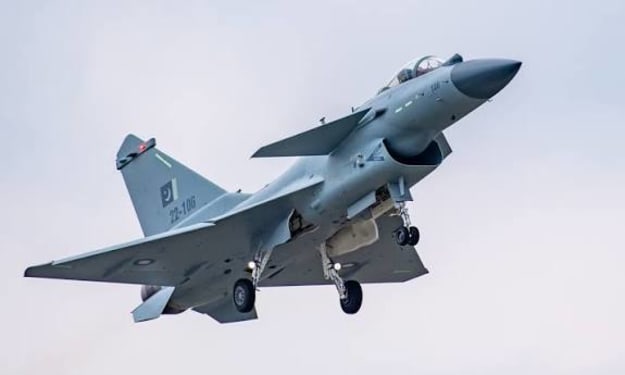
China is increasingly pushing for a strategic shift in its defence industry — moving beyond simply exporting military products to becoming a global exporter of fully integrated defence systems. That was the message delivered this week by NPC Deputy Zhang Wei, a member of the National People’s Congress, during a high‑profile defence industry forum in Beijing. Zhang’s comments underscore China’s ambitions to compete more directly with the United States and other major arms exporters in the global aviation and military hardware market. “The era in which we are content to sell standalone products — fighters, missiles, radars — must give way to a pursuit of complete systems that integrate across air, space, and cyberspace,” Zhang told delegates. “This is not just an industrial upgrade, but a strategic imperative if China is to deepen partnerships with foreign militaries and contribute to international security.” From “Product” to “System” Export For decades, Chinese defence exports have primarily consisted of “products”: individual platforms such as aircraft, helicopters, surface‑to‑air missiles, and naval vessels. Many of these offerings — notably the Chengdu J‑10, Hongdu L‑15, and various drone types — have found buyers in Africa, Southeast Asia, and the Middle East, particularly among countries seeking more affordable alternatives to Western hardware. However, the global arms trade has increasingly shifted toward integrated systems — packages that include not just the hardware itself but command‑and‑control infrastructure, logistics support, training, and ongoing upgrades. Western defence firms, particularly those in the United States and Europe, now sell such systems to allied militaries, bolstered by long‑term service contracts and interoperability with existing Western military networks. Zhang emphasised that China must position itself to offer not just platforms, but “complete solutions” for prospective buyers. “Our emphasis must move from what the hardware can do on its own to what it can achieve in the context of a broader defence ecosystem,” he said, echoing similar calls from senior equipment designers and People’s Liberation Army (PLA) strategists. Strategic Rationale and Global Context China’s defence industry has made impressive strides in recent decades. Its jets, UAVs, and missiles now rival many Western designs on performance metrics, and Beijing has steadily improved its ability to produce advanced microelectronics, sensors, and propulsion systems. Yet its share of the international arms market remains significantly smaller than that of the United States Department of Defense and European exporters such as France’s Dassault Aviation and the United Kingdom’s BAE Systems. According to SIPRI arms transfer data, China accounted for roughly 5 per cent of global major arms exports in recent years, compared with about 37 per cent for the United States. European exporters together held another large share. China’s market presence is strongest in nations that often face sanctions or restrictions on Western equipment, including Pakistan, Myanmar, and some African states. By promoting system exports, China hopes to expand beyond these traditional markets and appeal to countries seeking high‑end, interoperable defence solutions without political restrictions tied to Western alliances. This could include emerging aviation systems tied to integrated air‑defence networks, logistics‑management suites, and even cyber‑enabled maintenance systems that increase uptime and reduce lifecycle costs. Aviation and the Arms Trade Aviation remains at the centre of this strategic shift. Integrated solutions in the aviation domain now include not just the aircraft themselves but weapons payloads, datalinks, sensor fusion packages, and training simulators that allow air forces to operate effectively as part of multi‑domain battle networks. Zhang cited recent advances by China’s defence conglomerates — including Aviation Industry Corporation of China (AVIC) and China Aerospace Science and Industry Corporation (CASIC) — as evidence that China now has the industrial base to pursue integrated offerings. “We have matured to the point where we can offer not just discrete aircraft but entire aerial ecosystems that include surveillance, strike, and defensive capabilities working in concert,” he said. Challenges and Skepticism Despite the ambition, analysts warn that China faces several obstacles in making the leap from product to system exporter. These include questions about interoperability with existing military frameworks in buyer countries, intellectual property concerns, and political apprehension — particularly among nations wary of close ties with Beijing. There are also internal challenges. China’s defence industry has historically focused on producing equipment for its own PLA needs, which do not always translate directly to export markets. Building robust after‑sales support networks — critical for system exports — requires investment in foreign infrastructure and long‑term commitments that many Chinese firms have historically been reluctant to make. What This Means for the Global Arms Market If China succeeds, the implications for the global arms trade could be significant. Western exporters, which have long dominated the market for integrated defence systems, could face increased competition in regions where cost, neutrality, and fewer political strings are attractive to buyers. Additionally, a more competitive Chinese offer could encourage buyers to demand better terms and interoperability regardless of source, potentially raising capabilities across multiple regions. Zhang’s comments signal a strategic recalibration within China: an effort to redefine its role not just as a producer of defence hardware, but as a provider of complex, sustained defence solutions. Whether that shift takes hold will depend on China’s ability to build trust with buyers, invest in global support infrastructure, and continue improving the technological sophistication of its offerings.
By Fiaz Ahmed about 4 hours ago in Journal



Comments
There are no comments for this story
Be the first to respond and start the conversation.