
HL7 Interface Development: Improving Healthcare Communication
A Comprehensive Guide to Developing HL7 Interfaces for Seamless Integration of Healthcare Systems - SISGAIN

In the healthcare industry, it is critical to have accurate and efficient communication between various software systems. The Health Level Seven International (HL7) interface is a widely used standard for exchanging health information between different systems. This interface allows for seamless communication between electronic health records (EHR), laboratory information systems (LIS), radiology information systems (RIS), and other healthcare applications. In this article, we will explore the development of HL7 interfaces and the importance of HL7 interface development.
HL7 Interface Development
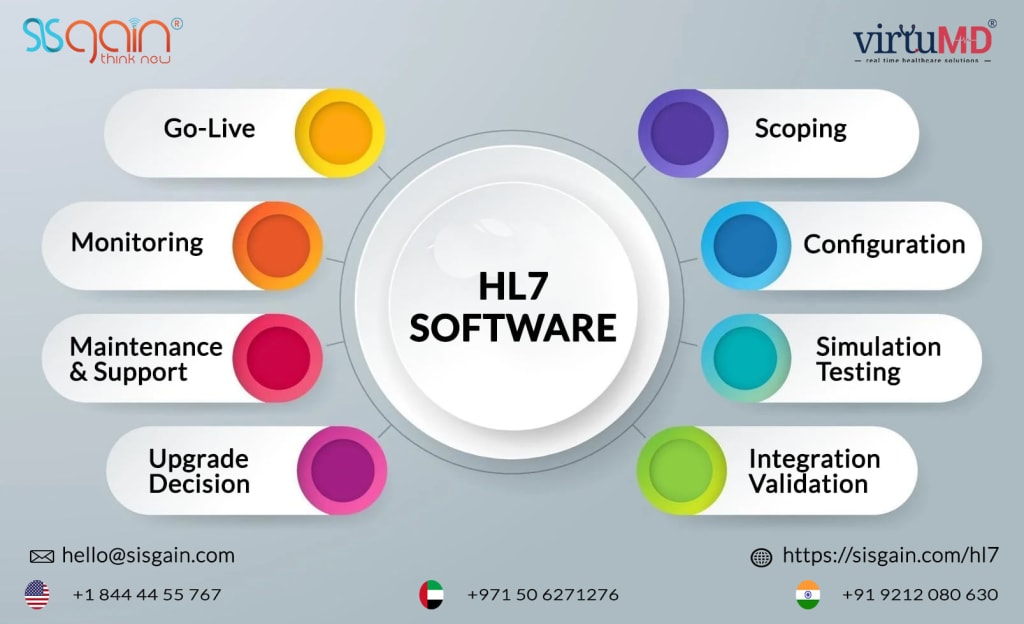
HL7 interface development involves designing, developing, and testing an interface between two or more healthcare systems. This interface enables these systems to communicate with each other, allowing for the exchange of patient data, such as lab results, imaging studies, and medication orders. The development of an HL7 interface typically involves the following steps:
Analysis: The first step in HL7 interface development is to identify the systems that need to communicate with each other. The next step is to analyze the data that needs to be exchanged between these systems. This analysis involves identifying the data elements that need to be included in the interface and their formats.
Design: The next step is to design the interface. This involves creating a message structure that will allow for the exchange of data between the systems. The design of the interface must comply with HL7 standards to ensure interoperability between systems.
Development: Once the interface design is complete, the development phase begins. This phase involves creating the software code that will implement the interface. This code must be written in a programming language that is compatible with the systems that are being integrated.
Testing: The final step in HL7 interface development is testing. This involves verifying that the interface is working correctly and that the data is being exchanged accurately between the systems. Testing must be comprehensive and rigorous to ensure that the interface is reliable and secure.
Importance of HL7 Interface Development
HL7 interface development is essential for healthcare organizations for several reasons. These include:
Improved efficiency: HL7 interfaces allow for the automation of data exchange between systems, eliminating the need for manual data entry and reducing errors. This improves efficiency and reduces the time and resources required to manage patient data.
Improved patient care: HL7 interfaces enable healthcare providers to access patient data from multiple systems, providing a more comprehensive view of the patient’s health. This improves the quality of care and can help to prevent medical errors.
Compliance with regulations: HL7 interfaces ensure that healthcare organizations comply with regulations related to the exchange of patient data, such as HIPAA. Compliance with these regulations is critical to ensure patient privacy and security.
Integration with new systems: HL7 interfaces allow healthcare organizations to integrate new systems into their existing infrastructure easily. This enables organizations to take advantage of new technologies and innovations as they become available.
SISGAIN and HL7 Interface Development
SISGAIN is a leading healthcare software development company that specializes in HL7 interface development. SISGAIN has extensive experience in developing interfaces for a wide range of healthcare systems, including EHR, LIS, RIS, and more.
SISGAIN’s HL7 interface development process is comprehensive and thorough. The company’s team of experienced developers follows a rigorous development process that includes analysis, design, development, and testing to ensure that the interface is reliable and secure.
SISGAIN’s HL7 interface development services are designed to meet the specific needs of healthcare organizations. The company’s team of developers works closely with clients to understand their unique requirements and develop interfaces that meet these needs.
SISGAIN’s HL7 interface development services include:
Interface analysis and design: SISGAIN’s team of developers analyzes the systems that need to communicate and designs the interface to meet the specific needs of the healthcare organization.
Development and testing: SISGAIN develops the software code that implements the interface and rigorously tests it to ensure that it is reliable and secure.
Integration with existing systems: SISGAIN ensures that the HL7 interface is seamlessly integrated with existing healthcare systems, minimizing disruptions to workflow and patient care.
Maintenance and support: SISGAIN provides ongoing maintenance and support for the HL7 interface, ensuring that it continues to function correctly and meets the changing needs of the healthcare organization.
Conclusion
In conclusion, HL7 interface development is critical for healthcare organizations to improve efficiency, patient care, compliance with regulations, and integration with new systems. SISGAIN is a leading healthcare software development company that specializes in HL7 interface development. SISGAIN’s comprehensive and thorough development process ensures that the HL7 interface is reliable and secure, meets the specific needs of the healthcare organization, and is seamlessly integrated with existing systems. SISGAIN’s ongoing maintenance and support services ensure that the HL7 interface continues to function correctly and meets the changing needs of the healthcare organization.
About the Creator
~ Fired ~
— Ai Intrusion ~ Are you Next ~ Is Ai Evolution after your job? — Few workplaces haven't been affected. Ai is in supermarkets, at doctors' offices, and even monitoring farms. I just can't think of anything this machine is not getting into, can you? For instance: Education ~ Law and Tech jobs will one day have a major influence or be taken over by these inanimate machines, with accuracy and vigor. From mechanics' diagnoses to a wide variety of everyday jobs, including fast food workers, with this input having the ability to cut their unnecessary work hours. I'm certain all of us have been touched by this with our short stories and colorful headings, have you? Even comments are very questionable 'Non-Robot' insertions.
By Jay Kantor3 days ago in Journal
Why Longevity Matters in Wellness: Insights From a 9-Year Industry Journey
Over the past few years, the wellness industry has gained significant traction. Consumers still want convenience and quick results, but expectations are changing. Today, many buyers are thinking beyond immediate outcomes and asking how a product or service will support them over time—not just in the first few weeks. After nearly a decade in the wellness space, certain patterns have become impossible to ignore.
By Diandra Hake3 days ago in Journal



Comments (1)
Wow, this article really highlights the importance of HL7 interface development in improving communication in healthcare. It shows how HL7 plays a crucial role in streamlining data exchange and ultimately enhancing patient care. If you want to dive deeper into HL7 integration, you should definitely check out this awesome article on Cleveroad's blog (https://www.cleveroad.com/blog/hl7-integration/). It gives practical insights, examples, and tips that can help you understand and implement HL7 solutions effectively. It's a must-read resource for anyone interested in this topic!