
Grandma’s Hands
How our sewing machines helped us learn to carry the stories of our grandmother’s and turn their legacies into community lessons for all

“Grandma’s Hands clapped in church on Sunday morning / Grandmas Hands used to ache and sometimes swell.”
Bill Withers (1938–2020)
Both of our maternal grandmothers didn’t live long enough to take our hands and walk us through the process of sewing. Our grandmothers didn’t even live long enough to collect social security checks. Socioeconomic factors combined with race, faith, the politics and confines of marriage, motherhood and gender were all things that they had to navigate from an early age. They were faithful Black matriarchs of their family who rolled up their sleeves every day. Each gave up pieces of themselves in sacrifice to see their children and grandchildren live better lives.
As such, when they passed away due to stress-induced illnesses, we weren’t left with a heaping amount of material items to remember them by. This is an unfortunately common and not so surprising reality for Black women and families in America.
Despite all that they gave, we mostly had the stories and pictures to remember them by. Luckily, we knew the joy of preserving their stories. We created our happiness inspired by our grandmother’s hands.
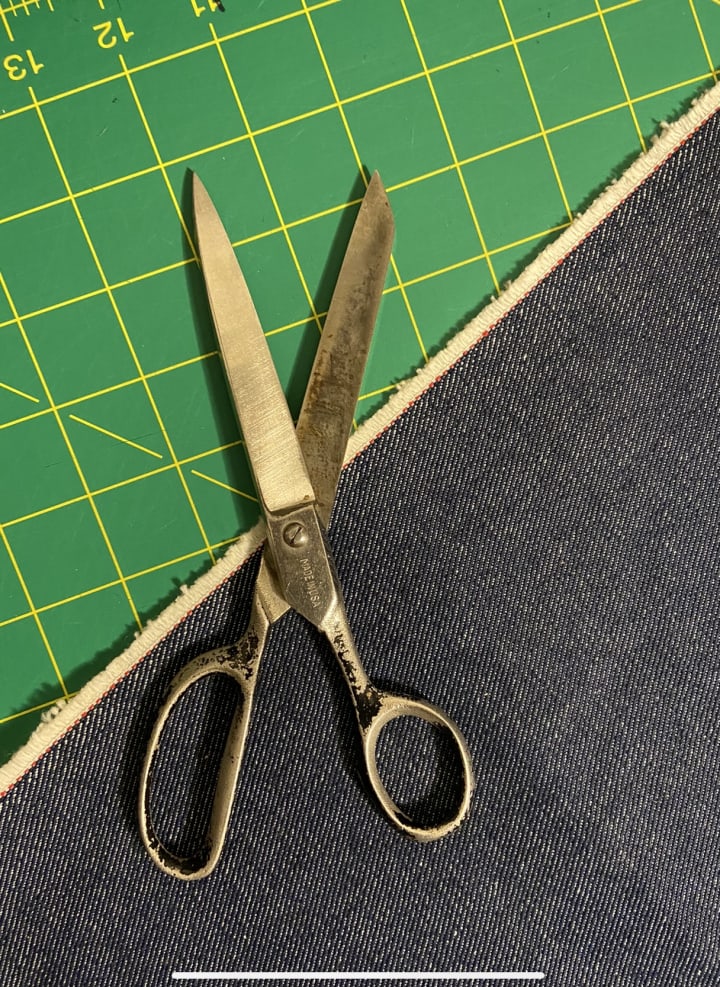
Crisp U.S. Thrift was founded with community in mind. The shop was cultivated as a 10x10 curated storefront. Inside the shop you would find vintage typewriters, fabrics, scissors and era fashion clothing. We were inspired by the American history of Crispus Attucks, a Black and Indigenous runaway slave and martyr of the Boston Massacre. We consider him to be an unsung Founding Father of the U.S.
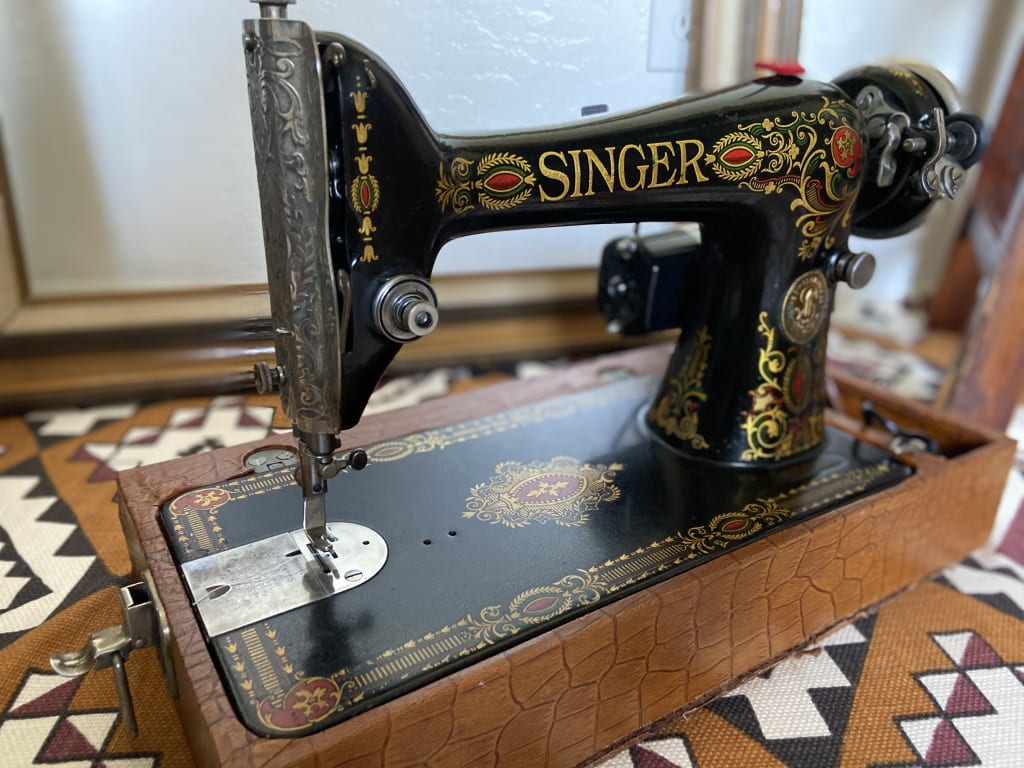
Soon after launching, we became regulars at local markets and pop-ups. When COVID-19 was announced as a global pandemic, our business stopped. We would have never foreseen a devastating international pandemic putting a hold on our business... and yet, there we were. It’s during this time that we looked back to the sewing machines we had both inherited from our grandmothers. Machines we kept around the house collecting dust because we couldn’t quite figure out how to make them work. One of them was a Kenmore from 1970’s and the other, a Singer from a Japanese military base in the 1960’s. With the inspiration to restore our grandmother’s respective machines, Tea, co-owner and founder set out on a journey of restoration. We acquired many machines with stories like ours with the hope to restore vintage items from the past to create new, exciting designs that combined our love of things both old and new. One of the first machines that was donated to us was from 1910 – Singer Red Eye Sphynx which is now fully operable inside of a treadle machine.
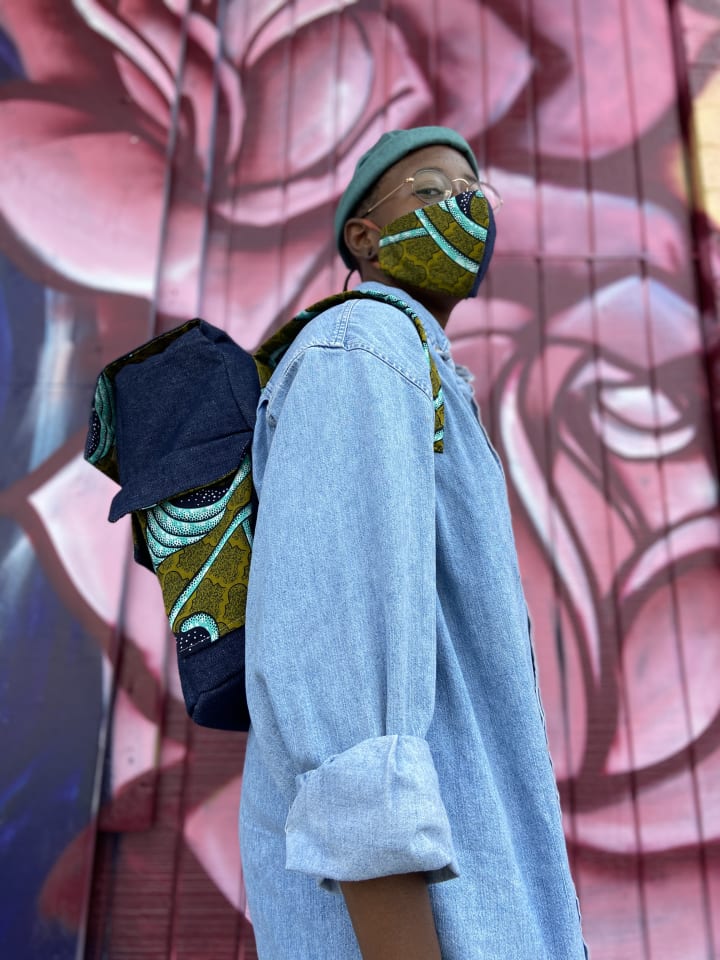
Restoring our grandmother’s machines inspired us to create things with our hands, expanding our landscape as store owners, community members and educators. The first line of hand-made goods we created were face masks. In response to COVID-19, we were happy to craft nearly 500 reusable denim face masks to supplement our community during extreme shortages of PPE. We chose to use denim for its rich history of American ingenuity of sharecroppers and slave laborers, as well as its’ sturdiness and “working class” fashion contexts. We wanted accessible reusable masks because it seemed that each week, a new story would emerge about the ecological impact of toxic waste from single-use face masks.
-We were made happy to begin creating bags and hats, combining textiles we collected from Ghana, West Africa as well as high quality denim, made in the U.S.A. This exciting and unique combination of fabric weaving further helped us put together our own unique style, reflective of our lineages of being both African and American.
Recently, we launched a class called “Grandma’s Hands” – a cultivation of knowledge, story, restoration and creativity that we are using to guide a new generation of students back to home economic classes. In this class that is open to the public, we focus on inclusive futures by reaching into our community of South Phoenix, hosting classes in a formerly segregated Black school and reintroducing young audiences fashion classes with our acquired machines.
Our children won’t have the luxury of meeting our grandmother’s, but that’s okay. By using their machines, their hands have guided ours towards more happy, bold, imaginative futures. Using their tools allowed us to reflect on the gifts of their lives, rather than their absence in departure. When we place our hands on the heirlooms we have left from our grandma’s hands, we rejoice in keeping them alive.
About the Creator
Crisp U.S. Thrift
Hello! We are owners of Crisp U.S. Thrift! Our business is a Black owned and operated fashion collective based in Phoenix, AZ. We are driven by history to preserve and educate others about unique vintage items.
Keep reading
More stories from writers in Journal and other communities.
~ Fired ~
— Ai Intrusion ~ Are you Next ~ Is Ai Evolution after your job? — Few workplaces haven't been affected. Ai is in supermarkets, at doctors' offices, and even monitoring farms. I just can't think of anything this machine is not getting into, can you? For instance: Education ~ Law and Tech jobs will one day have a major influence or be taken over by these inanimate machines, with accuracy and vigor. From mechanics' diagnoses to a wide variety of everyday jobs, including fast food workers, with this input having the ability to cut their unnecessary work hours. I'm certain all of us have been touched by this with our short stories and colorful headings, have you? Even comments are very questionable 'Non-Robot' insertions.
By Jay Kantor5 days ago in Journal
Buried for 33 Years: The Dream to Revive One of the Country’s Largest Gold Mines Suddenly Back on the Map
Introduction: In the heart of a country long known for its vast natural resources, an unexpected revival is stirring. For over three decades, a once-thriving gold mine lay dormant, its resources untapped and forgotten by many. Now, against all odds, the dream of resurrecting one of the country’s largest and richest gold mines is back on the map, with renewed investment and strategic government interest propelling it into the future.
By Ayesha Lashariabout 20 hours ago in Journal



Comments
There are no comments for this story
Be the first to respond and start the conversation.