
Google's AI Era Begins
Why Google I/O 2025 made it clear who's leading the future of intelligence

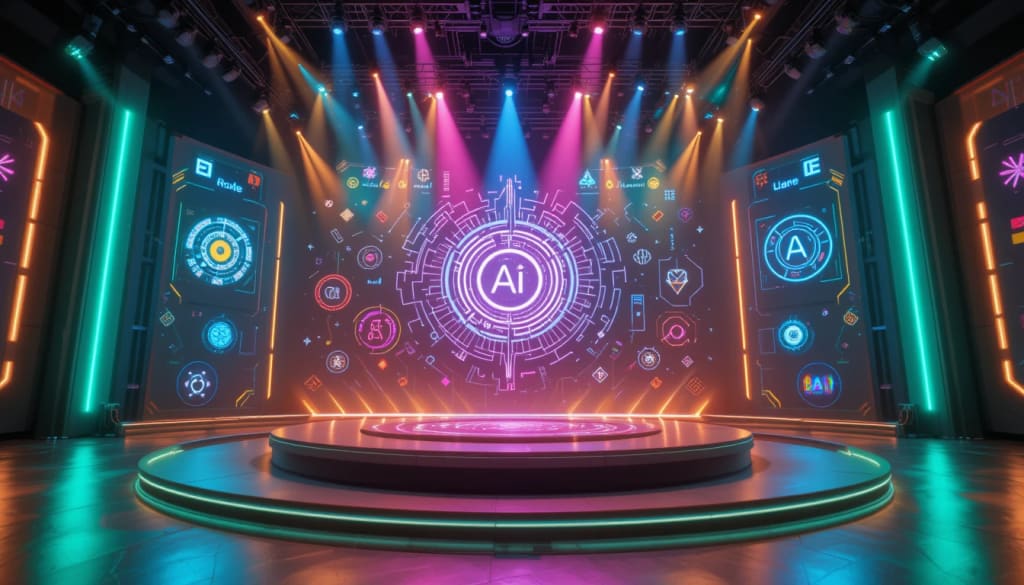
The tech world holds its breath every year during Google I/O, the company’s annual developer conference. But this year—Google I/O 2025—was different. It wasn’t just about new phones, new updates, or even flashy announcements. It was about one thing:
AI. And Google has just claimed the throne.
While competitors like Microsoft, OpenAI, and Meta have made impressive strides, Google I/O 2025 boldly declared that the future of AI belongs to them. Not with arrogance, but with evidence. Tools, demos, language models, integrations—Google didn’t just talk about the future. They unveiled it, live on stage.
After years of being one of the giants, Google is no longer just part of the race. They’re leading it. Here’s why.
A Decade in the Making
Google’s AI journey didn’t start this year. It started more than a decade ago. From Google Translate and Photos’ object recognition to the revolutionary Transformer architecture (yes, Google invented that), their AI roots go deep.
But until now, it felt like Google was holding back. While others rushed to release AI chatbots and assistants, Google stayed quiet—polishing, improving, perfecting. At I/O 2025, they finally showed us what they’ve been building.
The result? A clean, bold message:
Google is not reacting to the AI revolution. It’s been designing it from the beginning.
Gemini: Smarter, Faster, Everywhere
The centerpiece of Google I/O 2025 was Gemini 2 Ultra, the next evolution of its AI foundation model. But what sets Gemini apart is not just its intelligence—it’s how and where it works.
Gemini now runs seamlessly across devices, with lightning-fast performance and multimodal understanding. It reads, hears, sees, reasons, and responds—instantly.
You can speak to it, show it a photo, draw a sketch, or give it a PDF—and it replies with clarity and context. It doesn’t just know answers. It understands your intent.
Gemini is now:
Built directly into Android phones
Powering Gmail, Docs, and Google Sheets
Integrated with Chrome and Search
Embedded in Workspace and education tools
It’s no longer just an assistant. It’s part of the Google ecosystem.
AI in Your Pocket: Android Gets an Upgrade
Google unveiled the latest version of Android AI+, and it's not just an operating system anymore—it's a co-pilot.
Here’s what Android users can now do thanks to Gemini:
Summarize long text messages or web pages in seconds
Generate replies, captions, or even video descriptions automatically
Translate real-time speech and video with on-screen visuals
Use camera-based AI to analyze objects, solve problems, or describe surroundings for visually impaired users
And the most stunning part?
All of this runs on-device—no lag, no internet needed. Google’s custom TPU (Tensor Processing Unit) chips have made edge AI a reality. It’s fast, private, and deeply personal.
Google Workspace: AI for Work, Finally Done Right
Let’s face it: We’ve all struggled with long emails, complex documents, and chaotic spreadsheets.
Now, Google Workspace is powered entirely by Gemini:
Write entire emails with tone customization
Summarize entire threads in Gmail with a click
Auto-generate presentations in Slides using text prompts
Make custom spreadsheets by simply asking questions
But this isn’t just about automation—it’s about making work human again. Instead of spending hours formatting slides, writing reports, or managing data, AI takes care of the grunt work. You focus on the thinking, the creativity, the strategy.
This is the productivity upgrade we’ve all been waiting for.
The Reinvention of Google Search
One of the boldest moves at Google I/O 2025 was the redesign of Search itself.
Gone are the days of ten blue links. In their place? A conversational, AI-powered search assistant that understands your queries like a human.
Ask a complex question like:
“What are the best cities for remote work in Asia, factoring in internet speed, cost of living, and visa options?”
Google doesn’t just list articles. It compiles the answer for you, with links to sources, maps, and real-time data.
Even better, it remembers your preferences. You’re no longer searching randomly. You’re having a conversation—with the smartest assistant ever built.
AI Video, Audio, and Code — Unified
One of the surprise moments at I/O 2025 was the unveiling of Gemini Studio — Google's answer to content creators and developers.
Here’s what it can do:
Text-to-video: Turn a written script into a narrated, animated video with voice, music, and scenes—all generated with prompts.
Music generation: Compose original background tracks with style preferences.
Code completion and debugging: Using Gemini for Code, developers can now write, review, and deploy code faster than ever.
Speech-to-speech translation: Real-time dubbing with voice cloning and emotion preservation.
Whether you’re making YouTube videos, building a website, or coding your first app, Google’s AI tools are finally all in one place.
And unlike other platforms, this isn't a beta. It’s live, stable, and integrated into Google’s ecosystem.
Privacy and Ethics: Google’s Big Bet
One thing that stood out: Google didn’t ignore the ethical elephant in the room.
As AI becomes more powerful, trust matters more than ever. Google introduced their AI Ethics Dashboard, giving users control over:
How their data is used
What Gemini knows and remembers
Where AI-generated content appears
How to report or review biased output
They also introduced watermarking for AI-generated images and videos—making it easier to identify synthetic content and fight misinformation.
While no company is perfect, Google is setting a strong precedent: AI must be powerful and responsible.
The Real Reason Google is the AI King
So what makes Google stand out in this crowded field?
They own the ecosystem: Phones, browsers, email, search, maps, docs—Google’s products touch nearly every part of our digital lives. And now, they’re all connected through AI.
They built the foundation: Google created the transformer model that powers most modern AI, including ChatGPT.
They play the long game: While others rushed to release flashy tools, Google spent years quietly building stable, scalable, ethical AI systems.
They democratize access: Most of Google’s AI tools are free or low-cost. They work in developing countries, on low-power devices, and in multiple languages.
This isn’t just about dominance. It’s about infrastructure. Google didn’t just win the AI race—they built the road everyone else is driving on.
What It Means for Us
For everyday users, this new AI era is both exciting and overwhelming. But here’s the good news:
If you’re a student, AI can help you study smarter.
If you’re a freelancer, AI can help you work faster.
If you’re a business owner, AI can help you grow cheaper.
If you’re a creator, AI can help you publish more.
And if you're none of these? It can still help you save time, stay informed, and connect more easily with the world.
The AI revolution isn’t coming. It’s here. And Google just made it official.
Final Thoughts: The Crown is Claimed
Google didn’t need to be loud to prove they were leading. They simply opened the gates and let the technology speak for itself.
At I/O 2025, they showed us what happens when a company builds patiently, ethically, and intelligently—and then decides it’s time to lead.
From our phones to our inboxes to the way we search, Google has redefined how AI fits into our lives. Seamlessly. Powerfully. Permanently.
Welcome to the future.
About the Creator
Shohel Rana
As a professional article writer for Vocal Media, I craft engaging, high-quality content tailored to diverse audiences. My expertise ensures well-researched, compelling articles that inform, inspire, and captivate readers effectively.
Keep reading
More stories from Shohel Rana and writers in Journal and other communities.
Stay Ahead, Earn More
We are standing on the edge of a new digital era, one shaped not just by human intelligence but by something we've built—Artificial Intelligence (AI). It's no longer just the stuff of science fiction. AI is already here, and it's changing everything. From how we write and learn to how we earn and grow.
By Shohel Rana8 months ago in Journal
How do I Become a Mobile App Developer in 2026
The path to becoming a mobile app developer has changed. It has shifted from mastery of syntax to Entity Accountability. It now focuses on high-level architecture stewardship. The shift occurred within a post-generative development economy. In 2026, the barrier to entry is no longer writing code. The new barrier is validating the integrity of systems. You must also validate the security of AI-mediated discovery systems.
By Del Rosario7 days ago in Journal


Comments
There are no comments for this story
Be the first to respond and start the conversation.