
Google Accused of Shadow Banning Christian and Conservative Content
Webmasters Claim Content is Shadow Banned

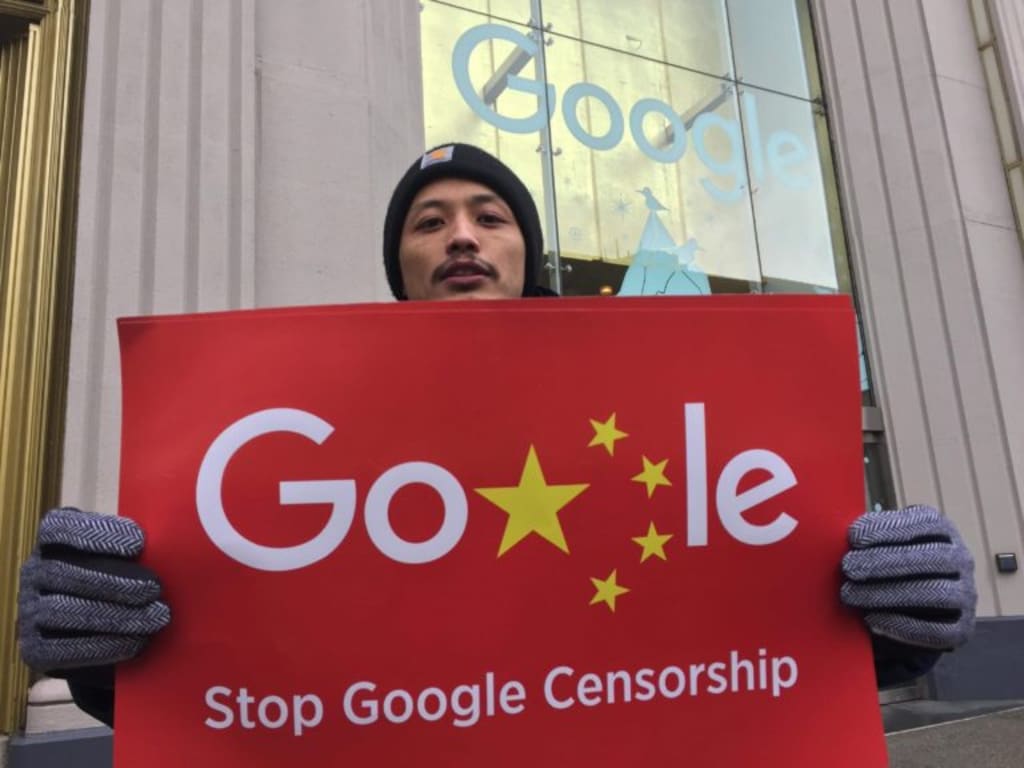
In recent years, Google, the world’s dominant search engine, has faced mounting accusations of manipulating its algorithms to suppress Christian and conservative websites.
Critics, including former Google employees, conservative activists, and political figures, allege that the tech giant engages in "shadow banning," a practice where content is deliberately downranked or hidden from search results without notification to the affected parties.
These claims have sparked heated debates about free speech, algorithmic bias, and the immense power Google wields over online visibility.
Despite Google’s consistent denials, the controversy persists, fueled by anecdotes from website owners, complaints on Google’s Search Community forums, and leaked internal documents. This article delves into the allegations, the evidence, Google’s response, and the broader implications for digital discourse.
The Allegations: Shadow Banning and Algorithmic Suppression
Shadow banning, also known as stealth banning or ghost banning, refers to the covert practice of limiting the visibility of certain content or users without explicitly notifying them.
In the context of Google, critics claim the company manipulates its search algorithms to deprioritize or exclude Christian and conservative websites, effectively burying their content deep in search results where few users venture.
The accusations are twofold: first, that Google fails to index certain pages, rendering them invisible to search queries; second, that its algorithms intentionally push down conservative and Christian News in favor of left-leaning or mainstream sources.
The controversy gained significant traction in 2018 when conservative commentators and politicians began highlighting perceived biases in Google’s search results.
For instance, Paula Bolyard, a supervising editor at PJ Media, published an analysis claiming that 96% of Google search results for "Donald Trump" favored left-leaning and anti-Trump media outlets.
Although her methodology was criticized as unscientific, it resonated with a growing segment of conservatives who felt their voices were being silenced online.
Similarly, pro-life organization Life Issues Institute reported a sharp drop in views for a promotional video, with its director, Brad Mattes, attributing the decline to Google’s algorithmic changes targeting pro-life content.
These claims are not limited to individual anecdotes. Posts on X and various conservative blogs have pointed to specific instances where Christian and conservative websites saw their traffic plummet after Google algorithm updates.
For example, God Reports, a Christian news outlet, claimed in 2022 that its traffic was suppressed following Google’s algorithmic shifts, particularly around the 2020 election. Such reports have fueled suspicions that Google is deliberately targeting content that conflicts with a perceived liberal corporate culture.
Former Google Employees Speak Out
Adding weight to these accusations are testimonies from former Google employees who have publicly criticized the company’s practices. In 2019, Project Veritas, a conservative investigative group, released internal Google documents leaked by whistleblower Zachary Vorhies.
The 950 pages of documents allegedly revealed blacklists and machine-learning algorithms designed to censor conservative websites, including well-known outlets like The Daily Caller, The Western Journal, and RedState. Vorhies claimed that Google’s internal systems flagged these sites for reduced visibility, effectively shadow banning them.
Another former Google engineer, Guillaume Chaslot, who worked on YouTube’s recommendation algorithm, has spoken out about the broader issue of content moderation.
While Chaslot’s work focused on YouTube, a Google subsidiary, his insights into algorithmic design suggest that human biases can influence how algorithms prioritize content. He noted that YouTube’s recommendations disproportionately favored mainstream media over smaller, conservative outlets, a pattern critics argue extends to Google Search.
In 2019, Google CEO Sundar Pichai acknowledged internal challenges, telling employees the company was “genuinely struggling with some issues” related to transparency and trust.
While Pichai’s comments were not directly tied to shadow banning, they underscored a growing distrust among employees and external critics alike. Former employees have also pointed to Google’s shift away from open internal discussions, with all-hands meetings scaled back and topics limited to business strategy, as evidence of a company increasingly wary of public scrutiny.
Google Search Community Complaints
The Google Search Community, a forum where website owners and SEO professionals seek technical support, is rife with complaints about indexing issues and algorithmic suppression.
Users frequently report that their pages are not being indexed, meaning they do not appear in search results at all. For conservative and Christian website owners, these technical issues are often interpreted as deliberate censorship.
A common grievance is that Google’s crawlers—software that scans websites for new content—seem to bypass certain pages, particularly those with politically or religiously charged content.
For example, in 2022, a user on the Google Search Community forum reported that their Christian blog was no longer appearing in search results after a core algorithm update.
Despite following Google’s webmaster guidelines, the site’s traffic plummeted, leading the owner to suspect targeted de-ranking. Similar complaints have surfaced about pro-life websites, with some alleging that Google’s algorithms flag their content as “sensitive” or “harmful,” triggering automatic suppression.
While Google maintains that indexing issues are often due to technical errors or non-compliance with quality guidelines, the volume of complaints has fueled skepticism.
Critics argue that the lack of transparency in Google’s indexing process makes it impossible to verify whether these issues are accidental or intentional. The company’s reliance on automated systems and human quality raters, who evaluate search results based on subjective criteria, further complicates the issue.
Google’s Denial and Defense
Google has consistently denied allegations of shadow banning or political bias. In response to accusations from conservative figures, including former President Donald Trump and Senators Ted Cruz and Roger Marshall, the company has maintained that its algorithms are designed to deliver “useful information” to all users, regardless of political affiliation.
In a 2024 statement to Reuters, a Google spokesperson called claims of conservative censorship “totally false,” emphasizing that the company’s business model depends on providing relevant results to a diverse user base.
Google attributes many reported issues to the complexity of its algorithms, which use over 200 ranking factors to determine search result placements. The company argues that these factors prioritize authoritative, high-quality content, and that any perceived bias is a result of websites failing to meet these standards.
For instance, in response to a 2022 study by the Media Research Center alleging bias against Republican Senate candidates, Google disputed the methodology, noting that the study used uncommon search terms and ignored user-specific factors like location and search history.
The company has also pointed to its efforts to combat misinformation as a reason for content moderation. Following the 2016 election, Google updated its algorithms to prioritize “authoritative” sources, a move that critics argue disproportionately affects conservative and alternative media.
In cases like the 2018 delisting of a pro-life music video by Joyce Bartholomew on YouTube, Google cited its policies against “harmful misinformation,” though it failed to provide specific reasons for the removal.
Critics and Their Concerns
Critics of Google span a wide range, from conservative activists and politicians to academics and free speech advocates. Robert Epstein, a psychologist and researcher, has been a prominent voice in this debate.
Since 2013, Epstein has published studies suggesting that Google’s search algorithms could manipulate public opinion by subtly altering result rankings.
His work, featured in the documentary The Creepy Line, argues that even small changes in search visibility can sway undecided voters, a phenomenon he calls the Search Engine Manipulation Effect.
Conservative media outlets like Breitbart, The Daily Caller, and The Federalist have amplified these concerns, often citing their own experiences of traffic drops after algorithm updates.
In 2020, The Federalist faced demonetization warnings from Google, which the outlet claimed were politically motivated. Similarly, PragerU, a conservative educational platform, sued YouTube in 2018 after 40 of its videos were restricted, alleging deliberate censorship of conservative ideas.
Politicians have also taken up the cause. In July 2024, Senator Roger Marshall launched an investigation into Google’s autocomplete feature, which failed to suggest terms related to an attempted assassination of former President Trump. Marshall described the omission as “another example of censorship against conservative voices,” calling for a congressional hearing.
Missouri Attorney General Andrew Bailey echoed these sentiments, announcing a probe into Google’s alleged manipulation of search results to de-emphasize Trump campaign content.
Beyond conservatives, academics like Safiya Noble, author of Algorithms of Oppression, argue that Google’s algorithms can perpetuate biases against marginalized groups, including women of color, suggesting that the issue of algorithmic bias is not exclusive to one political ideology.
Noble’s work highlights how human-designed algorithms can reflect the biases of their creators, a point that conservative critics often cite in their own arguments.
The Broader Implications
The accusations against Google raise profound questions about the role of tech giants in shaping public discourse. With over 90% of global search traffic, Google holds unparalleled influence over what information users see.
If the company is indeed manipulating results to favor certain viewpoints, it could undermine the democratic process by limiting access to diverse perspectives. Even unintentional biases, resulting from the subjective judgments of human quality raters or the prioritization of “authoritative” sources, could skew public perception.
The lack of transparency in Google’s algorithms exacerbates these concerns. Unlike traditional media, which operates under editorial standards that are at least partially visible, Google’s search processes are a black box.
The company’s refusal to publish detailed information about its ranking factors or content moderation policies leaves website owners and users with little recourse when they suspect foul play.
Moreover, the economic impact of algorithmic suppression can be devastating. Websites that rely on search traffic for revenue—such as Christian ministries or conservative news outlets—can face financial ruin if their content is buried.
The 2017 EU fine of €2.42 billion against Google for favoring its own services over competitors underscores the real-world consequences of algorithmic manipulation.
Google’s Efforts to Address Concerns
In response to criticism, Google has taken steps to improve transparency and address misinformation. The company regularly publishes reports on content removals and provides tools like the Google Search Console to help website owners diagnose indexing issues.
However, these measures have done little to quell accusations of bias, particularly among conservatives who view Google’s corporate culture as inherently hostile to their values.
Google has also faced pressure from regulators and lawmakers. In addition to the EU’s antitrust actions, U.S. politicians have called for greater oversight of tech companies, with some proposing to strip Google of its Section 230 protections, which shield it from liability for user-generated content. Such regulatory changes could force Google to adopt more transparent practices, though they risk further politicizing the debate.
Conclusion
The accusations of shadow banning and algorithmic suppression leveled against Google by Christian and conservative groups are unlikely to subside anytime soon.
While the company denies any intentional bias, the combination of whistleblower testimonies, user complaints, and high-profile political interventions has kept the issue in the spotlight.
Critics argue that Google’s dominance over search gives it unchecked power to shape narratives, while defenders maintain that its algorithms are impartial tools designed to deliver quality results.
As the debate rages on, the need for transparency and accountability in tech remains paramount. Whether through regulatory action, internal reforms, or alternative search engines like Freespoke, addressing these concerns will be critical to ensuring a fair and open digital landscape.
For now, the tension between Google and its critics underscores a broader struggle over who controls the flow of information in the digital age.
Criticism of Google, Wikipedia
Are Google and Facebook really suppressing conservative politics?, The Guardian
Missouri Republican says he is investigating Google for ‘censoring conservative speech’, The Guardian
Does Google censor conservative content?, Deseret News
Google’s suppression of Christian websites is un-American, God Reports
Posts on X by @KanekoaTheGreat and @vdare
About the Creator
VORNews
VOR News Independent news media proudly known as the Voice of the Republic, emerged with a clear mission: to deliver unfiltered, principled journalism that champions truth, integrity, and the values that define a free society.
Author’s Advice
If you would’ve asked me 20 years ago did I know I’d become a writer and an author, I would’ve said “nope, ain’t happening”. As fate would have it I did become an author and I can honestly say I’m loving it so far. It really does feel good to be a writer. I’ve learned a lot on this journey and I feel like with even me being as new to this world as I am, there’s some wisdom I need to share with every other aspiring author.
By Joe Patterson3 days ago in Journal
Reasons Why Sinners and Frankenstein Could Win the Oscar for Best Picture
Horror fans are in luck: this year, two horror films are in the running for the Oscar for Best Picture. As if that weren't enough, both films have multiple nominations for this award. This year, Sinners, a gothic horror film, has been crowned the film with the most nominations in Oscar history. This movie received 16 nominations, an absolute record that never ceases to amaze.
By Ninfa Galeanoa day ago in Journal




Comments
There are no comments for this story
Be the first to respond and start the conversation.