
Global Rubber Industry Insights: Growth Drivers and Industry Forecasts to 2033
The global rubber market, valued at $47.5 billion in 2024, is forecast to reach $69.7 billion by 2033. Explore key drivers, including automotive demand, industrial uses, and sustainable rubber innovations.

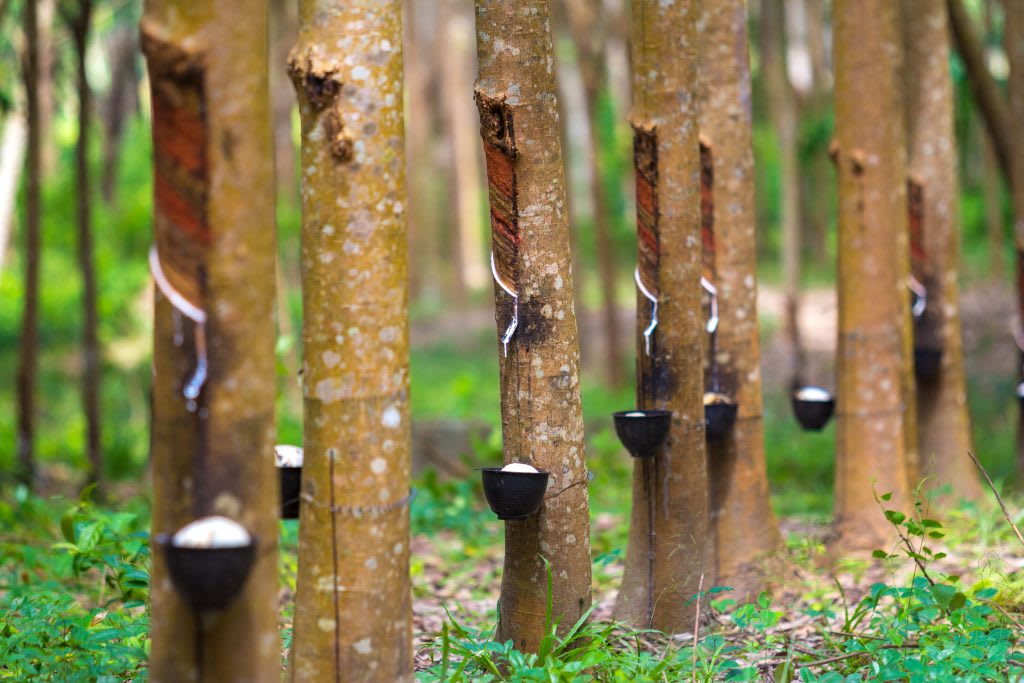
Market Overview:
According to IMARC Group's latest research publication, "Rubber Market Size, Share, Trends and Forecast by Type, Application, and Region, 2025-2033", the global rubber market size reached USD 47.5 Billion in 2024. Looking forward, IMARC Group expects the market to reach USD 69.7 Billion by 2033, exhibiting a growth rate (CAGR) of 4.4% during 2025-2033.
This detailed analysis primarily encompasses industry size, business trends, market share, key growth factors, and regional forecasts. The report offers a comprehensive overview and integrates research findings, market assessments, and data from different sources. It also includes pivotal market dynamics like drivers and challenges, while also highlighting growth opportunities, financial insights, technological improvements, emerging trends, and innovations. Besides this, the report provides regional market evaluation, along with a competitive landscape analysis.
How AI is Reshaping the Future of Rubber Market
- AI is transforming rubber manufacturing by optimizing mixing, vulcanization, and molding processes through real-time data analysis, ensuring consistent quality and less waste for producers.
- Predictive maintenance powered by AI cuts downtime by warning manufacturers about potential equipment failures, extending machinery lifespan and lowering costly repairs.
- AI-powered robots tapping rubber trees in China are tackling labor shortages, increasing tapping rates to 100–120 trees per hour while operating over eight hours on a single charge.
- Government schemes are boosting rubber sector growth with a 23% funding increase for sustainable development, supporting planting, farmer training, and quality control technologies in rubber production.
- Leading companies like Sri Trang Group use AI training programs to upskill employees, driving innovation and integrating AI into rubber processes for higher efficiency and global competitiveness.
Key Trends in the Rubber Market
- The rubber market is dealing with a supply-demand gap as natural rubber production grows only 0.3% while demand outpaces it at 1.8%, leading to tighter markets and potential price increases globally. Major producers like Indonesia and Vietnam face declining outputs due to lower profitability, pushing farmers to switch crops.
- Synthetic rubber holds about 58% market share driven by its superior resistance to heat and abrasion. It’s increasingly used in tire manufacturing, industrial belts, and seals, serving the booming automotive sector including electric vehicles, which boosts demand for specialized, high-performance rubber materials.
- Government schemes like India’s Sustainable & Inclusive Development of Natural Rubber Sector have raised financial assistance by 23%, supporting new planting, farmer empowerment through Rubber Producers Societies, advanced training, and digitization efforts to modernize production and improve livelihoods.
- Industry leaders are innovating with investments in next-gen synthetic rubber materials that offer better durability and environmentally-friendly production methods. Companies like Yokohama Rubber are expanding capacity in India focusing on electric vehicle tires, while Bridgestone explores resilient tires for lunar rovers, showing a diversification in rubber product applications.
- The growing focus on sustainability and electrification is reshaping the rubber market. Products for electric vehicles, green infrastructure, and renewable energy see accelerating demand, prompting manufacturers to realign R&D and supply chains toward eco-friendly, high-performance rubber compounds.
Growth Factors in the Rubber Market
- The global rubber market growth is fueled by rising demand in automotive and healthcare industries, where rubber's durability and flexibility are crucial in tires, medical gloves, and seals, driving continuous expansion worldwide.
- Government initiatives like India’s Sustainable & Inclusive Development of Natural Rubber Sector provide 23% increased funding for planting, farmer training, and infrastructure development, significantly boosting rubber cultivation and quality enhancement efforts.
- Asia-Pacific dominates rubber demand, driven by rapid industrialization, automotive production, and infrastructure projects in China, India, and Southeast Asia, making it the largest contributor to global market growth.
- Innovations in synthetic rubber with better durability and eco-friendly manufacturing techniques are attracting investments from leaders like Yokohama and Bridgestone, enabling growth through advanced applications including electric vehicle tires and specialty products.
- The growing popularity of electric vehicles and increasing urbanization have surged demand for specialized rubber products, with companies investing heavily in R&D to align with sustainability goals and evolving market needs.
Get Instant Access to the Full Report with a Special Discount!
Leading Companies Operating in the Global Rubber Market Industry:
- Arlanxeo (Saudi Arabian Oil Co.)
- Kumho Petrochemical Co. Ltd.
- LG Chem Ltd.
- Southland Holdings LLC
- Sri Trang Agro-Industry Plc
- TSRC Corporation
- Unitex Rubber Co. Ltd.
- Vietnam Rubber Group
- Von Bundit Co. Ltd.
Rubber Market Report Segmentation:
Analysis by Type:
- Synthetic Rubber
- Natural Rubber
Analysis by Application:
- Tire
- Non-Tire Automotive
- Footwear
- Industrial Goods
- Others
Regional Insights:
- North America (United States, Canada)
- Asia Pacific (China, Japan, India, South Korea, Australia, Indonesia, Others)
- Europe (Germany, France, United Kingdom, Italy, Spain, Russia, Others)
- Latin America (Brazil, Mexico, Others)
- Middle East and Africa
Recent News and Developments in Rubber Market
- 2024: Smart rubber composites with embedded sensors are revolutionizing industrial safety by enabling real-time monitoring of rubber products, enhancing reliability and preventing failures in critical applications.
- 2024: Automated production of silicone rubber using robotics boosts factory output speed by up to 35% and cuts error rates nearly in half, driving efficiency and quality improvements.
- 2025: Major industry shifts include Goodyear's $701 million sale of the Dunlop brand to Sumitomo Rubber Industries, streamlining operations and sharpening focus on core business areas.
Research Methodology:
The report employs a comprehensive research methodology, combining primary and secondary data sources to validate findings. It includes market assessments, surveys, expert opinions, and data triangulation techniques to ensure accuracy and reliability.
Note: If you require specific details, data, or insights that are not currently included in the scope of this report, we are happy to accommodate your request. As part of our customization service, we will gather and provide the additional information you need, tailored to your specific requirements. Please let us know your exact needs, and we will ensure the report is updated accordingly to meet your expectations.
About Us:
IMARC Group is a global management consulting firm that helps the world’s most ambitious changemakers to create a lasting impact. The company provide a comprehensive suite of market entry and expansion services. IMARC offerings include thorough market assessment, feasibility studies, company incorporation assistance, factory setup support, regulatory approvals and licensing navigation, branding, marketing and sales strategies, competitive landscape and benchmarking analyses, pricing and cost research, and procurement research.
Contact Us:
IMARC Group
134 N 4th St. Brooklyn, NY 11249, USA
Email: [email protected]
Tel No:(D) +91-120-433-0800
United States: +1-201-971-6302
About the Creator
Abhay Rajput
I am working in market research company that provides market and business research intelligence across the globe.
Keep reading
More stories from Abhay Rajput and writers in Journal and other communities.
Global Fish Farming Market Analysis: Trends and Industry Forecast 2025-2033
Market Overview: According to IMARC Group's latest research publication, " Fish Farming Market by Environment (Marine Water, Fresh Water, Brackish Water), Fish Type (Salmon, Milkfish, Tuna, Tilapia, Catfish, Sea Bass, and Others), and Region 2025-2033", the global fish farming market size reached USD 322.3 Billion in 2024. Looking forward, IMARC Group expects the market to reach USD 470.3 Billion by 2033, exhibiting a growth rate (CAGR) of 4.25% during 2025-2033.
By Abhay Rajput5 months ago in Journal
The goals I did not achieve
Every writing goal I made for the year is a wash. It has been this way for a while, but I think it's important to be open about my failures and the reality of how life can get in the way. This is especially true considering the several times I have posted on Vocal about my writing goals, how I was changing my approach, and where I was hoping to be for the upcoming year. I will probably do that again in a couple months, but for now, it is time to acknowledge where I am today.
By Kay Husnick23 days ago in Journal
The Early Church Fathers and Why Their Writings Matter Today
The Early Church Fathers are some of the most important figures in the history of Christianity. Their writings, letters, sermons, and theological reflections helped define the beliefs, practices, and structure of the Church in the centuries following Christ. Understanding who the Church Fathers were and why their works matter today is essential for anyone seeking to understand Catholic teaching, tradition, and the roots of Christian faith.
By Sound and Spirit4 days ago in Journal


Comments
There are no comments for this story
Be the first to respond and start the conversation.