
Global Power Shake-Up: The Political Upheavals Redefining 2025
From Shocking Elections to Geopolitical Turmoil—How Leadership Changes Are Reshaping the World
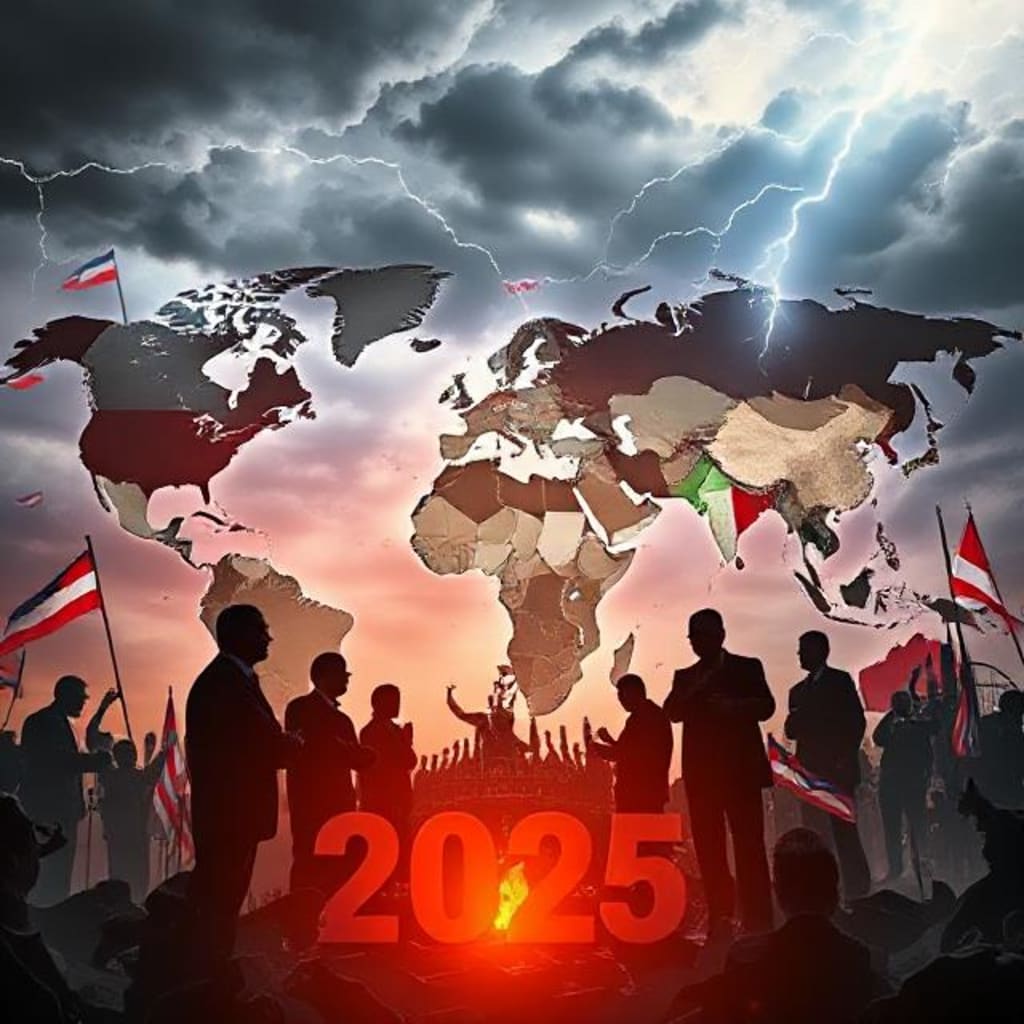
The Political Upheavals Redefining 2025: A Global Power Shakeup Power dynamics, alliances, and the ideological battlegrounds that define the global stage are all set to undergo seismic shifts in the year 2025, which is shaping up to be a transformative period in global politics. New challenges and opportunities are being brought about by political upheavals, such as the rise of non-Western powers and nationalism's resurgence. In this article, we will examine the major political forces, movements, and events that are reconfiguring the global order and reshaping international relations.
The Declination of Western Power The United States of America and Western Europe have dominated the global stage for decades. A lot of the global system was shaped by the post-Cold War order, which was based on the military and economic power of the United States. However, a significant shift in the balance of power will occur by 2025 as the once undeniable influence of Western nations begins to wane. The rise of China and its growing assertiveness on the global stage are two of the primary drivers of this change. China has established itself as a direct rival to the leadership of the United States because of its rapid economic expansion, military modernization, and growing geopolitical influence, particularly through initiatives like the Belt and Road Initiative (BRI). China's strategic use of technology, especially in areas like artificial intelligence and 5G, further bolsters its geopolitical position, giving it a competitive edge in shaping the future of global governance.
Additionally, Europe's ability to present a united front in global politics has been harmed by its political and economic difficulties, such as the lingering effects of Brexit, growing populism, and internal divisions within the European Union. The rise of nationalist movements, particularly in countries like Hungary, Poland, and Italy, has deepened the fragmentation of European politics, leading to a reevaluation of the continent’s role in world affairs.
China’s Emergence as a Global Superpower
By 2025, China is no longer just an economic powerhouse but a fully-fledged global superpower capable of shaping international norms and institutions. With the Belt and Road Initiative extending its influence across Asia, Africa, and even parts of Europe, China’s global reach is unparalleled. Moreover, its military presence in the South China Sea, the expansion of its naval capabilities, and the increasingly sophisticated nature of its diplomatic and economic relations underscore its ambition to rewrite the rules of global governance.
The state-led capitalism-driven economic model of China has emerged as an alternative to the Western liberal democratic capitalist system. China is establishing itself as the center of the global technology landscape through its "Digital Silk Road" initiative. Its dominance in 5G networks, artificial intelligence, and surveillance technologies give it unparalleled leverage. In a world where technological infrastructure increasingly defines power, China’s ability to control and influence key technologies will be a determining factor in the 21st century’s geopolitical realities.
The United States' Changing Role Although the United States of America continues to be a dominant economic and military power, its global leadership will face significant challenges by 2025. The erosion of multilateral institutions and America’s withdrawal from key international agreements, such as the Paris Climate Accords and the Iran nuclear deal, has left many questioning the reliability of the U.S. as a global leader.
Domestically, political polarization has intensified, with deepening divisions between the political left and right, leading to political instability. These internal challenges have detracted from America’s ability to effectively project its power abroad. Furthermore, the rise of new global players, particularly China, has led to questions about the sustainability of the U.S.-led international order. While the U.S. remains a key player in the global system, it is no longer the undisputed leader it once was.
The evolving foreign policy of the United States is one of the most significant repercussions of these shifts. The Biden administration’s pivot toward Asia, especially in terms of countering China’s growing influence, reflects the new geopolitical realities. However, a variety of domestic and international issues, such as rising nationalism, rising tensions with Russia, and ongoing conflicts in the Middle East, complicate this strategy. Russia’s Resurgence: A Strategic Balancing Act
Russia’s role in global politics has been another key development in the reshaping of global power structures. Under President Vladimir Putin, Russia has sought to assert itself as a counterweight to Western influence, especially in Europe and the Middle East. Russia's larger strategy to reclaim its sphere of influence includes the 2014 annexation of Crimea, military interventions in Syria, and efforts to influence political outcomes in nations like Ukraine and the United States. By 2025, Russia's geopolitical strategy will still be focused on challenging Western dominance and forging new alliances with powers outside of the West. One of the most significant shifts in global politics is its strategic partnership with China, particularly in the areas of cooperation in the military and energy. This alliance directly challenges Western-led international institutions and provides both nations with a counterbalance to U.S. and European influence. Russia continues to use its energy resources, particularly oil and natural gas, to influence Europe at the same time. The Nord Stream 2 pipeline, which aims to deliver Russian gas directly to Germany, is a prime example of Russia’s efforts to use energy as a geopolitical tool.
The Rise of Populism and Nationalism
In many regions of the world, populism and nationalism have emerged as defining characteristics of the political landscape. From the election of nationalist leaders in Europe and the United States to the growing influence of right-wing parties in Latin America and Asia, populism is reshaping both domestic politics and international relations.
Popular dissatisfaction with traditional political elites and globalization is reflected in the rise of populism, particularly in the wake of the 2008 financial crisis and the ensuing economic chaos. Leaders like Donald Trump in the United States, Jair Bolsonaro in Brazil, and Viktor Orbán in Hungary have capitalized on these sentiments, promoting policies that prioritize national sovereignty, restrict immigration, and challenge multilateralism.
Global cooperation will be significantly affected by this populist wave. Global issues like climate change, economic inequality, and conflict resolution become more difficult to address as nationalist leaders withdraw their nations from international agreements and institutions. The rise of nationalism poses a significant obstacle to collective action in a world where many of the most pressing issues transcend national boundaries. International Relations' Future and Implications for the World The political upheavals that are redefining the year 2025 are having profound effects on how international relations will develop in the future. The rise of China, the decline of Western dominance, the resurgence of Russia, and the rise of nationalism all point to a multipolar world where power is increasingly decentralized.
This shift has profound implications for global institutions like the United Nations, the World Trade Organization, and the International Monetary Fund. The traditional structures of global governance, designed in the post-World War II era, may no longer be sufficient to manage the complexities of a multipolar world. New alliances, trade agreements, and security frameworks will need to emerge to accommodate the changing realities of global power.
In conclusion, the political upheavals of 2025 are setting the stage for a new global order. As traditional powers like the United States and Europe face internal and external challenges, new powers like China and Russia are stepping into the void, asserting their influence on the global stage. The rise of populism and nationalism further complicates the picture, making international cooperation more difficult. Competition will rise, there will be more uncertainty, and new frameworks will be needed to deal with a world that is changing quickly will dominate the next decade. The global power shake-up is here, and the world of 2025 will look vastly different from the one that came before it.
About the Creator
Author’s Advice
If you would’ve asked me 20 years ago did I know I’d become a writer and an author, I would’ve said “nope, ain’t happening”. As fate would have it I did become an author and I can honestly say I’m loving it so far. It really does feel good to be a writer. I’ve learned a lot on this journey and I feel like with even me being as new to this world as I am, there’s some wisdom I need to share with every other aspiring author.
By Joe Patterson5 days ago in Journal




Comments
There are no comments for this story
Be the first to respond and start the conversation.