
Global Bionic Devices Market: Size, Trends, and Forecast 2025–2033
Rising Disabilities, AI-Driven Prosthetics, and Healthcare Innovation Push the Market Toward USD 11.90 Billion by 2033

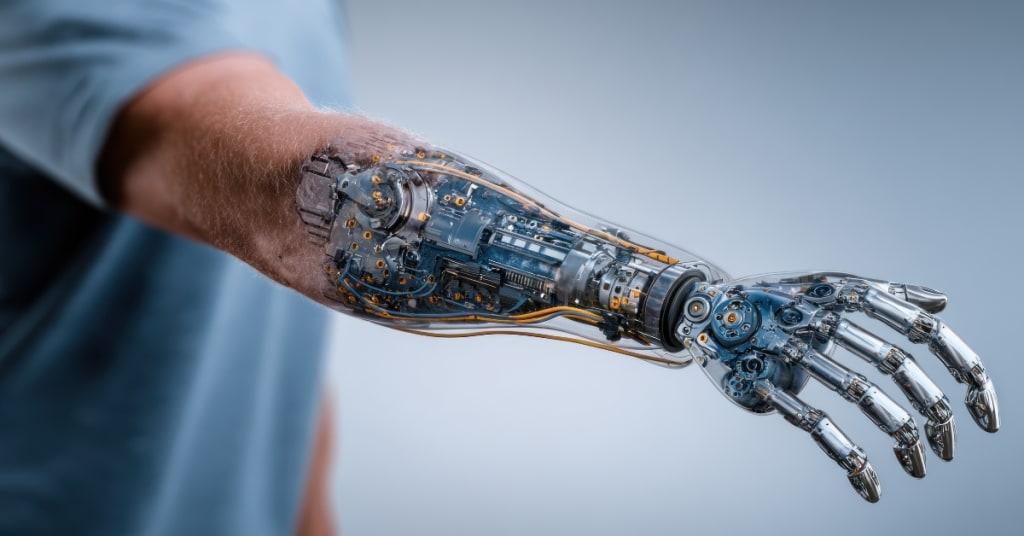
Bionic Devices Market Overview
The global bionic devices market is on a remarkable growth trajectory. Valued at USD 5.74 billion in 2024, it is expected to reach USD 11.90 billion by 2033, expanding at a CAGR of 8.45% between 2025 and 2033. This growth is being fueled by technological advancements in robotics, artificial intelligence (AI), and materials science, coupled with rising disability prevalence and an aging global population.
Bionic devices—ranging from prosthetic limbs and exoskeletons to cochlear implants and neural interfaces—are transforming healthcare by offering enhanced mobility, independence, and improved quality of life for millions worldwide.
Industry Drivers: What’s Fueling Growth?
1. Enhanced Healthcare Access
Improved healthcare infrastructure, particularly in emerging economies, is opening new opportunities for advanced prosthetics and assistive technologies. Public and private insurance coverage is also lowering costs, making bionic devices accessible to a broader consumer base. Governments and NGOs are increasingly partnering to ensure that patients in underserved regions receive high-quality prosthetics and implants at subsidized rates.
2. Rising Disability Prevalence
According to the World Health Organization, over 2.2 billion people worldwide suffer from vision impairment, while millions live with mobility limitations due to spinal cord injuries, limb amputations, and neurological diseases. As these numbers grow, so does the demand for rehabilitation solutions. Bionic devices such as prosthetic limbs, exoskeletons, and neural bionics are becoming critical in addressing this global health challenge.
3. Improved Materials and 3D Printing
The adoption of lightweight, durable materials like carbon fiber and titanium alloys has made prosthetics more functional and comfortable. Meanwhile, 3D printing enables customized, affordable, and faster production of patient-specific devices, revolutionizing manufacturing in the sector.
4. AI and Smart Integration
The integration of AI into prosthetics and implants is enhancing device responsiveness and user control. For example, AI-driven prosthetic limbs can now anticipate movement, while neural bionics improve brain-device communication. These innovations offer patients improved independence and better rehabilitation outcomes.
Challenges in the Bionic Devices Market
Despite promising growth, the market faces obstacles:
- Lack of Awareness: In developing nations, limited awareness and education about bionic technologies hinder adoption. Many patients remain unaware of advanced rehabilitation options.
- Technological Limitations: Issues like short battery life, lack of seamless neural integration, and high production costs continue to challenge manufacturers.
- Affordability: While progress has been made, advanced devices remain expensive compared to traditional aids like wheelchairs and crutches.
👉 For deeper analysis, detailed segment data, and company insights: 🔗 Request Customization Report
Market Segmentation Insights
By Product
- Auditory Bionics/Cochlear Implants: Growing rapidly due to the global rise in hearing impairments.
- Orthopedic Bionics: Includes prosthetic limbs and exoskeletons, with demand rising due to accident-related amputations and aging-related mobility loss.
- Neural Bionics: Gaining attention for their potential to restore mobility and communication in patients with spinal cord injuries or neurological disorders.
- Heart Transplant Devices: Representing a niche but critical segment in life-saving bionics.
By Fixation
- Implantable Devices: Popular for long-term solutions such as cochlear implants and neural bionics.
- Wearable/Externally Worn Devices: Includes exoskeletons and prosthetics designed for rehabilitation and daily mobility.
By Technology
- Electronics-Based Devices: Rapidly advancing with AI, sensors, and robotics integration.
- Mechanical Devices: Still widely used due to reliability and lower costs.
By End-Users
- Hospitals & Clinics: Leading adoption hubs, especially for surgeries and rehabilitation services.
- Ambulatory Surgical Centers: Growing adoption due to shorter recovery times and lower costs.
- Healthcare Facilities: Expanding role in rural and community-level distribution.
Regional Market Outlook
United States
The U.S. is one of the most advanced markets for bionic devices, supported by robust R&D, strong insurance coverage, and high consumer awareness. Rising rates of diabetes-related amputations and neurological disorders are driving demand.
United Kingdom
The UK market benefits from NHS coverage, making advanced prosthetics and cochlear implants accessible to a larger population. Increased activism and disability rights awareness further support growth.
India
India’s market is expanding due to higher disposable incomes, increased accident-related injuries, and a growing diabetic population. However, high costs and low awareness in rural areas remain challenges.
Saudi Arabia
Saudi Arabia’s Vision 2030 initiative is fueling healthcare modernization. Rising diabetes prevalence, high accident rates, and government investment in advanced healthcare infrastructure make it a promising market for bionic technologies.
Global Outlook
- North America and Europe: Mature markets with high adoption.
- Asia-Pacific: Fastest-growing region, driven by large populations and improving healthcare access.
- Middle East & Africa: Gradual adoption, with government-led investments paving the way.
Key Market Trends
- Cochlear Implants on the Rise
With growing hearing impairments, auditory bionics are emerging as one of the fastest-growing segments.
- Implantable Fixation Devices Gain Traction
Secure, durable fixation methods are becoming indispensable in orthopedic surgeries.
- Mechanical Technology Still Crucial
Despite advancements in AI and electronics, mechanical devices remain vital due to affordability.
- Hospitals Dominate End-User Segment
As primary points of care, hospitals remain the largest adopters of advanced bionics.
Competitive Landscape
The global bionic devices market is highly competitive, with leading companies investing heavily in R&D and partnerships.
Key Players Include:
- Abbott Laboratories
- Abiomed
- Edward Lifesciences Corp.
- ReWalk Robotics Ltd.
- Boston Scientific Corp.
- Baxter International Inc.
- Cochlear Ltd.
- Medtronic Plc
- William Demant Holdings A/S
- EKSO Bionics Holdings Inc.
Recent innovations include AI-driven prosthetics, waterproof cochlear implants, and wearable exoskeletons for rehabilitation.
Conclusion: A Transformative Decade Ahead
The bionic devices market is on track for transformative growth between 2025 and 2033. With advancements in AI, materials, and 3D printing, alongside rising global healthcare spending, the industry is moving toward making bionics more affordable, accessible, and effective.
From life-saving heart implants to mobility-restoring exoskeletons, bionic technologies are redefining healthcare. While challenges like affordability and awareness persist, the future promises a world where millions with disabilities can lead more independent, empowered lives.
By 2033, as the market nearly doubles in size, bionic devices will no longer be seen as futuristic innovations—they will be everyday healthcare solutions.
About Renub Research
Renub Research is a Market Research and Consulting Company. We have more than 15 years of experience especially in international Business-to-Business Researches, Surveys and Consulting. We provide a wide range of business research solutions that helps companies in making better business decisions. We partner with clients in all sectors and regions to identify their highest-value opportunities, address their most critical challenges, and transform their businesses. Our wide clientele comprises major players in Healthcare, Travel and Tourism, Food Beverages, Power Energy, Information Technology, Telecom Internet, Chemical, Logistics Automotive, Consumer Goods Retail, Building, and Construction, Agriculture. Our core team is comprised of experienced people holding graduate, postgraduate, and Ph.D. degrees in Finance, Marketing, Human Resource, Bio-Technology, Medicine, Information Technology, Environmental Science, and many more.
Contact Us:
Company Name: Renub Research
Contact Person: Rajat Gupta
Phone No: (D) +91-120-421-9822 (IND)
Email: [email protected]
About the Creator
Renub Research
Renub Research is a Market Research and Consulting Company. We have more than 15 years of experience especially in international Business-to-Business Researches, Surveys and Consulting. Call Us : +1-478-202-3244
Keep reading
More stories from Renub Research and writers in Journal and other communities.
Retinal Surgery Devices Market Set to Reach $4.84 Billion by 2033
Retinal Surgery Devices Market Overview The global retinal surgery devices market is on a strong growth trajectory, projected to rise from USD 2.48 billion in 2024 to USD 4.84 billion by 2033, at a robust CAGR of 7.72%. This expansion is attributed to increasing cases of retinal disorders such as diabetic retinopathy, retinal detachment, and macular degeneration, combined with technological advancements that enable safer, minimally invasive surgeries.
By Renub Research4 months ago in Journal
The goals I did not achieve
Every writing goal I made for the year is a wash. It has been this way for a while, but I think it's important to be open about my failures and the reality of how life can get in the way. This is especially true considering the several times I have posted on Vocal about my writing goals, how I was changing my approach, and where I was hoping to be for the upcoming year. I will probably do that again in a couple months, but for now, it is time to acknowledge where I am today.
By Kay Husnick17 days ago in Journal
'20/20'
"Do It Again" the track that would ultimately open the Beach Boys final album on Capitol Records which was released on February 10th 1969 had originally been released as a single in August of 1968. The track was the first of many post-Pet Sounds era throwbacks to the early Beach Boys sound which would become continually more cliched and eventually lead the Beach Boys to the level of self-parody they would eventually succumb to in the 1980s while their closest contemporaries The Beatles nearing the end of their run in 1969 would go on to be viewed as the most influential band of all time. However, the song itself is not bad on its surface, and it opens with a futuristic sounding (for 1969) drumbeat captured by then-Beach Boys engineer Stephen Desper using tape delays on the drums performed by Dennis Wilson and John Guerin. The song has been re-recorded numerous times over the years on various Beach Boys-related projects most notably the 2011 re-recording at Capitol studios featuring the five surviving Beach Boys at the time backed instrumentally by various members of both the Brian Wilson Band and Mike Loves touring "Beach Boys" to promote the then upcoming Beach Boys 50th Anniversary reunion tour in 2012. The hammering and power drill sound at the end of the song was an excerpt from a track called "Workshop" that was to be a part of the uncompleted "SMiLE" album.
By Sean Callaghan7 days ago in Beat


Comments
There are no comments for this story
Be the first to respond and start the conversation.