
Finding Relief: How PRP Therapy Can Heal Chronic Joint and Tendon Pain
PRP Therapy for Arthritis, Tendonitis, Sports Injuries
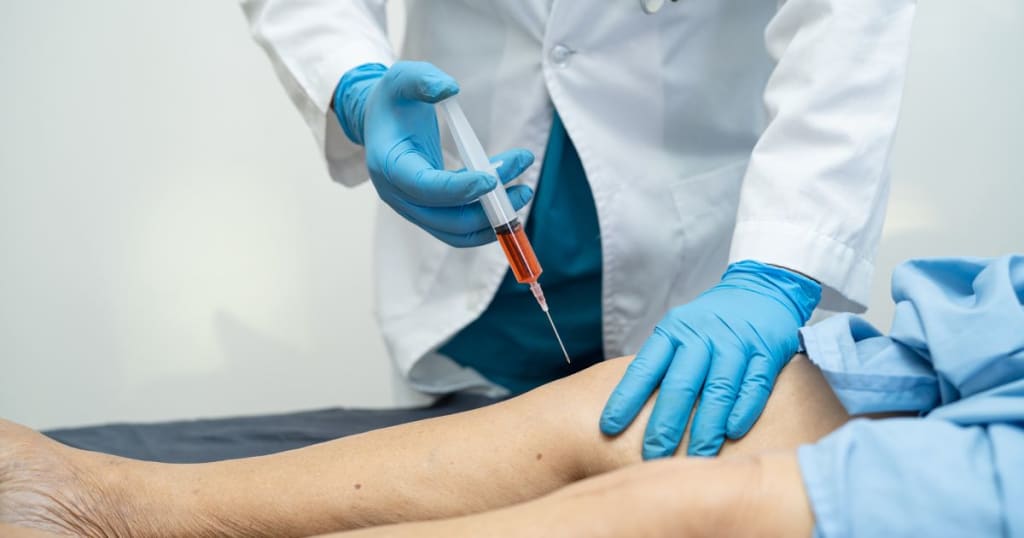
As we age, injuries take longer to heal. That familiar ache in your shoulder when reaching for something on a high shelf, stiffness in your knees when standing up, feeling that “pop” in an elbow or heel during exercise — they often get worse over time rather than better. Doctors may recommend pain medications, physical therapy, braces, or even surgery. But another option that is gaining popularity — regenerative injection therapies like platelet-rich plasma (PRP).
My Story: PRP Brought My Shoulder Back to Life
I’m an avid tennis player and have competed in local tournaments for years. But as I entered my 40s, my shoulder just couldn’t keep up anymore. What began as minor soreness after matches turned into chronic rotator cuff pain, nagging me day and night.
Simple things like lifting heavy boxes or reaching to a high shelf left me wincing. Just tossing the ball upward when serving would send sharp pains down my arm. It even began disrupting my sleep.
My doctor said I had a partial thickness tear in my rotator cuff tendon. He suggested trying rest, physical therapy, and a corticosteroid injection first. But the pain always returned after some temporary relief. An MRI revealed the tear was growing larger over time.
It worked. After three PRP injections spaced one month apart, I began to regain strength and mobility. Today I’m mostly pain-free and able to play competitive tennis once more. And the latest MRI shows the tear is partially healed.
Now I tell everyone with similar joint/tendon issues to at least consider trying PRP before surgery. The science is quite convincing, and I’m living proof that it can work wonders!
How Can Injecting Your Blood Help Heal Injuries?
PRP treatment starts with a standard blood draw. Technicians spin your blood rapidly in a centrifuge to separate its components and extract platelet-rich plasma. Studies find PRP contains 3-5x higher platelet concentrations than whole blood. Other blood components like red and white cells are reduced.
They then inject this concentrated platelet serum directly into the injured or degenerated tissue (tendon, ligament, cartilage, etc). No anesthesia is required since platelet-rich plasma contains no harsh chemicals — it’s made from your blood. You may feel some mild pressure and discomfort at the injection site.
PRP treatment aims to help wherever tissues struggle to adequately heal — like nagging tendonitis or arthritis you can’t seem to shake. Instead of just masking inflammation and pain signals with medications, it tries to resolve the underlying issue through regenerative stimulation.
Who Benefits Most from PRP Injections?
Researchers are still teasing apart which conditions respond best to platelet therapy. But thus far studies and clinical results find PRP helps treat:
Chronic Tendon Injuries
• Tennis/Golfer’s Elbow (lateral/medial epicondylitis)
• Rotator Cuff Tears
• Achilles Tendonitis
• Plantar Fasciitis
Joint/Cartilage Conditions
• Knee Osteoarthritis
• Meniscus Tears & Early Knee OA
• Mild-Moderate Hip OA
• Elbow Tendonosis
Muscle & Soft Tissue
• Hamstring Strain
• Muscle Strains & Contusion
• Ligament Sprains
Essentially, PRP aims to heal the damaged tissue causing all the trouble — not just mute your pain response so you can push through it. This regenerative capacity makes it very promising for otherwise difficult-to-treat conditions unresponsive to other conservative therapies.
What Does the Research Say About PRP Effectiveness?
Dozens of randomized controlled trials demonstrate PRP’s effectiveness and safety for common orthopedic injuries and arthritis.
A 2020 literature review found PRP injection significantly improved pain and function in chronic elbow, hip, and knee osteoarthritis better than hyaluronic acid or placebo. Patients reported faster improvements averaging 4 weeks sooner than the comparison groups as regenerative processes activated.
Some conditions like tennis elbow tend to respond very well. A 2019 review of 10 earlier studies involving nearly 800 patients found almost all reported substantial reductions in elbow pain and disability compared to controls.
Researchers concluded PRP injection consistently demonstrates better safety and efficacy than corticosteroid injections for lateral epicondylitis. It also significantly outperformed physical therapy alone. Remission rates exceeded 74% at six months in PRP groups while controls lagged below 49%.
Can PRP Replace Surgery for Sports Injuries & Tendon Tears?
Not yet in all cases. However, researchers are actively investigating if PRP injections allow some patients to avoid surgery altogether for select injuries. Especially those at risk of surgical complications or unlikely to benefit from the trauma.
One 2018 study followed patients with ultrasound-confirmed partial rotator cuff tears for over two and a half years. PRP significantly improved function and pain compared to exercise therapy alone.
Can PRP Replace Surgery for Sports Injuries & Tendon Tears?
Not yet in all cases. However, researchers are actively investigating if PRP injections allow some patients to avoid surgery altogether for select injuries. Especially those at risk of surgical complications or unlikely to benefit from the trauma.
One 2018 study followed patients with ultrasound-confirmed partial rotator cuff tears for over two and a half years. PRP significantly improved function and pain compared to exercise therapy alone. Nearly 95 percent still avoided surgery after a series of PRP injections.
Similar rotator cuff studies demonstrate PRP paired with physical therapy matches or exceeds surgical outcomes with less risk of complications like infection and nerve damage.
More research is still needed before PRP injections become a direct substitute for surgical repair in full-thickness tendon and ligament tears. But even then, it shows promise for first-line treatment in select populations. Using PRP as an intermediate step between conservative and operative therapies makes sense in many situations based on existing data.
What About Risks and Side Effects?
The minimally invasive nature of PRP therapy makes serious adverse events very rare when performed by experienced clinicians. Since technicians use only your body’s blood tissue, risks of rejection or infection are extremely low compared to foreign device implantation with surgical repairs.
That said, some patients may experience common injection-related side effects like:
• Mild injection site pain
• Temporary swollen tissue
• Minor bruising
Symptoms typically resolve within a few days as the body incorporates the PRP solution.
Rarer complications like infection, numbness from nerve irritation, or thrombosis are unlikely but possible. However, overall adverse event rates appear similar or lower than those seen in corticosteroid and hyaluronic acid injections.
Pro athletes and weekend warriors alike need to weigh the risks and benefits with their medical providers. While PRP treatments will not help every patient, a growing body of clinical evidence demonstrates their healing potential for chronic joint, tendon, and ligament injuries.
About the Creator
Keep reading
More stories from Sanjoy debnath and writers in Journal and other communities.
Stem Cell Therapy: A Ray of Hope for Cerebral Palsy Patients
Cerebral palsy (CP) is a disorder caused by abnormal development or damage to the parts of the brain that control movement, balance, and posture. It is the most common motor disability in childhood, affecting around 1 in 345 children in the United States.
By Sanjoy debnath2 years ago in Journal
~ Fired ~
— Ai Intrusion ~ Are you Next ~ Is Ai Evolution after your job? — Few workplaces haven't been affected. Ai is in supermarkets, at doctors' offices, and even monitoring farms. I just can't think of anything this machine is not getting into, can you? For instance: Education ~ Law and Tech jobs will one day have a major influence or be taken over by these inanimate machines, with accuracy and vigor. From mechanics' diagnoses to a wide variety of everyday jobs, including fast food workers, with this input having the ability to cut their unnecessary work hours. I'm certain all of us have been touched by this with our short stories and colorful headings, have you? Even comments are very questionable 'Non-Robot' insertions.
By Jay Kantor3 days ago in Journal



Comments
There are no comments for this story
Be the first to respond and start the conversation.