
Fiber Optic Cable Manufacturing Plant Setup Cost 2025: Industry Trends, Business Plan and Revenue
Setting up a fiber optic cable manufacturing plant in 2025 is a strategic investment driven by growing demand for high-speed internet, 5G rollout, data centers, and digital infrastructure across India and globally.

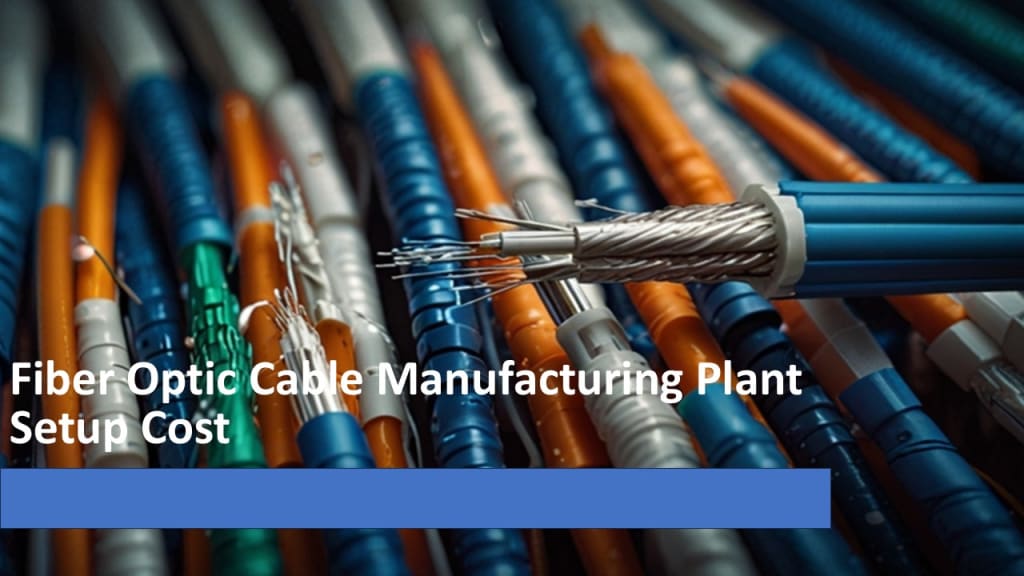
As the need for rapid data transfer accelerates worldwide, there is a growing push toward establishing fiber optic cable manufacturing plants. These cables form the backbone of modern communication infrastructure, powering everything from internet networks and telecom systems to industrial automation. Setting up a fiber optic cable manufacturing facility involves a blend of technical expertise, significant investment, and strategic business planning. This article outlines the key components of plant setup, including business planning, machinery costs, and overall fiber optic cable manufacturing plant setup cost.
Industry Overview
Fiber optic cables are used for transmitting data as pulses of light through strands of glass or plastic. Compared to traditional copper wires, they offer greater bandwidth, lower signal loss, and improved durability. This has made them indispensable in telecommunications, data centers, smart cities, and defense applications.
Driven by rising investments in digital infrastructure, the deployment of 5G networks, and the worldwide push for expanded internet access, the fiber optics manufacturing sector is set for long-term growth. For entrepreneurs and investors aiming to step into this industry, a clear understanding of the operational framework and financial commitments needed to establish a manufacturing facility is essential.
Business Plan for Fiber Optic Cable Manufacturing
Creating a comprehensive business plan is a crucial first step in establishing a successful fiber optic cable manufacturing venture. Serving as a strategic roadmap, this plan outlines the foundational elements of the operation and encompasses several key components:
• Industry Evaluation: Analyzing market trends, existing competitors, and customer segments across both local and global landscapes.
• Product Definition: Specifying the range of fiber optic cables to be manufactured, including options like single-mode, multi-mode, ribbon, and armored variants.
• Production Workflow: Detailing the sequential steps of manufacturing, starting from preform creation and fiber drawing to final processes like spooling and jacketing.
• Regulatory Standards: Ensuring adherence to safety guidelines, environmental regulations, and recognized quality benchmarks.
• Logistics and Procurement Planning: Building a reliable supply network by partnering with material providers and distribution channels.
• Economic Forecasting: Projecting investment needs, income potential, time to profitability, and necessary financial backing.
• Risk Management: Evaluating possible threats in operations and market performance while formulating appropriate contingency plans.
An in-depth business plan does more than steer the setup and day-to-day operations—it also strengthens your credibility when approaching investors or potential partners.
Fiber Optic Cable Manufacturing Plant Setup Cost
A fiber optic cable manufacturing plant setup cost involves various costs associated with infrastructure, machinery, and operational activities. These expenses can generally be grouped into the following categories:
1. Capital Investment
Initial capital is required for acquiring land, constructing factory buildings, and installing utilities such as power, water, and ventilation. The scale of the plant—small-scale, mid-size, or large-scale—significantly impacts the capital requirements.
2. Machinery and Equipment
Machinery costs make up a major portion of the investment. High-precision, specialized machines are essential to ensure quality and efficiency in production. These include:
• Optical fiber preform manufacturing equipment (for in-house fiber production)
• Fiber drawing towers with temperature-controlled furnaces and tension controllers
• UV curing systems for coating the drawn fibers
• Buffering and jacketing lines for applying protective layers
• Stranding and cabling machines for assembling multiple fibers
• Testing equipment for optical performance, tensile strength, and attenuation
The choice between buying new, imported, or locally manufactured machinery also influences the total cost.
3. Infrastructure and Utilities
The plant setup must accommodate a cleanroom environment for certain production stages, along with well-designed layouts for raw material storage, processing areas, finished goods warehousing, and quality control labs. Adequate power backup systems, climate control, and safety mechanisms are also necessary.
Machinery Cost Breakdown
The machinery cost for a fiber optic cable manufacturing plant varies depending on the production capacity, level of automation, and range of products. Advanced equipment offers better precision and scalability but requires a higher upfront investment.
Key cost components include:
• High-speed fiber drawing towers with temperature and tension control features
• Coating and curing units with integrated quality monitoring systems
• Cabling and jacketing machines capable of handling different cable structures
• Test and measurement tools such as OTDRs (Optical Time-Domain Reflectometers) and attenuation testers
• Ancillary equipment like spooling machines, cable markers, and cutting units
Investing in reliable, high-quality machinery can reduce maintenance needs and ensure consistent production output, which is critical in meeting industry standards and customer expectations.
Operating Costs
Once the plant is operational, there are recurring operating costs that must be managed to maintain profitability. These include:
• Raw materials such as optical fiber preforms, coating materials, and cable sheathing components
• Labor costs covering skilled technicians, quality control engineers, machine operators, and administrative staff
• Energy consumption, particularly in high-temperature processes like fiber drawing
• Maintenance and spare parts for machinery upkeep
• Logistics and packaging for delivering finished products to customers or distributors
• Quality assurance and compliance testing to ensure adherence to global standards
Optimizing these costs through process automation, bulk procurement, and efficient workforce management can significantly impact margins.
Regulatory and Quality Considerations
Fiber optic cable manufacturing must meet stringent regulatory requirements and industry certifications. Compliance ensures product reliability, market acceptance, and safety. Common certifications include:
• ISO 9001 for quality management systems
• RoHS and REACH for environmental and chemical compliance
• Telcordia and IEC standards for telecom-grade cables
Following these standards from the very beginning helps avoid legal complications and strengthens the manufacturing facility’s reputation.
Growth Potential and Expansion
A fiber optic cable manufacturing plant, once established, offers multiple avenues for growth:
• Scaling up production capacity to meet growing market demand
• Diversifying product lines to include specialty cables or custom configurations
• Export opportunities to regions with expanding digital infrastructure needs
• Vertical integration by producing optical fibers in-house or entering cable installation services
Long-term success depends on innovation, customer relationships, and adaptability to evolving technology trends such as 5G, smart cities, and IoT connectivity.
Establishing a fiber optic cable manufacturing plant requires substantial capital but offers significant growth potential in today’s digital transformation landscape. A strategic business plan, careful cost assessment, and investment in precision machinery are key to a successful launch. While the fiber optic cable manufacturing plant setup cost varies by scale and complexity, a well-planned operation can deliver long-term returns and play a pivotal role in building tomorrow’s communication networks.
About the Creator
Andrew Sullivan
Hello, I’m Andrew Sullivan. I have over 9+ years of experience as a market research specialist.
Keep reading
More stories from Andrew Sullivan and writers in Journal and other communities.
Tyre Manufacturing Plant Setup: Cost 2025: Machinery and Business Plan Overview
The global tyre market continues to expand alongside automotive production and rising vehicle usage. For businesses considering entry into this sector, establishing a tyre manufacturing plant can offer long-term commercial potential. This guide outlines key setup components and major tyre manufacturing plant setup costs.
By Andrew Sullivan6 months ago in Journal
Smart phones, Humans and Aliens.
WARNING. I will be tapping into one of your favorite creative tensions: The absurdity of humans worshipping their glowing rectangles as if they were tiny oracles. There’s something deliciously poetic about that contradiction, and it lends itself beautifully to an instructive proviso.
By Novel Allen5 days ago in Poets


Comments
There are no comments for this story
Be the first to respond and start the conversation.