
FDA Refuses to Review Moderna’s mRNA Flu Vaccine Application, Sparking Industry Uproar
Regulatory setback highlights tensions over trial design standards and broader shifts in U.S. vaccine policy
The world of vaccines just witnessed an unexpected twist. Moderna, the biotech company famous for its COVID-19 mRNA vaccine, received a refusal-to-file (RTF) letter from the U.S. Food and Drug Administration (FDA) for its seasonal influenza mRNA vaccine, mRNA-1010. While this is not a safety rejection, the news sent ripples across the biotech and pharmaceutical industries—and even Wall Street. In this blog post, we break down what happened, why it matters, and what could come next.
What Happened?
On Tuesday, Moderna announced that the FDA had declined to begin a review of its application for mRNA-1010. The official reason? According to the FDA’s Center for Biologics Evaluation and Research (CBER), the clinical trial design did not meet current expectations—specifically, the choice of comparator vaccines.
The trials had compared mRNA-1010 against a licensed standard-dose seasonal flu vaccine, but the FDA argued that a more advanced comparator—like high-dose or adjuvanted vaccines for older adults—should have been used. This has nothing to do with safety or efficacy concerns; in fact, Moderna reported that the vaccine performed well in its Phase 3 trials, which included around 40,000 participants.
Moderna’s Response: Strong and Vocal
Moderna’s CEO, Stéphane Bancel, did not mince words. In a public statement, he said that the FDA’s rationale was inconsistent with prior discussions and could undermine the shared goal of advancing new medicines. He stressed that the refusal does not reflect any problems with the vaccine itself.
“It should not be controversial to conduct a comprehensive review of a flu vaccine submission that uses an FDA-approved vaccine as a comparator in a study discussed and agreed upon with CBER prior to starting,” Bancel said.
Industry experts describe RTF letters as rare for vaccine applications, especially for vaccines that have successfully met primary trial endpoints. This makes Moderna’s situation particularly noteworthy.
Why Comparator Choice Matters
The FDA’s central concern is that the trial did not use the highest standard of care for older adults, a group that is especially vulnerable to flu. Older Americans often receive high-dose or adjuvanted flu vaccines, and the agency wants new vaccines to demonstrate clear superiority against these formulations.
Critics argue that the FDA’s new expectations are somewhat subjective. There is no clear written guidance requiring this specific comparator, and Moderna believes the agency’s standards shifted after the trial was already designed.
For context, Moderna also submitted additional analyses comparing mRNA-1010 against a high-dose vaccine in older adults. However, the FDA still deemed the data insufficient under the updated guidelines.
Market and Industry Implications
Moderna’s stock immediately reacted, falling between 6% and 9% in extended trading. Investors are closely watching how this might affect the company’s vaccine revenue and its reputation for mRNA innovation.
The FDA’s decision may also signal broader changes in U.S. vaccine policy. Other companies developing next-generation flu vaccines might now have to reassess trial designs, which could increase costs and delay approval timelines.
Global Perspective
While the FDA decision is a setback in the U.S., Moderna is still pursuing approvals elsewhere. The vaccine is currently under review in the European Union, Canada, and Australia, where regulators have accepted submissions and begun their evaluations. Approvals in these regions could still come in late 2026 or early 2027.
Additionally, Moderna has requested a Type A meeting with the FDA to discuss the RTF letter in detail. These meetings allow companies and regulators to clarify requirements and plan a path forward for resubmission.
Why This Matters Beyond Moderna
This episode highlights some key trends in the biotech industry:
Regulatory expectations are shifting. Even well-designed trials that meet endpoints may face scrutiny if agency standards evolve mid-development.
mRNA technology is under the microscope. While mRNA vaccines revolutionized COVID-19 protection, regulators are now approaching new applications cautiously.
Innovation may be slowed. If companies have to redesign trials to meet new comparator standards, bringing new vaccines to market could take longer.
The FDA emphasizes that its goal is to protect public health and ensure vaccines are safe and effective, but companies and investors alike are watching how transparency and consistency in regulatory standards evolve.
Looking Ahead
Moderna insists that the RTF letter will not materially affect its overall business strategy. The company continues to expand into other areas, including oncology and new mRNA therapeutics, while navigating the evolving U.S. regulatory landscape.
For consumers and the healthcare industry, the key takeaway is that scientific progress continues, but regulatory hurdles may shape how quickly innovations like mRNA-based flu vaccines reach the public. Moderna’s next steps—especially in discussions with the FDA—will likely set a precedent for future vaccine submissions in the U.S.
Conclusion
The FDA’s refusal to file Moderna’s mRNA-1010 application is more than just a single regulatory hiccup—it’s a signal of shifting standards, a challenge to mRNA innovators, and a reminder that the path from lab bench to medicine cabinet is rarely straightforward. While the U.S. setback is significant, global approvals and continued trials mean Moderna’s flu vaccine may still make its mark in the coming years.
The story of mRNA vaccines is far from over, and this latest chapter underscores the delicate balance between innovation, regulation, and public health.
About the Creator
Keep reading
More stories from Ayesha Lashari and writers in Journal and other communities.
Kraft Heinz Pauses Work Amid Strategic Review: A Sign of Deeper Changes in the Food Industry
Kraft Heinz, one of the world’s largest and most recognizable food and beverage companies, has recently announced a pause on certain projects and operational initiatives as part of a broader strategic review. The move has sparked conversations across the business world, raising questions about the company’s long-term direction and the broader challenges facing legacy food manufacturers in today’s rapidly changing market.
By Ayesha Lashari2 days ago in Journal
Molly Adventure
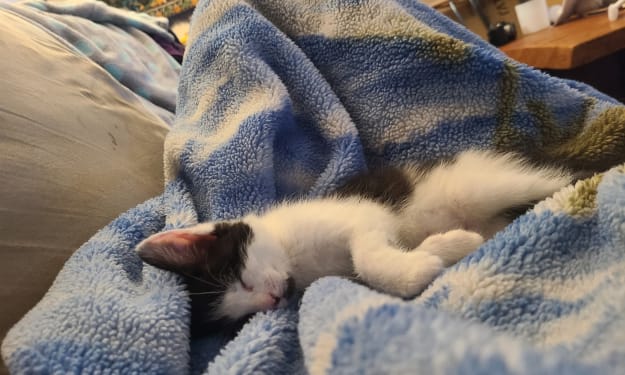
Spring is always an exciting time on the farm. Not only are flowers in bloom, but it is the time baby kittens are born. I have always loved seeing what color combos we get, how many each mamma has, also finding out their genders. Finding the birth places is also a lot of fun to see what places the mom's choose. When I was growing up on the farm we bottle raised about two litters. Last year after our one female had her second litter she moved all of them except one. A little black and white angel in the flower bed all alone crying. I visit my brother at the farm at least three days a week. I heard her crying the first day and figured mom would be back for her. The second day was chilly ,and wet rain off and on. She was cold, damp, and hungry. I couldn't handle it I went into my brother's room grabbed a shoe box and got a towel out of the closet, and took her. I stopped in with my grandma she heated a towel for her. I knew I had taken on a huge job of bottle raising a kitten. I thought back to the other two litters. We had help the my brother, my grandma, my mom, and me we all helped to bottle feed. I knew I had to save this baby for a reason. I went to the nearest animal supply store got a bottle kitten formula and syringe to feed her. Then began the adventure the vet wouldn't see her until she was a month old. At the time we got her we believed she was about nine days old. Eyes were open, but she needed to be fed by bottle or syringe, and help to go potty. My vet emailed me instructions on how to care for an orphan kitten. I had a small heating pad in the bigger box I found at my house for her. I also gave her a little beanie baby cat toy to have as a friend. My hubby was starting a two week vacation which we were spending at home. That helped me out he did a lot of the night caring for her. After every feeding we had to wipe her bottom so she would go to the bathroom. She had so much diarrhea her bottom got so sore we had to get special wipes. She was such a messy eater she needed so many baths. She is four months old now healthy as can be. Her first visit to the vet not one thing wrong with her. She loves to play with her big brother only a few months older than her. Her two older sisters have a love hate relationship with her. I look at my little angel everyday and I can't believe she is alive. So many people including my grandmother didn't think she would make it. The first two weeks were scary. She slept a lot and I wasn't sure if I was keeping her warm enough if she was eating enough. I guess my hubby and I did I good job. She is still a messy eater at times. Yes I may of dropped her twice, but kittens are very stable animals and can take a lot of abuse. We weren't looking to add a fourth to our cat family for some reason God said, "Surprise she is yours." I am glad he did. She completed out home our cat family the perfect playmate for her brother Coffee. I named her Molly not sure why it just felt right. She is the angel I didn't think I needed. We had some many adventures already. Many trips to my grandma's house, treat or treating to my grandma's house, trip to camp, and got a clean bill of health at the vet. My grandma loves her so much. My step mom loves to get pictures of her, and loves that I saved her. I know she would of died if I hadn't saved her. She is the angel I didn't know I needed.
By catgabby1 Funk5 days ago in Journal


Comments
There are no comments for this story
Be the first to respond and start the conversation.