
Exploring the Main Applications of 100-Ton Overhead Cranes
Lifting large and heavy loads with precision and safety
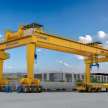

100-ton overhead cranes play a critical role in various industrial settings where the lifting and handling of heavy materials are essential. These cranes, with their immense lifting capacity, are indispensable in environments that demand the movement of large and heavy loads with precision and safety. Here, we explore some of the main applications of 100-ton overhead cranes, highlighting their importance in steel mills, shipyards, manufacturing plants, and warehouses.
Steel Mills
Steel mills are one of the primary users of 100-ton overhead cranes. In these environments, cranes are required to handle heavy and bulky materials such as raw steel, billets, coils, and finished products. The production of steel involves various processes, including casting, rolling, and forging, which necessitate the movement of extremely heavy items. Overhead cranes facilitate these processes by transporting materials between different stages of production. Their robust design ensures they can withstand the harsh conditions typically found in steel mills, such as high temperatures and dusty environments.
In addition to their role in material handling, 100-ton overhead cranes in steel mills often come equipped with specialized lifting attachments. These attachments can include electromagnetic lifters for handling steel plates and slabs, or tongs and grabs for moving ingots and other irregularly shaped items. The flexibility provided by these attachments enhances the efficiency and safety of steel mill operations. Moreover, the integration of advanced control systems allows for precise handling and positioning of materials, reducing the risk of damage and improving overall productivity.
Shipyards
In shipyards, 100-ton overhead cranes are essential for building and maintaining ships. These cranes are used to lift and position large and heavy components such as ship sections, engines, and other machinery. The construction of a ship involves assembling numerous large parts, and overhead cranes provide the precision and strength needed to handle these components safely. Additionally, during the maintenance and repair of ships, overhead cranes are crucial for removing and installing heavy parts. Their ability to move loads horizontally and vertically allows for precise positioning, which is vital in the complex and confined spaces of a shipyard.
The use of 100-ton overhead cranes in shipyards extends beyond ship construction and maintenance. They are also vital in the loading and unloading of cargo, making them integral to the shipyard’s logistics operations. These cranes can handle oversized and heavy cargo that would be impractical or impossible to move with smaller lifting equipment. By facilitating the efficient movement of materials and components, overhead cranes help shipyards meet tight construction and maintenance schedules, ultimately contributing to the timely delivery of projects and minimizing downtime.
Manufacturing Plants
Manufacturing plants that produce heavy machinery, automotive parts, and other large products rely on 100-ton overhead cranes to streamline their operations. These cranes enable the efficient handling of raw materials, semi-finished products, and finished goods. In the automotive industry, for example, overhead cranes are used to transport car bodies and large components along the production line. The cranes' ability to lift and move heavy loads enhances productivity by reducing manual handling and the associated risks. Moreover, they contribute to the flexibility of the production process, allowing for quick adjustments and modifications to meet varying production demands.
In addition to automotive manufacturing, other sectors such as aerospace, heavy equipment production, and energy infrastructure also benefit from the use of 100-ton overhead cranes. In aerospace manufacturing, cranes are used to assemble aircraft components, engines, and other large structures. These cranes ensure that even the heaviest and most delicate parts are handled with care, maintaining the integrity of the components and ensuring high-quality assembly. In the energy sector, overhead cranes play a critical role in the construction and maintenance of power plants, wind turbines, and other infrastructure, enabling the efficient handling of heavy equipment and materials.
Warehouses
In warehouses that store heavy materials and large components, 100-ton overhead cranes provide a reliable solution for moving and organizing inventory. These cranes are particularly useful in warehouses dealing with bulky items like steel coils, large machinery, and construction materials. By using overhead cranes, warehouses can maximize their storage space and improve the efficiency of their operations. The cranes' capacity to lift and transport heavy loads reduces the need for multiple smaller lifts, thereby saving time and labor costs. Additionally, they enhance safety by minimizing the risks associated with manually handling heavy items.
The application of 100-ton overhead cranes in warehouses also extends to logistics and distribution centers where large volumes of heavy goods are processed daily. These cranes facilitate the swift and efficient movement of goods from storage areas to loading docks, ensuring timely shipments and deliveries. Furthermore, the integration of automation and smart technology in modern overhead cranes allows for improved inventory management, real-time tracking of goods, and enhanced operational efficiency. This technological advancement helps warehouses meet the growing demands of e-commerce and global supply chains, ensuring seamless and efficient operations.
Conclusion
The applications of 100-ton overhead cranes in steel mills, shipyards, manufacturing plants, and warehouses demonstrate their versatility and indispensability in heavy-duty industries. These cranes are engineered to handle the most demanding lifting tasks, providing the strength, precision, and reliability required in environments where heavy materials and large components are commonplace. As industries continue to evolve and the demand for heavy lifting solutions grows, overhead crane 100 ton will remain a cornerstone of industrial operations, ensuring efficiency, safety, and productivity.
About the Creator
Aicrane01
Welcome to the Aicrane Blog, your practical guide to lifting solutions. Discover articles covering overhead cranes, gantry cranes, winches, steel structures, boat lifts, and more.
Website: https://steelmillcranes.com/




Comments
There are no comments for this story
Be the first to respond and start the conversation.