
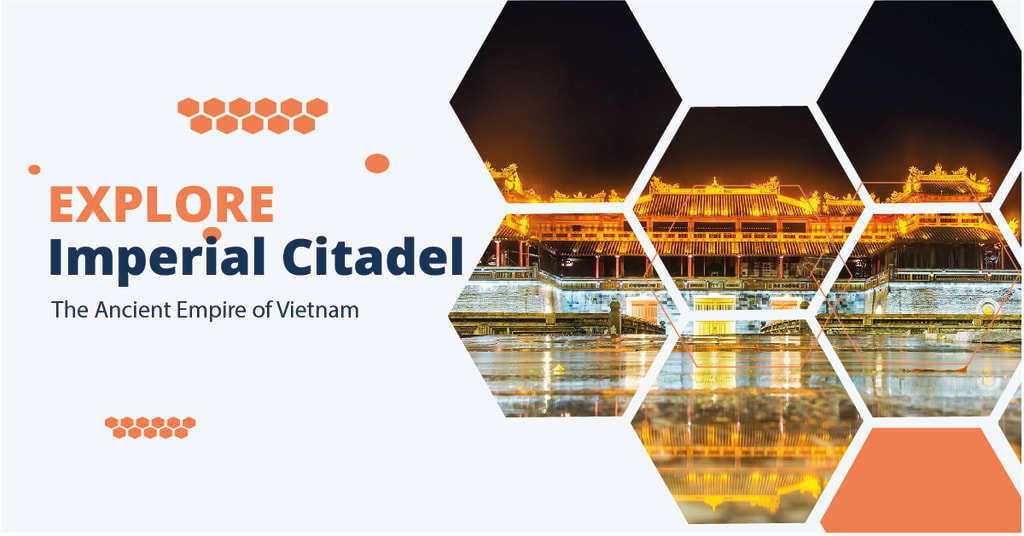
Explore Imperial Citadel: The Ancient Empire of Vietnam
The Imperial Citadel of Vietnam has outstanding cultural and architectural values. Citadel of Hue, Imperial Citadel of Thang Long, and Ho Dynasty Citadel.
A trip to Vietnam will not be complete without visiting various historical places that reflect the long-lasting historical traits of the country. Vietnam is renowned for its sophisticated culture and heritage since many dynasties and colonizers ruled the S-shaped country. These events have had an immense influence on its culture and architecture.
Additionally, many Vietnamese people feel proud of their historical sites when introducing them to foreigners. Among various historical sites, there is a miss if we do not mention the Imperial Citadel in many places. They are symbols of both glory and gore of the rulers in Vietnam. In the article, specialist tour operators will show you highlights of the imperial citadel in Vietnam.
Citadel of the Ho dynasty - Ho Dynasty Citadel
As built by Ho Quy Ly in 1397, Ho Dynasty Citadel was completed within three months. This is a place where Ho Quy Ly lived for ten years after the overthrow of the Tran Dynasty. People built the Ho Dynasty using large stones with rudimentary techniques. However, through time and the war, the architecture of the Ho Dynasty Citadel remained intact.
The ancient Chinese invaders stated that the Citadel of the Ho Dynasty was destroyed through ups and downs and was not intact. Surrounding the Ho Dynasty Citadel are relics such as the exhibition house, Nang Cave and An Ton mountain, Ho Cong Cave, and so on. Inside the citadel of the Ho Dynasty are Thanh Noi (Inner Citadel), Hao Thanh, La Thanh, and Nam Giao Altar.
Thanh Noi - Inner Citadel
Thanh Noi carries out the main architectural work of the citadel since locals call it the Imperial Citadel with the remains of the royal palaces and temple. Additionally, the Inner Citadel has about 870 meters in length in the northern and southern and about 883 meters in length in the eastern and western. This part of the Ho Dynasty Citadel has four domed gates: South, North, West, and East.
Hao Thanh
The Ho Dynasty Citadel is a system of water trenches around Thanh Noi. Besides, it is connected with the Buoi River through a canal in the southeast part of the imperial citadel.
La Thanh
La Thanh looks like an outer wall of the imperial citadel to protect Thanh Noi since Thanh Noi was home to people in the citadel. Besides, the La Thanh was about 10 kilometers in the perimeter. The construction of the imperial citadel was based on the natural terrain.
Nam Giao Altar
The part of Imperial Citadel is located in the southwest of Don Son Mountain and connected with the south gate of Thanh Noi. Ancient people used Nam Giao Altar to sacrifice to heaven and pray for harmonious rain and wind, a prosperous and long-lasting dynasty.
Citadel of Hue city
Ancient people built the Imperial Citadel in Hue in 1902 by King Gia Long after over 100 years. Throughout the time and wars, people chose the centerpiece of the Vietnam War. Therefore, the United States and the imperialists bombed the Imperial Citadel of Hue city. The wars damaged the buildings around the citadel of Hue city badly. Nowadays, the Vietnamese government and authorities did restore it intact. However, some parts of the Imperial Citadel in Hue have not been restored.
Additionally, there are ten majestic gates that lead to the Imperial Citadel of Hue city. It is divided into two parts excluding houses and mansions such as the Citadel and the Forbidden City. The Citadel protected the palaces inside the Imperial Citadel of Hue city. Meanwhile, the Forbidden city was a place for the emperor and the royal family to stay and the court’s workplace.
Visiting the Imperial Citadel of Hue city, tourists can see traditional eastern architecture: majestic palaces, tombs, and temples, making an utmost tourist attraction.
Imperial Citadel of Thang Long
Exploring the history and mysteries of the Imperial Citadel of Thang Long, let’s look back to 1000 years ago. In 1009, Ly Cong Uan took the throne and founded the Ly Dynasty. After moving to the capital of Vietnam, Ly Cong Uan built the Imperial Citadel of Thang Long in 1011.
Furthermore, the royal palaces and most of the structures in the Imperial Citadel of Thang Long were destroyed during the French colonial era. Moving to the 20th century, the remaining structures were torn down since the Imperial Citadel was home to keeping about 4000 prisoners in March 1954.
In the 21st century, the foundations of Thang Long Imperial Citadel were excavated. Explore more architectural values of the Imperial Citadel of Thang Long.
Flag Tower - The most iconic symbol of Imperial Citadel Hanoi
This is one of the most iconic symbols of Hanoi. With 33.4 meters in height, the Flag Tower consists of four parts: the base, the second floor, the third floor, and the top. The third floor of the tower has four doors in four directions. Besides, there is a cylindrical pillar at the top of the flag tower. The Nguyen Dynasty built the flag tower in 1812 over the French era.
Kinh Thien Palace - the heart of Hanoi Citadel in Thang Long
Kinh Thien Palace is a central relic in the sophisticated Imperial Citadel Thang Long. Ancient people built the King Thien Palace in 1428 to celebrate imperial ceremonies and important national affairs. The Imperial Citadel of Thang Long features 57 meters in length, 41.5 meters in width, and over 2.3 meters in height. Tourists can find more sophisticated dragon statues on green stones along the stairs.
Doan Mon in the South Gate
Doan Mon in the Imperial Citadel of Thang Long was built in the Le Dynasty. The place allowed royal family members to pass the gate. There is only the main gate in the middle of the Imperial Citadel of Thang Long and four small gates. Local people hang lotus-shaped lanterns which are lit up at night. Thus, it will add mystical beauty to the Imperial Citadel of Thang Long.
Bac Mon in the North Gate
It is located to the north of the Imperial Citadel of Thang Long with two remaining gates. Ancient people built Bac Mon with brick and arches of stone. This is a place to worship the two governors of Hanoi: Nguyen Tri Phuong and Hoang Dieu.
Hau Lau - Princess Pagoda
Hau Lau is the tower in the back. As built of brick, Hau Lau includes a basement and three floors above. The architecture of the Imperial Citadel of Thang Long is a place for princesses and queens. At the end of the 19th century, the wars and time damaged Hau Lau severely. After that, the French rebuilt the place as it is today.
Wrapping Up
If you are planning a visit to Vietnam, exploring the Imperial Citadel throughout Vietnam is worth experiencing. The interesting excavated remains and mock-ups of the ancient Imperial Citadel will give you a deep-diving understanding of Vietnamese cultures and history over thousands of years. As leading a travel and tour agency in Vietnam, World Mate Travel helps you create tailor-made tours and packages with memorable experiences.
About the Creator
Keep reading
More stories from World Mate Travel and writers in Journal and other communities.
The goals I did not achieve
Every writing goal I made for the year is a wash. It has been this way for a while, but I think it's important to be open about my failures and the reality of how life can get in the way. This is especially true considering the several times I have posted on Vocal about my writing goals, how I was changing my approach, and where I was hoping to be for the upcoming year. I will probably do that again in a couple months, but for now, it is time to acknowledge where I am today.
By Kay Husnick23 days ago in Journal
Why do catholics worship, Mary?
One of the questions that often comes up for people learning about the Catholic faith is why Catholics honor Mary, the mother of Jesus. It is a common misconception that Catholics worship Mary. In fact, the Church teaches that worship is due to God alone. Catholics do not pray to Mary as if she were God, nor do they believe she has divine power independent of God. Instead, Mary is honored because of her unique role in salvation history and her close relationship with her son, Jesus Christ.
By Sound and Spirit5 days ago in Journal




Comments
There are no comments for this story
Be the first to respond and start the conversation.