
Everyone is Wrong About Something
How Accepting Our Mistakes Leads Us to Real Growth

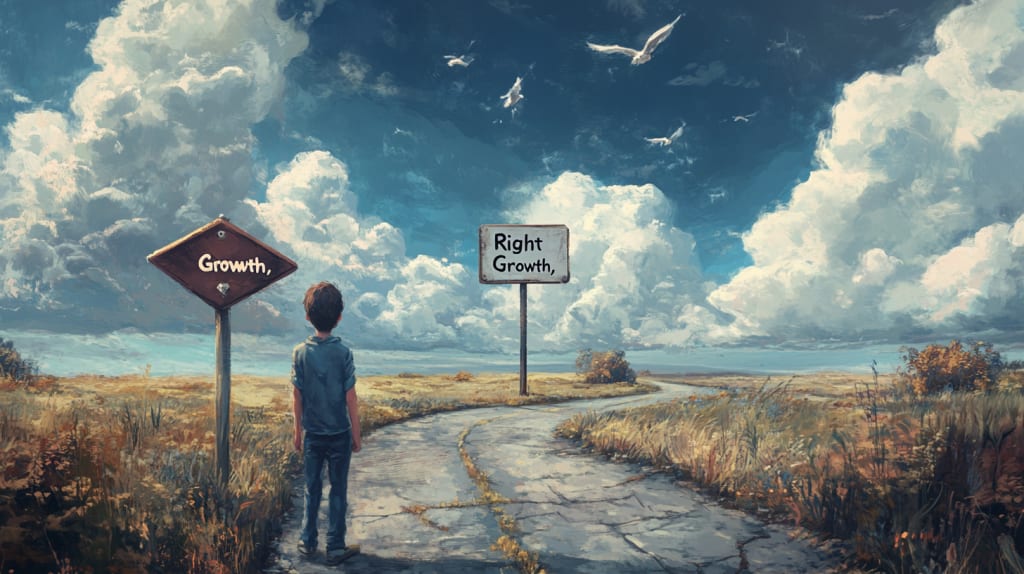
What if being wrong wasn't just common'but necessary? This idea, though uncomfortable, might be one of the most freeing realizations we can have. I didn't come to this conclusion all at once. It was more like a series of gradual nudges, pushing me to rethink beliefs I once held as truth. But over time, I reached a somewhat unsettling yet transformative understanding: everyone is wrong about something. Not just the occasional slip-up, but often something deep-seated, a belief or assumption we rarely question.
This realization isn't exactly a comfortable one. It's unsettling to admit that what we 'know' may not be as reliable as we think. And yet, it's freeing, too. The more I embraced this idea, the more liberated I felt from the constant need to be right. After all, if everyone'no matter how intelligent, accomplished, or thoughtful'is bound to be wrong about something, then maybe it's okay to make room for a little doubt.
Being wrong isn't a flaw; it's part of being human. From the greatest minds to the average person, history is littered with examples of people who believed things that later proved false. Consider the scientists who thought the earth was flat or that the sun revolved around us. Even Albert Einstein, the very symbol of genius, famously called his belief in a 'cosmological constant' his 'biggest blunder.' It's humbling to think that even the most brilliant among us are sometimes wrong. And yet, knowing this can remind us of something important: if everyone can be wrong, then there's no shame in it.
However, most of us carry a deep-seated fear of mistakes, especially when they're tied to things we've believed for years. Many of us were raised to think that being wrong is something to avoid, something that should bring embarrassment. As children, we were rewarded for 'right' answers and saw mistakes marked in red. But what if we looked at mistakes differently? What if we saw them not as failures but as steps on a path to understanding? Isn't it often our realization of being wrong that nudges us into growth?
This perspective shift requires vulnerability. Letting go of the ego's need to be right, and admitting we don't have everything figured out, can feel risky. But while admitting fault may seem like a weakness, it's actually a strength'a step toward seeing the world more fully. When we allow ourselves to be wrong, we create space to grow. We become better listeners, more open-minded, and even more compassionate. And as we realize that everyone is wrong about something, it becomes easier to forgive others for their own stumbles.
For me, one of the most humbling moments of being wrong happened a few years ago in a work meeting. I was absolutely convinced of my stance on a project, certain that my perspective was the most practical and well-informed. I argued for it, resisted other viewpoints, and doubled down whenever anyone raised a concern. But as the project progressed, it became clear that my approach wasn't as foolproof as I'd thought. I'd missed some crucial details that others had tried to point out. My face burned with embarrassment as I realized my error. But this humility also made me more receptive to my team's ideas moving forward. It was a small mistake in the grand scheme, but the lesson was unforgettable: sometimes, being wrong can teach us more than being right ever could.
The beauty of being wrong is that it doesn't define us. Instead, it refines us. Every mistake is an opportunity, a doorway to a clearer understanding of ourselves and the world around us. Realizing we're wrong can be a humbling experience, but it's also a powerful reminder of our shared humanity. Everyone you meet, no matter how certain they seem, carries beliefs that are mistaken or incomplete. So instead of feeling shame when we're wrong, we can view it as part of our journey'a step toward becoming a better version of ourselves.
Accepting that we're wrong about something isn't easy, but it's worth it. It teaches us to be better listeners, more open-minded thinkers, and kinder people. So next time you find yourself resisting a different perspective, consider it an invitation to grow. What you discover might surprise you. After all, maybe admitting we're wrong is the first step toward getting things right.
About the Creator
Keep reading
More stories from Ellis Grey and writers in Journal and other communities.
Why the Beach Feels Like Home
From childhood summers spent building sandcastles to quiet winter mornings watching the tide roll in, the beach has always been more than just a destination to me. It’s a place where I can breathe, listen, and simply be. With each visit, I feel grounded, as though the rhythm of the waves somehow aligns with my own heartbeat, calling me to let go and be fully present.
By Ellis Greyabout a year ago in Journal




Comments
There are no comments for this story
Be the first to respond and start the conversation.