
Eric Tippetts Explains Why Entrepreneurship Is Important To The Economy
Entrepreneurship sits at the heart of modern economies, acting as both a catalyst for innovation and a steady engine for job creation.
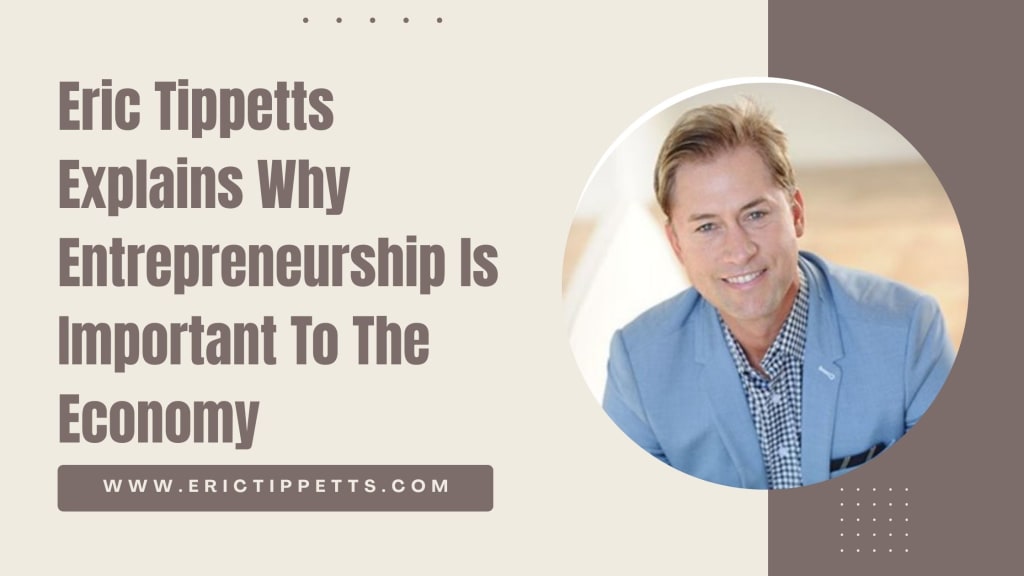
Entrepreneurship sits at the heart of modern economies, acting as both a catalyst for innovation and a steady engine for job creation. In a clear, optimistic take, Eric Tippetts explains why entrepreneurship matters not only to small communities but to national economic health. His perspective underscores how new ventures, whether tech startups or community-focused small businesses, reshape markets, create resilience, and keep the economic cycle healthy.
The economic case for entrepreneurship
1. Job creation and productivity gains
Startups and small businesses are the primary source of net new jobs in many countries. When entrepreneurs launch companies, they hire staff, work with suppliers, and stimulate demand in adjacent industries. Eric Tippetts often points out that each successful new firm multiplies economic activity generating payrolls, tax revenues, and consumer spending that support broader growth.
2. Innovation and competitive pressure
Entrepreneurs bring fresh ideas and business models that incumbents must respond to. That competitive pressure raises productivity across sectors: existing firms streamline operations, invest in new technologies, and improve customer service. In conversations about economic dynamism, Eric Tippetts emphasizes that innovation is rarely evenly distributed—it's the concentrated effort of risk-taking founders that pushes entire industries forward.
3. Regional development and inclusivity
Beyond big-city unicorns, entrepreneurship fuels regional renewal. Rural towns and smaller cities benefit when local founders start businesses that employ neighbors and attract visitors or investors. Eric Tippetts highlights community-rooted entrepreneurship as a powerful tool for reducing regional inequality—keeping talent and capital circulating locally instead of concentrating it in a few coastal hubs.
How entrepreneurship builds economic resilience
Diversification of the economy
Economies overly dependent on a handful of industries are vulnerable to shocks. Entrepreneurs diversify the economic base by introducing new products and services. When global demand for one sector drops, a diversified economy supported by a vibrant startup scene weathers downturns more effectively. This strategic resilience is a point Eric Tippetts returns to when discussing long-term economic planning.
Rapid problem-solving during crises
Entrepreneurs are agile. During crises—natural disasters, supply-chain breaks, or sudden market shifts—small companies can pivot quickly, repurposing production, innovating solutions, and filling urgent needs. Eric Tippetts argues that this agility complements larger institutions’ capacity, creating a two-speed system where nimble startups address immediate gaps while established firms scale solutions.
Creation of human capital
Starting a business is an intense learning process. Founders and early hires acquire a breadth of skills—from finance and operations to customer acquisition—that multiplies throughout the labor market as employees move between firms or start new ventures. This development of human capital increases the economy’s overall capability and adaptability, a phenomenon Eric Tippetts calls a “skills multiplier.”
Practical benefits for consumers and markets
- Better products and services: Competition from startups leads to higher quality and lower prices.
- Greater choice: Niche businesses satisfy diverse consumer needs that mass-market firms overlook.
- Faster adoption of technology: Entrepreneurs often act as early adopters and integrators of new tech, accelerating diffusion.
These consumer-side benefits translate into measurable economic gains, which is why voices like Eric Tippetts stress the direct link between entrepreneurship and improved standards of living.
Policy and ecosystem actions that amplify entrepreneurial impact
Invest in early-stage financing
Access to seed funding and microloans enables founders to validate ideas and scale. Public and private initiatives that reduce early-stage capital gaps make it easier for promising ventures to survive the critical first 12–24 months. Eric Tippetts endorses targeted financing that balances risk with mentorship.
Simplify regulations and lower barriers
Streamlining business registration, reducing unnecessary licensing costs, and making tax compliance simpler encourage more entrepreneurs to formalize their ventures. Policy that lowers friction helps convert informal activity into taxable, scalable enterprises—strengthening both entrepreneurs and public revenue.
Support education and mentorship
Entrepreneurial skills can be taught and amplified through mentorship networks, incubators, and university programs. Practical training—covering cashflow management, customer discovery, and hiring—reduces avoidable failures and speeds the journey from idea to impact. Eric Tippetts underscores mentorship as one of the highest-return investments for ecosystem builders.
Foster inclusive ecosystems
Ensuring entrepreneurs from diverse backgrounds have access to capital, networks, and markets creates a fairer, more robust economy. Policies and programs that intentionally support underrepresented founders unlock untapped potential and broaden the pool of scalable ideas.
A short case framework for cities and regions (3 steps)
- Map local strengths — Identify sectors where the region has talent, suppliers, or institutional advantages.
- Build targeted supports — Create seed funds, mentorship cohorts, and simplified permits for priority sectors.
- Measure and iterate — Track job creation, business survival rates, and investment flows; refine programs based on results.
This pragmatic framework reflects the actionable recommendations often shared by thought leaders such as Eric Tippetts.
Conclusion
Entrepreneurship is more than a private pursuit; it is a public good that drives innovation, jobs, and economic resilience. As Eric Tippetts explains, supporting founders is an investment in the nation’s economic future—one that pays dividends in growth, inclusion, and adaptability. Policymakers, investors, and communities all have roles to play: by lowering barriers, increasing access to capital, and nurturing talent, they can amplify entrepreneurship’s positive effects and secure a prosperous, dynamic economy for everyone.
About the Creator
Author’s Advice
If you would’ve asked me 20 years ago did I know I’d become a writer and an author, I would’ve said “nope, ain’t happening”. As fate would have it I did become an author and I can honestly say I’m loving it so far. It really does feel good to be a writer. I’ve learned a lot on this journey and I feel like with even me being as new to this world as I am, there’s some wisdom I need to share with every other aspiring author.
By Joe Patterson3 days ago in Journal
My First Time Skiing and I Got Lost, Alone, in the French Alps
Looking back, I can trace some of my life’s biggest adventures to a simple action from my sister. She’d introduced me to Tommy (a very long time ago), a colleague of hers, who had overshared his penchant for Italian-looking women, and I ticked that box.
By Chantal Christie Weiss2 days ago in Humans




Comments
There are no comments for this story
Be the first to respond and start the conversation.