
Engineering Enjoyment: Dissecting the Characteristics of High Repeat-Play Rides
Understanding the Design Elements That Drive Guests to Ride Again and Again
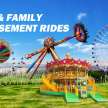

The modern amusement park functions not just as an entertainment venue, but as a psychological and mechanical ecosystem optimized for guest engagement. Among the myriad of attractions, some rides elicit significantly higher repeat rides than others. Understanding the elements that drive repeat play rate is crucial for ride manufacturers, park operators, and experience designers seeking to maximize both operational efficiency and guest satisfaction.
This article examines the structural, psychological, and experiential attributes that define high repeat-play attractions—with focused analyses on archetypes such as the swing tower and the roller coaster.
Defining Repeat Play Rate
Repeat play rate refers to the frequency with which a guest opts to re-experience the same attraction within a single visit or across multiple visits. It serves as a direct indicator of the ride’s enduring appeal, often correlating with its novelty retention, sensory stimulation, and emotional imprint.
Quantitatively, repeat play rate is typically assessed via RFID wristband data, queue reentry scans, or survey feedback. A consistently high repeat rate implies that a ride has succeeded in embedding itself into the emotional and physical expectations of its users.
Key Factors Influencing Repeat Play Rate
Sensory Reinforcement and Kinetic Predictability
Guests gravitate toward experiences that offer intense, yet manageable stimulation. Swing tower rides, which elevate guests to significant heights before rotating and descending them in smooth oscillatory motion, exploit a balance of thrill and predictability. The tower’s vertical axis provides panoramic views, while the centrifugal rotation elicits moderate adrenaline spikes without overwhelming the senses.
Similarly, roller coaster attractions benefit from orchestrated sequences of inversions, drops, and lateral G-forces. Coasters with dynamic layouts that integrate moments of airtime, banking transitions, and visual misdirection generate an experience that is both anticipatory and euphoric—prime conditions for repeat engagement.
Psychological Safety Coupled with Perceived Danger
High-repeat rides carefully calibrate the illusion of risk. Swing tower designs, for example, emphasize apparent vulnerability—suspended chairs and open-air exposure—while operating under stringent mechanical controls and redundancy systems. This juxtaposition offers guests a sense of bravery with minimal actual risk.
Roller coaster designs frequently utilize near-miss elements, tunnels, and thematic storytelling to manufacture psychological intensity. Riders feel as though they’ve narrowly escaped danger, prompting a dopamine-rich reward cycle that encourages replay.
Ride Cycle Duration and Queue Turnover
A crucial yet often overlooked factor is the duration of the ride cycle. Attractions that last between 90 and 180 seconds tend to hit the sweet spot—long enough to deliver satisfaction, but short enough to encourage re-entry without queue fatigue.
The swing tower, due to its simple vertical platform and limited seating rotation, enables fast throughput. Likewise, modern roller coaster systems leverage magnetic launches and high-capacity trains to maintain minimal downtime and maximize rider volume per hour.
Shorter wait times and rapid reboarding capabilities contribute to a perception of accessibility, further bolstering repeat interest.
Structural and Engineering Characteristics
Swing Tower
Height and Visibility: Often the tallest structure in the park, its visibility alone acts as a constant marketing beacon. Guests are more likely to return to attractions they can see and be reminded of.
Rotational Mechanics: Controlled axial movement minimizes motion sickness while maintaining enough thrill to satisfy repeat riders.
Seating Configuration: Typically open-air and individual or paired, enhancing both comfort and exposure—a duality that appeals across age groups.
Roller Coaster
Track Complexity: Coasters with intricate track layouts and non-repetitive elements reduce habituation. Multiple ride-throughs can reveal new perspectives and timing variations.
Train Design: Ergonomic restraints and smooth transitions between track segments improve rider comfort, encouraging re-rides even for guests sensitive to high-G elements.
Integration with Terrain or Theme: The use of natural elevation changes or deeply immersive storytelling elevates emotional resonance, imprinting the experience in memory.
Demographic and Behavioral Insights
The propensity to re-ride a particular attraction is partially age-dependent. Teenagers and young adults are statistically the most frequent re-riders, drawn by both thrill-seeking behavior and peer influence. However, well-designed swing tower attractions, with moderate thrill levels and high aesthetic appeal, also capture family segments, thereby broadening their repeat audience base.
Behavioral studies indicate that familiarity increases favorability. Once guests have completed a ride and confirmed its safety, they are more willing to re-engage—especially if the emotional return outweighs the cognitive demand.
The Role of Variability and Perceived Customization
Another critical component in repeat engagement is variability. Rides that feel different each time—due to randomized elements, seating position variance, or external factors like time of day—maintain freshness. For instance:
Swing tower experiences differ significantly in daylight versus dusk, where lighting effects and ambient sounds shift the emotional tone.
Front versus rear seating on a roller coaster changes the kinetic profile; front-row seats offer visibility and anticipation, while rear seats deliver enhanced momentum effects.
The perception of control or uniqueness in the ride contributes to a personalized experience, which increases the likelihood of repeat rides.
Conclusion
High repeat play rate rides exhibit a convergence of engineering precision, psychological insight, and operational pragmatism. Swing tower and roller coaster attractions—while mechanically distinct—share core traits that encourage riders to return: a calculated thrill-to-safety ratio, sensory richness, efficient turnover, and variability.
By understanding these underlying dynamics, amusement park operators and ride designers can craft attractions not just to impress once, but to compel again and again. The result: elevated guest satisfaction, improved throughput, and a ride catalog that sustains long-term cultural and commercial relevance.
About the Creator
Beston Amusement Rides
As a leading amusement facility manufacturer, we provide safe and interesting amusement equipment to customers around the world, including roller coasters, Ferris wheels, pirate ships and so on.
Website:https://bestonamusementrides.com/
Keep reading
More stories from Beston Amusement Rides and writers in Journal and other communities.
Engineering the Thrill: Milestone Innovations in Roller Coaster Design
The history of the roller coaster is a chronicle of mechanical ambition, structural ingenuity, and a ceaseless pursuit of visceral exhilaration. As one of the most technically demanding types of amusement park rides, roller coaster design has evolved through a series of pivotal innovations that have fundamentally reshaped the experience and possibilities of kinetic entertainment. From the earliest gravity-based sled rides to today’s magnetic launch systems and beyond-vertical drops, each leap forward has defined new eras of coaster engineering.
By Beston Amusement Rides10 months ago in Journal
How a Garage DIY Scaled to a $2M Product
Today, we’re bringing you the story of Swift Paws. The founder, Meghan, and her dad built the first prototype in their garage just so their dog Pretzel could practice lure coursing for specific dog lovers. But soon, more and more dog owners wanted the same for their dogs and even cats. So Meghan started to figure out how to turn it into a real product.
By Jingsourcing.com 8 days ago in Journal


Comments
There are no comments for this story
Be the first to respond and start the conversation.