
Embroidery and its history in the world
Embroidery history


It is no exaggeration to say that embroidery has always existed. Even in mythology, the Greek goddess Athena was skilled in embroidery and weaving. When the name of such a powerful figure is associated with the art of embroidery, it is not surprising that this art is popular among the rich. For example, in medieval England, professional artisans produced fine embroidered silk garments for wealthy families and the upper echelons of society. Of course, this art was not only for the rich, in Eastern Europe, England, East Asia and South America, there were also popular art movements in this regard that served ordinary people.
The history of embroidery is just as diverse as the history of art aesthetics. Primitive man quickly realized that the stitches used to fasten animal skins together could also be decorative. Embroidery is an ancient hand art that was originally used to repair and modify clothes; Because clothing was so expensive to produce, old clothes were rarely thrown away and instead were modified using embroidery. With the passage of time, this art developed and gained a decorative aspect. In the following, we trace the evolution of this art by introducing the cultures that shaped it.
Embroidery and other arts related to weaving and needlework are believed to have originated in the East and Middle East. Sculptures, paintings and vases depicting the inhabitants of the various ancient civilizations of these regions show people wearing embroidered clothes.
Embroidered textiles can be traced back to 30,000 BC. In 1964, archaeologists in a Paleolithic cemetery in Russia found the fossilized remains of a hunter dressed in needlework. The clothes and boots of this hunter were sewn and decorated with ivory beads. This fossil is the oldest known evidence of this handicraft.
Egypt
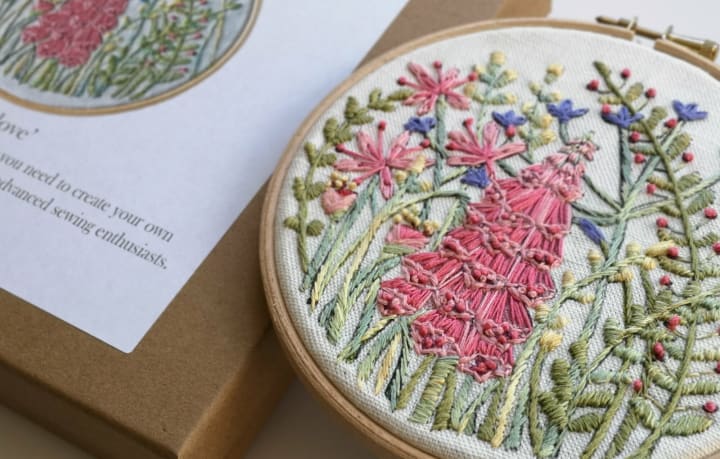
Needlework was prominent in ancient Egypt until the 14th century BC. The most famous examples of embroidery in this period are the hand-stitched treasures of King Tutankhamen. These examples were buried with the pharaoh, ceremonial robes, decorative leopard skin and a collar with alternating rows of petals and blossoms, leaves and blue beads sewn onto papyrus.
china
Needle-embroidered textiles have also been discovered in Chinese tombs dating back to the 4th century BC. The oldest examples of embroidery from this period are in a tomb in Hubei province. This work has been described as a "treasure house of silk", ritual clothes embroidered with colorful mythological motifs such as dragons, phoenixes, etc.
Japan
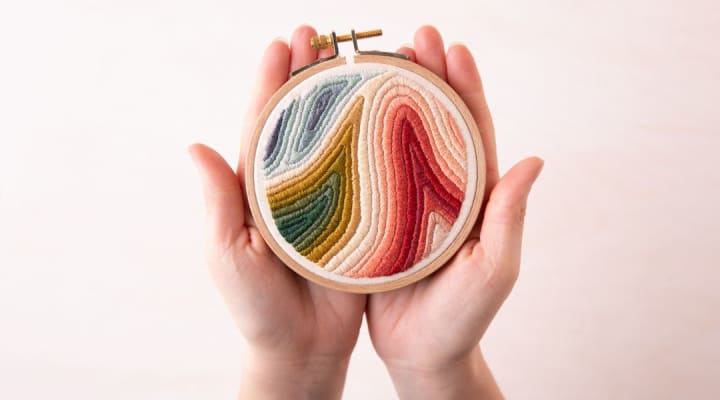
Embroidery appeared in Japan in the 7th century. First, it was exclusively used for religious depictions and to represent the Buddha. But from the 14th century onwards, its techniques were also used to decorate everyday textiles, including the traditional dance costumes of bugako and other non-religious garments.
Europe
The first finds of embroidery in Sweden date back to the ninth and tenth centuries AD, which coincides with the period we call the Viking Age. Over the next two centuries, the art continued to flourish in Europe. During this period, the Christian Church began to grow and gain franchises in many countries. To show their power and wealth, they used very flamboyant and decorated clothes and ornaments.
The Bayeux Tapestry is a needlework tapestry that depicts the events that led to the conquest of England by the Normans in the eleventh century and shows it in full detail. This big curtain, which was built in the 11th century, is seventy meters long and half a meter wide, now only a part of it is left due to decay due to the passage of time.

India
Embroidery flourished in India in the 16th century. In India, embroidery with a "hook" (tambur needle) was very popular, because its beauty and elegance were favored by the Mughal dynasty. This style was used to decorate leather, wall hangings, and clothing, including the Indian saree. In the 18th century, Indian embroidery was regarded as the most profitable export commodity, as tambur embroidery had become immensely popular in England and France.
Embroidery in the Islamic world
In the 18th and 19th centuries, embroidery was an important art in the medieval Islamic world. Since embroidery was a sign of high social status in Muslim societies, it was very popular. In cities such as Damascus, Cairo and Istanbul, embroidery could be seen on handkerchiefs, flags, clothes, bedspreads, slippers, sheaths and even on leather belts. Muslim artisans used to embroider with a combination of thread, gold and silver. The oldest examples of Iranian embroidery that are available belong to the Seljuk period.
Industrial revolution and its effect on hand embroidery
What we know today as Koblen, around 1800, was known as a popular pastime among upper class women; which often had oriental motifs of plants and flowers and were inspired by goods imported from India to the West.
It can be said that since 1900, embroidery has become a hobby of ordinary people. This art was no longer done only on expensive silk, but cheaper materials were used to present it.
The industrial revolution of the late 18th and early 19th centuries changed the face of embroidery. Automation brought about by machinery allowed textiles, including embroidery, to be mass produced. In the mid-1800s, France paved the way for the future of machine embroidery. This method made production easier, cheaper and changed the foundation of handicrafts, because it reduced production costs and, as a result, became more accessible to the masses.
Hand embroidery lost some of its popularity with the introduction of number embroidery, canvas embroidery, Koblenz color printed patterns and machine embroidery.

About the Creator
atiyeh mehri
Hi guys, I'm Ati and I am a interior designer. In this blog I want to share some great tips about interior decoration and making your home cozy!
Keep reading
More stories from atiyeh mehri and writers in Journal and other communities.
Hijab trends in the fashion world
As fashion and trends change in different styles, hijab style also undergoes changes. The definition of hijab is always the same; Covering Muslim women's hair and body. But with the same definition, Muslim women who believe in hijab can have a beautiful style and coordinate themselves with the trends. Sometimes, some hijab bloggers go further and suggest trends according to their familiarity with the taste of veiled women. Of course, whether the suggested trend is suitable or not is up to each person.
By atiyeh mehri3 years ago in Journal
How Polar Geopolitics Are Creeping Into the Arctic Winter Games
For decades, the Arctic Winter Games has symbolized cooperation among northern communities scattered across some of the world’s most remote regions. Athletes from Alaska, northern Canada, Greenland, and Nordic territories have gathered to celebrate sport, culture, and shared Arctic identity. Yet in recent years, the quiet camaraderie that once defined the games has increasingly been overshadowed by geopolitical tensions shaping the polar region. The Arctic is no longer viewed merely as a frozen frontier. Instead, it has become a strategic arena where global powers compete for influence, resources, and security advantages. As this competition intensifies, the ripple effects are beginning to reach even small regional sporting events. A Sporting Tradition Rooted in Cooperation First held in 1970, the Arctic Winter Games was designed to bring together athletes from northern regions that often felt disconnected from national sporting systems. Participants compete in sports such as cross-country skiing, biathlon, and hockey, alongside unique Indigenous events like the one-foot high kick and knuckle hop. The games emphasize friendship, youth development, and cultural exchange rather than fierce national rivalry. Many delegations represent subnational regions—such as Alaska or Yukon—rather than entire countries. This structure historically insulated the competition from the political tensions that sometimes affect larger international sporting events. But as global interest in the Arctic grows, maintaining that neutrality is becoming more difficult. The Arctic’s Rising Strategic Importance In recent decades, melting sea ice has transformed the Arctic from an isolated wilderness into a region of economic and strategic potential. New shipping routes, expanded fishing zones, and access to untapped oil and gas reserves have drawn attention from major powers. The eight countries represented in the Arctic Council—including the United States, Canada, Russia, and the Nordic nations—have long cooperated on environmental protection and scientific research. However, geopolitical tensions have increasingly strained this collaboration. The most dramatic turning point came after the Russian invasion of Ukraine in 2022. In response, several Western Arctic states suspended many forms of cooperation with Russia. While the Arctic Winter Games are not directly governed by the council, the broader political rift has influenced regional exchanges across the north. Russia’s Absence and Its Effects Historically, athletes from Russia’s Arctic regions occasionally participated in northern sporting exchanges, though they were never a consistent presence at the Arctic Winter Games. The deterioration of relations between Russia and Western countries has further reduced opportunities for such interactions. This absence has symbolic implications. The Arctic spans vast territory across Russia, and excluding athletes from these areas limits the sense of pan-Arctic unity that the games once aimed to foster. Officials involved in organizing the event often emphasize that sport should remain separate from political disputes. Yet in practice, travel restrictions, sanctions, and diplomatic tensions make participation increasingly complicated. Security and Infrastructure Concerns Geopolitics is also affecting how northern governments think about infrastructure in the Arctic. Investments in transportation, telecommunications, and military presence have increased in several regions, particularly in areas close to strategic waterways. For communities that host the Arctic Winter Games, these developments can be both beneficial and controversial. Improved infrastructure may make it easier to stage international sporting events, but it also reflects growing military and strategic competition in the region. For example, Arctic airports and ports used by civilian travelers—including athletes and spectators—are sometimes located near facilities with strategic importance. As governments strengthen their Arctic presence, the overlap between civilian life and geopolitical interests becomes more visible. Indigenous Perspectives One of the defining features of the Arctic Winter Games is its celebration of Indigenous culture. Many participants belong to Indigenous communities that span national borders across the Arctic. For these communities, geopolitical tensions can feel distant from everyday life yet still influence regional cooperation. Cross-border travel, cultural exchanges, and joint initiatives may become more difficult when relations between national governments deteriorate. Indigenous leaders often emphasize that the Arctic should remain a zone of peace and collaboration. They view cultural and sporting gatherings as important tools for maintaining unity among northern peoples despite the political divisions that exist at the state level. The Symbolic Power of Sport Throughout modern history, sports have often reflected global politics. Events such as the Olympic Games have experienced boycotts, diplomatic protests, and ideological rivalries during periods of international tension. The Arctic Winter Games was never intended to become part of that pattern. Its founders envisioned a friendly competition where northern youth could meet peers from similar environments and cultures. Yet even regional sporting events cannot remain entirely separate from geopolitical realities. As the Arctic becomes more central to global strategy, almost every form of cross-border cooperation—whether scientific, economic, or cultural—feels the impact. Preserving the Spirit of the Games Despite these challenges, organizers remain determined to preserve the cooperative spirit that has defined the event for more than half a century. Many believe that maintaining dialogue through cultural and sporting exchanges is more important than ever. Youth athletes who travel to the Arctic Winter Games often experience their first opportunity to meet people from other Arctic regions. These connections help build a shared identity that transcends national boundaries. In a time when the Arctic is attracting increasing geopolitical attention, that sense of unity may prove invaluable. While global politics continue to reshape the polar region, the games stand as a reminder that the Arctic is not only a strategic frontier—it is also home to communities determined to celebrate cooperation, culture, and friendship on the ice and snow.
By Fiaz Ahmed a day ago in Journal



Comments
There are no comments for this story
Be the first to respond and start the conversation.