
Ella Abomah Williams
The Untold Story of Mme Abomah, the Legendary Dahomey Warrior

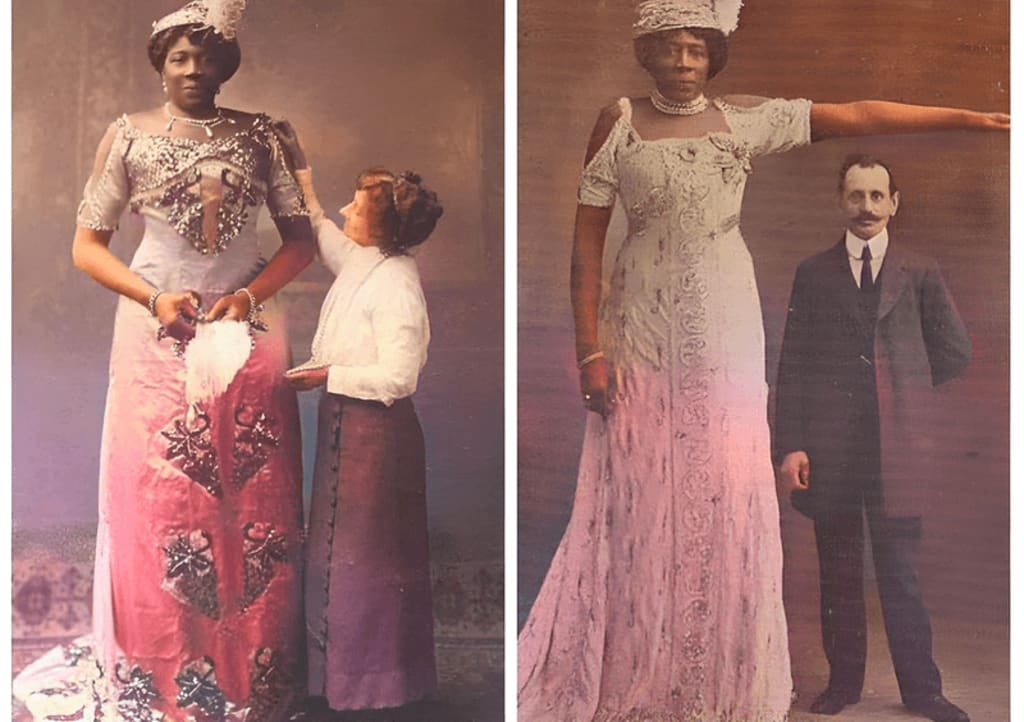
The Woman Who Defied History
History often celebrates kings, generals, and conquerors—but hidden between those pages are women whose strength and resilience broke barriers. Among them is Ella Abomah Williams, famously known as Mme Abomah, a towering figure both literally and figuratively.
Dubbed the “Dahomey Warrior”, Abomah fascinated the world during the late 19th and early 20th centuries. Her story is intertwined with the legacy of the Dahomey Amazons—the all-female military regiment of the Kingdom of Dahomey (present-day Benin)—and her presence on the global stage challenged conventional views of African women at the time.
But who was this extraordinary woman? Was she truly a descendant of the feared Dahomey warriors? How did she rise to fame and become one of the most talked-about figures of her era? Let’s dive deep into her remarkable journey.
Who Was Ella Abomah Williams?
Ella Abomah Williams was an African-American woman who captivated audiences across continents as a performer during the late 1800s and early 1900s. She was often marketed under exoticized titles such as “Mme Abomah, the African Giantess” or “The Dahomey Warrior.”
Standing at an astonishing 6 feet 10 inches (over 2 meters) tall, Mme Abomah’s commanding presence made her an instant sensation in circuses, exhibitions, and sideshows. In an era where average women stood at around 5 feet 4 inches, her height was nothing short of extraordinary.
Her promoters crafted a narrative that linked her lineage to the famed Amazons of Dahomey, elite women warriors who served the kings of Dahomey for centuries. While historical evidence connecting her directly to these warriors is debatable, the story resonated with the Western imagination and gave her an aura of strength and mystique.
The Dahomey Amazons: A Legacy of Fearless Women
To understand why Mme Abomah’s image became so iconic, you need to know about the Dahomey Amazons. These were real women—fierce, disciplined, and battle-hardened—who served as an all-female military regiment in West Africa for over 200 years.
Origin: The regiment emerged in the early 18th century under King Houegbadja of Dahomey.
Role: They were bodyguards, warriors, and strategists, trained in weaponry and hand-to-hand combat.
Reputation: The French army, during the colonization of Dahomey in the late 19th century, described them as “incredibly brave and skilled fighters.”
This background became a perfect marketing hook for promoters in Europe and America, who were eager to showcase something “exotic” to their audiences. Mme Abomah was presented as a living remnant of this fierce tradition—a warrior queen in flesh and blood.
Early Life of Ella Abomah Williams
Research suggests that Ella Abomah Williams was born in the Caribbean or the United States (records vary) in the mid-19th century. Like many African descendants of her time, details of her early life remain hazy due to inadequate documentation and systemic erasure of Black history.
What is known, however, is that Abomah possessed remarkable physical stature from an early age. In an age obsessed with freak shows and “human curiosities,” her height became both a blessing and a curse—it opened doors to fame but also subjected her to objectification and racial stereotyping.
How Mme Abomah Rose to Global Fame
The Start of a Spectacular Career
Mme Abomah began her career in the United States but quickly gained international attention. She became a sought-after performer in circuses, vaudeville shows, and world fairs, captivating audiences in Europe, South America, and beyond.
Her promoters used elaborate posters and advertisements depicting her in warrior costumes, often holding spears and shields, reinforcing the “Amazon” narrative. She was described as the “African Giantess”, with fictional backstories claiming royal lineage and ties to African military elites.
Touring the World
Mme Abomah was not confined to American stages—she traveled extensively:
Europe: Performed in England, France, and Germany, drawing massive crowds.
South America: She was a headline act in Argentina and Brazil, where fascination with African heritage was intense.
United States: Regularly featured in major circus circuits and vaudeville halls.
Her global tours made her one of the most famous Black women of her time—long before the civil rights movement or modern Black icons emerged.
The Cultural Impact of Mme Abomah
In a time when Black women were largely invisible in mainstream media, Mme Abomah’s towering presence defied stereotypes. She was bold, unapologetic, and powerful, challenging the era’s ideals of femininity and beauty.
However, her fame was also a double-edged sword. While she earned wealth and recognition, she was often exoticized and commodified, packaged as an “oddity” for Western audiences hungry for spectacles.
Challenges and Controversies
Like many performers of African descent during the colonial period, Mme Abomah faced:
Racism: She was objectified as a “curiosity,” not a human being with dignity.
Exploitation: Promoters profited immensely, while her actual earnings remain unclear.
Cultural Misrepresentation: The narrative of her being a direct descendant of Dahomey warriors was likely a marketing ploy.
Yet, despite these challenges, Mme Abomah maintained agency and resilience, navigating a world that sought to define her through a colonial lens.
Mme Abomah in Popular Culture
Her legacy echoes in modern times through movies like “The Woman King” (2022), which spotlighted the Dahomey Amazons and revived global interest in African female warriors. While Mme Abomah wasn’t a soldier, she symbolized the strength and mystique of African womanhood on the world stage.
What Made Mme Abomah Unique?
Height: At 6’10”, she was among the tallest women in her era.
Charisma: She commanded attention with elegance, not just size.
Trailblazer: One of the earliest African-American women to achieve international fame.
Legacy: Why Her Story Matters Today
Mme Abomah’s journey resonates in today’s conversations about representation, feminism, and the commodification of Black bodies. She was more than an entertainer—she was a symbol of power, both celebrated and misunderstood.
Her story reminds us that Black women have always been pioneers, warriors, and icons, even when history tried to erase them.
Frequently Asked Questions
Was Mme Abomah a real Dahomey warrior?
No documented evidence confirms this. The claim was likely a marketing tactic, though her African heritage linked her symbolically to that legacy.
How tall was Mme Abomah?
She reportedly stood 6 feet 10 inches tall.
Is she connected to the characters in The Woman King?
Indirectly. While not an actual warrior, she was promoted as one, capitalizing on the legendary reputation of the Dahomey Amazons.
Conclusion
Ella Abomah Williams—Mme Abomah—was a woman ahead of her time. She turned what could have been a life of obscurity into one of global fame, using her uniqueness as a platform. Her story isn’t just about height or spectacle—it’s about resilience, identity, and breaking barriers.
Today, as we celebrate strong women in media, politics, and culture, we must look back at pioneers like Mme Abomah, whose legacy still whispers through history’s forgotten pages.
About the Creator
Omasanjuwa Ogharandukun
I'm a passionate writer & blogger crafting inspiring stories from everyday life. Through vivid words and thoughtful insights, I spark conversations and ignite change—one post at a time.
Keep reading
More stories from Omasanjuwa Ogharandukun and writers in Journal and other communities.
Why's China Ready to Launch World’s First Pregnancy Robot with Artificial Womb Technology?
Imagine a future where childbirth no longer requires a human mother, where gestation can take place entirely inside an artificial womb, and where robots could one day become “surrogate mothers.” That future may be closer than many realize.
By Omasanjuwa Ogharandukun5 months ago in Journal
The goals I did not achieve
Every writing goal I made for the year is a wash. It has been this way for a while, but I think it's important to be open about my failures and the reality of how life can get in the way. This is especially true considering the several times I have posted on Vocal about my writing goals, how I was changing my approach, and where I was hoping to be for the upcoming year. I will probably do that again in a couple months, but for now, it is time to acknowledge where I am today.
By Kay Husnick25 days ago in Journal
The Invisible Hand That Rules
In the heart of the city, there’s a building that no one notices. Its glass walls reflect the sun, its elevators glide silently, and its corridors smell of polished ambition. Decisions are made here that shape millions of lives, yet outside, the city breathes, unaware. The air hums with traffic, the chatter of cafes, the distant wail of sirens, and life moves on as though the building’s influence is nothing more than an echo.
By Jhon smith6 days ago in Journal



Comments
There are no comments for this story
Be the first to respond and start the conversation.