
Electric Scooter Manufacturing Plant Setup Cost in 2025: A Complete Investment Guide
Setting up an electric scooter manufacturing plant requires significant investment across Capital Expenditure (CapEx) and Operating Expenditure (OpEx), and is highly influenced by factors such as scale, automation level, location, and component sourcing.

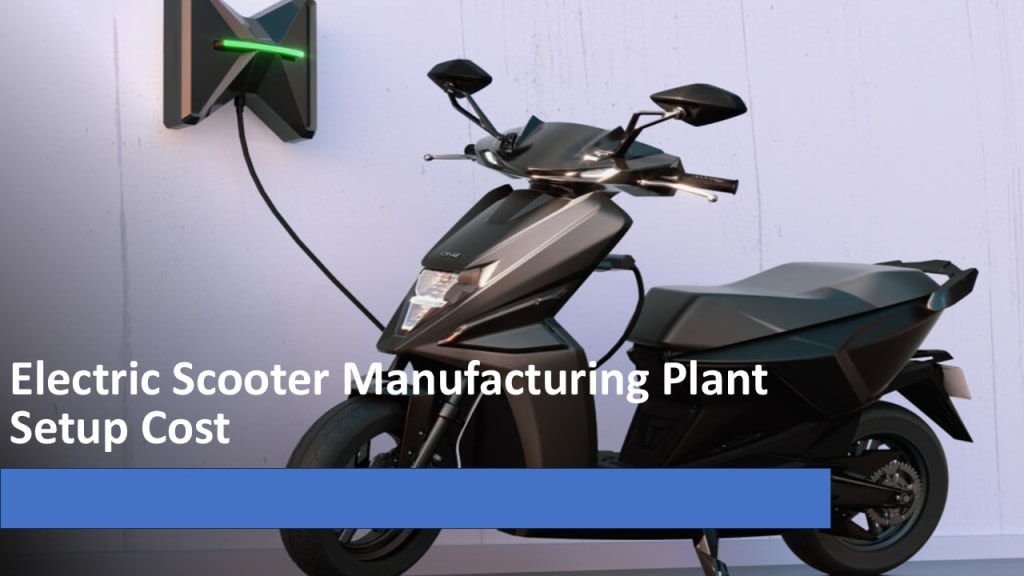
The worldwide movement toward sustainable transportation and clean energy has accelerated the widespread use of electric scooters in both urban and suburban areas. Setting up an electric scooter manufacturing facility offers a lucrative prospect for entrepreneurs and investors aiming to enter this growing industry. This detailed guide covers the electric scooter manufacturing plant setup cost including necessary equipment, capital investment framework, and operational costs, providing a clear blueprint for launching a successful business.
Understanding Electric Scooter Manufacturing Plant Setup Cost
The electric scooter manufacturing plant setup cost encompasses various key expenditure areas that determine the total financial outlay required to launch operations. The major cost components include:
• Land and Infrastructure: Acquiring or leasing industrial land, constructing production units, storage areas, testing tracks, and administrative buildings.
• Machinery and Equipment: Procuring high-precision machinery and tools for frame fabrication, battery assembly, motor integration, painting, quality testing, and final assembly.
• Utilities and Facilities: Installing power supply systems, compressed air units, ventilation, and safety equipment.
• Working Capital: Covering raw material procurement, salaries, utility expenses, and initial marketing activities before sales revenue stabilizes.
The overall cost varies significantly based on production capacity, technology sophistication, automation level, compliance with industry standards, and geographic location. A well-planned budget is crucial to prevent cost overruns and ensure smooth setup.
Key Machinery and Machinery Cost
Modern electric scooter production demands advanced machinery to guarantee high build quality, safety compliance, and efficient assembly lines. Core machinery typically includes:
• Frame Manufacturing Machines: CNC laser cutters, welding robots, and bending machines for precise frame construction.
• Paint Booths and Curing Ovens: For corrosion-resistant and aesthetic finishing of frames and panels.
• Battery Pack Assembly Lines: Automated systems for safe and efficient battery module assembly and testing.
• Motor Fitting and Wiring Stations: For installing brushless DC motors, controllers, and electrical harnesses.
• Wheel Assembly Units: Machines for mounting tires and balancing wheels.
• Final Assembly Line: Conveyor systems for systematic assembly, inspection, and functional testing of scooters.
• Quality Control Equipment: End-of-line testing rigs for speed, braking, battery performance, and safety checks.
• Packaging and Dispatch Units: For protective packing and labeling before distribution.
The machinery cost is a significant component of the capital investment and varies based on desired output capacity and level of automation. Investing in reliable, industry-certified equipment minimizes defects, reduces maintenance costs, and enhances productivity.
Capital Investment Breakdown
A detailed capital investment plan is vital to secure funding and forecast project returns. For an electric scooter manufacturing unit, capital investment generally comprises:
Fixed Capital Investment:
• Cost of land purchase or long-term lease agreements.
• Construction of production halls, storage warehouses, testing labs, and administrative offices.
• Procurement and installation of manufacturing machinery and plant equipment.
• Setup of utility systems, safety infrastructure, and environmental control units.
Working Capital Requirements:
• Procurement of raw materials such as metal frames, lithium-ion cells, motors, wiring, and plastic parts.
• Inventory of spare parts and packaging supplies.
• Salaries for production staff, engineers, quality inspectors, logistics, and administrative employees.
• Initial marketing, dealership network development, and customer support setup.
Accurate capital allocation for each component helps maintain financial stability during setup and scale-up phases. Many investors secure funding through a mix of equity, term loans, and government subsidies for green mobility projects.
Operating Cost Considerations
Once operational, an electric scooter plant incurs recurring operating expenses that impact profit margins and pricing strategies. Major operating costs include:
• Raw Materials: Purchasing aluminum or steel frames, electronic controllers, battery cells, wheels, suspension parts, and plastic body panels.
• Utilities: Electricity costs for running production lines, charging battery modules, and maintaining HVAC systems in sensitive assembly areas.
• Labor: Wages for assembly line workers, engineers, technicians, supervisors, and administrative staff.
• Maintenance and Repairs: Regular servicing of machinery, calibration of testing equipment, and replacement of wear-and-tear parts.
• Packaging and Logistics: Protective packaging materials and transportation costs to deliver scooters to dealerships or customers.
• Quality Assurance and Compliance: Routine testing expenses, certifications, and adherence to evolving safety standards and emission norms.
Effective monitoring of these operating costs through lean manufacturing practices and supplier negotiations can enhance overall profitability.
Production Process Overview
A standard electric scooter production process involves multiple integrated steps:
1. Frame Fabrication: Raw metal is cut, bent, and welded into the scooter’s frame and chassis.
2. Painting and Finishing: Frames are painted and heat-cured for durability and aesthetics.
3. Battery Pack Assembly: Lithium-ion cells are configured into battery packs with built-in safety circuits.
4. Motor and Electronics Installation: Brushless DC motors, controllers, and wiring harnesses are fitted.
5. Wheel and Suspension Assembly: Tires, brakes, shock absorbers, and other mechanical components are attached.
6. Final Assembly: All modules are integrated, and the scooter is assembled on a moving conveyor line.
7. Quality Control and Testing: Finished units undergo functional checks for range, speed, braking efficiency, and safety compliance.
8. Packaging: Fully tested scooters are packed and dispatched to distribution centers or direct customers.
Compliance and Sustainability Measures
Electric scooter manufacturing must comply with national transport and environmental standards. Key compliance measures include:
• Certification for battery safety, motor performance, and electromagnetic compatibility.
• Waste management systems for safe disposal of defective batteries and electronic components.
• Employee safety measures and protective equipment for hazardous processes like battery assembly.
Additionally, sustainable practices such as using recyclable materials, energy-efficient machinery, and renewable energy sources can help meet green manufacturing goals and qualify for government incentives.
Setting up an electric scooter manufacturing plant is a forward-looking investment aligned with global trends in clean transportation. Understanding the complete plant setup cost, careful planning of machinery cost, and accurate estimation of operating costs are critical steps toward building a competitive, compliant, and profitable business.
With robust quality control, smart supply chain management, and continuous innovation, manufacturers can successfully position themselves in the rapidly expanding market for eco-friendly urban mobility solutions.
About the Creator
Andrew Sullivan
Hello, I’m Andrew Sullivan. I have over 9+ years of experience as a market research specialist.
Keep reading
More stories from Andrew Sullivan and writers in Journal and other communities.
The goals I did not achieve
Every writing goal I made for the year is a wash. It has been this way for a while, but I think it's important to be open about my failures and the reality of how life can get in the way. This is especially true considering the several times I have posted on Vocal about my writing goals, how I was changing my approach, and where I was hoping to be for the upcoming year. I will probably do that again in a couple months, but for now, it is time to acknowledge where I am today.
By Kay Husnick23 days ago in Journal
Catholic Social Teaching and Modern Life
Catholic Social Teaching is a rich tradition that provides moral guidance on how to live out faith in society. Rooted in Scripture and the teachings of the Church, it addresses issues of human dignity, justice, care for the poor, and responsible stewardship of the world. Understanding Catholic Social Teaching helps believers apply their faith to modern challenges while staying true to God’s call for love, compassion, and justice.
By Sound and Spirit4 days ago in Journal




Comments
There are no comments for this story
Be the first to respond and start the conversation.