

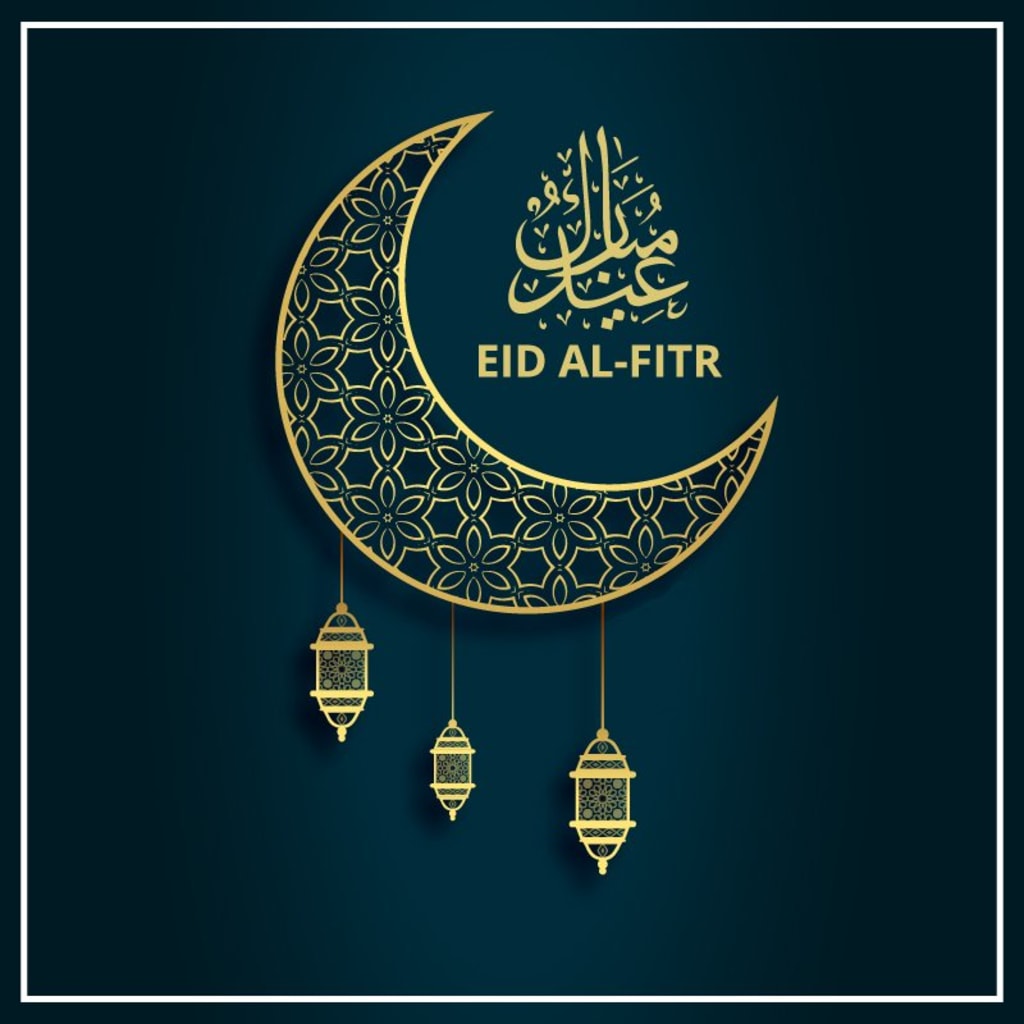
Eid ul Fitr is a significant religious festival celebrated by Muslims all over the world. It marks the end of the holy month of Ramadan, during which Muslims fast from dawn to dusk. The date of Eid ul Fitr is determined by the sighting of the new moon of Shawwal, the tenth month of the Islamic calendar.
Eid ul Fitr is a time of joy, forgiveness, and thanksgiving to Allah for the blessings of Ramadan. Muslims wake up early in the morning, take a bath, wear new clothes, and offer the Eid prayer in congregation at the mosque or an open field. After the prayer, Muslims exchange greetings and gifts with one another, visit friends and relatives, and enjoy festive meals.
Charity is an essential aspect of Eid ul Fitr, and Muslims are encouraged to give Zakat al-Fitr, a small amount of charity, before the Eid prayer. It is obligatory upon every Muslim, who has the means to pay, to give this charity to the poor and needy so that they too can celebrate Eid with happiness and joy.
Eid ul Fitr is a time for Muslims to come together, share their joy, and strengthen their bonds of brotherhood and sisterhood. It is a time to express gratitude to Allah for the blessings of Ramadan and seek His mercy and forgiveness.
Muslims celebrate Eid ul Fitr with great enthusiasm and joy. Here are some of the things that Muslims commonly do on the occasion of Eid ul Fitr:
Offer the Eid prayer: Muslims wake up early in the morning, take a bath, wear new clothes, and offer the Eid prayer in congregation at the mosque or an open field.
Exchange greetings: Muslims exchange Eid greetings with one another, saying "Eid Mubarak" or "Blessed Eid" to express their joy and happiness.
Give charity: Charity is an important aspect of Eid ul Fitr, and Muslims are encouraged to give Zakat al-Fitr, a small amount of charity, before the Eid prayer. It is obligatory upon every Muslim, who has the means to pay, to give this charity to the poor and needy so that they too can celebrate Eid with happiness and joy.
Visit friends and family: Muslims visit friends and family, share festive meals, and exchange gifts with one another.
Celebrate with food: Muslims enjoy festive meals, which often include sweet dishes like vermicelli pudding, rice pudding, and sweets.
Wear new clothes: It is a tradition to wear new clothes on Eid ul Fitr to mark the joyous occasion.
Decorate homes: Muslims decorate their homes with lights, balloons, and other decorations to create a festive atmosphere.
Overall, Eid ul Fitr is a time for Muslims to come together, celebrate, and express gratitude to Allah for the blessings of Ramadan. Eid ul Fitr holds great significance in Islam for several reasons:
Celebration of the completion of Ramadan: Eid ul Fitr marks the end of the holy month of Ramadan, during which Muslims fast from dawn to dusk. It is a time of celebration and thanksgiving to Allah for the blessings of Ramadan.
A reward from Allah: Eid ul Fitr is considered a reward from Allah for Muslims who have successfully completed the month of Ramadan, fulfilling their religious duties and increasing their devotion to Allah.
Strengthening of community ties: Eid ul Fitr is a time for Muslims to come together, share their joy, and strengthen their bonds of brotherhood and sisterhood. It is a time to forgive one another, reconcile differences, and spread love and kindness.
Reminder of the importance of charity: Charity is an important aspect of Eid ul Fitr, and Muslims are encouraged to give Zakat al-Fitr, a small amount of charity, before the Eid prayer. This serves as a reminder of the importance of helping the less fortunate and sharing one's blessings with others.
Opportunity to express gratitude to Allah: Eid ul Fitr is a time for Muslims to express their gratitude to Allah for the blessings of Ramadan, such as the opportunity to purify one's soul, increase one's faith, and strengthen one's relationship with Allah.
Overall, Eid ul Fitr is an important festival in Islam that serves as a reminder of the values of forgiveness, generosity, and gratitude, and provides an opportunity for Muslims to strengthen their faith and community ties.
About the Creator
Tamseela Arooj
Meet me: writer, procrastinator, fridge enthusiast. Dreaming of a best-seller that's actually worth reading.
Keep reading
More stories from Tamseela Arooj and writers in Journal and other communities.
Karachi, The Previous Capital Of Pakistan.
Karachi is the largest city of Pakistan and is situated on the Arabian Sea coast in the southern part of the country. With a population of over 16 million people, it is not only the most populous city in Pakistan but also one of the most densely populated cities in the world. Karachi is the commercial and financial hub of Pakistan and has a rich cultural heritage that reflects the diversity of its inhabitants.
By Tamseela Arooj3 years ago in Journal
Three Generations of Ukrainian Women on Soviet Memory, War, Faith, and Independence
By Scott Douglas Jacobsen and Anastasia Bura (Translator, English-Ukrainian) Liubov Polischuk is a Ukrainian interview participant whose recollections focus on Soviet and post-Soviet life. In the conversation, she discusses scarcity, propaganda, military surroundings, restricted travel, prayer, and Ukrainian independence. Her comments emphasize lived experience across political change, including daily survival, faith, memory, and wartime moral perspective over several decades. Tetiana Shuliaka is a Ukrainian interview participant describing civilian life during Russia’s war against Ukraine. In the conversation, she recounts nightly drone threats, prayer, fear of missile strikes, and the pressures of self-defence. Her remarks connect contemporary danger to longer Soviet patterns of military industry and constrained freedom for civilians. Anastasia Bura is the youngest participant in this group discussion and is the translator (English-Ukrainian) in this interview.
By Scott Douglas Jacobsenabout 8 hours ago in Journal
Why Didn't Anyone Tell Us
Men, move along. This is not for you. This is for the women. I was forty-five when I began menopause. It is pretty young for that to be going on in a woman’s life, but I had undiagnosed PCOS, my entire life. Thank you to all the gynecologists I had seen my entire life. That in itself should encourage women to keep seeking second opinions, especially when you are not getting correct answers or any at all.
By Alexandra Grantabout 21 hours ago in Humans


Comments
There are no comments for this story
Be the first to respond and start the conversation.