
Economical Condition of Pakistan
A general view of Pakistan's recent economical conditions.

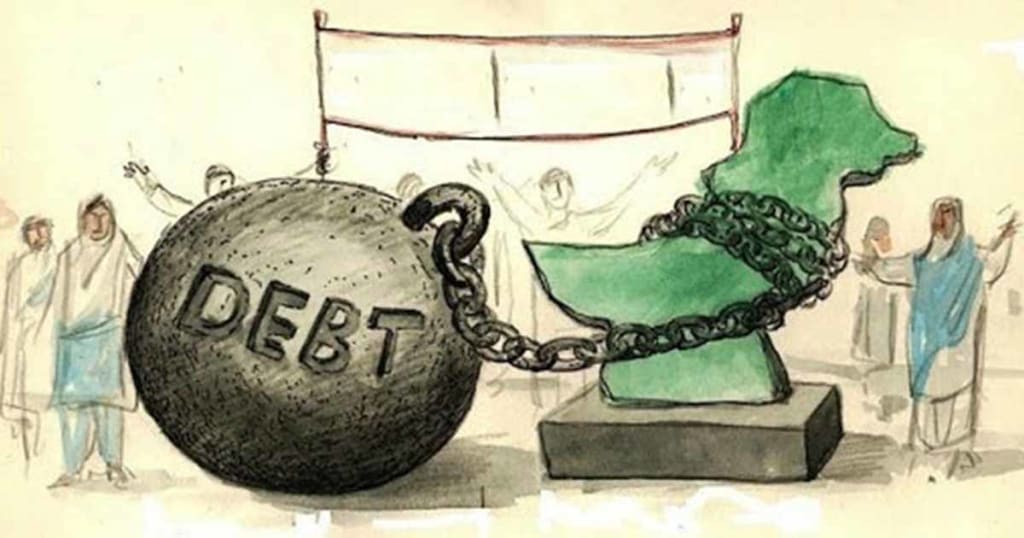
Pakistan is a developing country with a population of over 220 million people. Its economy has experienced periods of growth and stability, but also challenges such as inflation, high public debt, and political instability.
In recent years, Pakistan's economic growth has been impacted by the COVID-19 pandemic, which led to a contraction of the economy in 2020. However, there are signs of recovery as the government has implemented policies to support businesses and households.
As of September 2021, Pakistan's inflation rate was around 9%, which is higher than the State Bank of Pakistan's target of 5-7%. High inflation has been attributed to factors such as supply chain disruptions and currency depreciation. The Pakistani rupee has also been depreciating against the US dollar, which can further fuel inflation.
The government has been implementing measures to address these challenges, including efforts to improve tax collection, reduce public debt, and promote exports. The country has also received financial assistance from international organizations such as the International Monetary Fund to support its economic reforms. Pakistan's economy was a developing one with a Gross Domestic Product (GDP) of around $305 billion, making it the 5th largest economy in South Asia. The economy is driven by agriculture, services, and manufacturing sectors.
Agriculture is a vital sector in Pakistan, contributing about 18.5% to the GDP and employing over 40% of the labor force. Major crops produced in the country include cotton, wheat, sugarcane, and rice. Pakistan is also a significant exporter of fruits and vegetables.
The services sector is the largest contributor to Pakistan's GDP, accounting for about 60% of it. It includes finance, insurance, transportation, and communication services, among others.
The manufacturing sector contributes around 21% to the GDP and includes industries such as textiles, food processing, and chemical production.
Despite its potential, Pakistan's economy faces several challenges, including a large informal economy, low levels of foreign investment, and political instability. The country has also been struggling with high public debt, inflation, and a current account deficit in recent years.
To address these challenges, the Pakistani government has implemented economic reforms and sought financial assistance from international organizations such as the International Monetary Fund. The country has also been pursuing regional trade agreements to boost exports.
Pakistan's economy had experienced a drop due to the COVID-19 pandemic. The pandemic led to a contraction of the economy in 2020, as various sectors such as services, manufacturing, and construction were impacted. The pandemic had also resulted in reduced economic activity, lower investment, and increased uncertainty. As a result, Pakistan's GDP was expected to decline by around 0.4% in the fiscal year 2019-2020. In addition, Pakistan had been facing economic challenges even before the pandemic. The country had been grappling with issues such as high inflation, a current account deficit, and a large public debt burden.
There were several causes of the drop in Pakistan's economic conditions in recent years, some of which were exacerbated by the COVID-19 pandemic. Here are some of the major factors:
Low levels of foreign investment: Pakistan has struggled to attract foreign investment, which has limited its capacity for economic growth. This has been partly due to concerns over security issues, a challenging business environment, and corruption.
High inflation: Inflation has been a persistent problem for Pakistan in recent years, which has made it difficult for households to make ends meet and has impacted businesses. Factors contributing to high inflation include a large government deficit, a depreciating currency, and supply chain disruptions.
Political instability: Pakistan has been plagued by political instability in recent years, which has contributed to economic uncertainty. Frequent changes in government, corruption, and weak institutions have made it difficult for the country to implement consistent economic policies.
Current account deficit: Pakistan has been running a current account deficit, which means that it is importing more goods and services than it is exporting. This has put pressure on the country's foreign exchange reserves and contributed to currency depreciation.
Large public debt burden: Pakistan has a large public debt burden, which has limited its capacity to invest in social programs and infrastructure. The country's debt-to-GDP ratio was over 90% as of 2020, which is higher than the International Monetary Fund's recommended threshold of 60%.
It's worth noting that the COVID-19 pandemic has also impacted Pakistan's economy, leading to a contraction in GDP, reduced economic activity, and lower investment. However, the country has implemented policies to support businesses and households and has received financial assistance from international organizations to address these challenges.
Have a nice day!
About the Creator
Tamseela Arooj
Meet me: writer, procrastinator, fridge enthusiast. Dreaming of a best-seller that's actually worth reading.
Keep reading
More stories from Tamseela Arooj and writers in Journal and other communities.
The 5 AM Myth: Why I Trashed My Alarm Clock to Finally Find My Edge
The blue light of the smartphone screen felt like a laser beam hitting my retinas at 4:58 AM. Outside my window, the world was a bruised purple—silent, freezing, and utterly indifferent to my "ambition."
By George Evan7 days ago in Journal



Comments (1)
I am very surprised you have included no mention of the effects of the floods. Also, it would have been interesting to have more analysis of the effects of colonialism and current policies of the West. Thank you for writing.