
Earthquake Warnings: Can Science and Scripture Both Be Right?
From seismic data to ancient prophecies, the ground beneath us tells a story we may not want to hear.
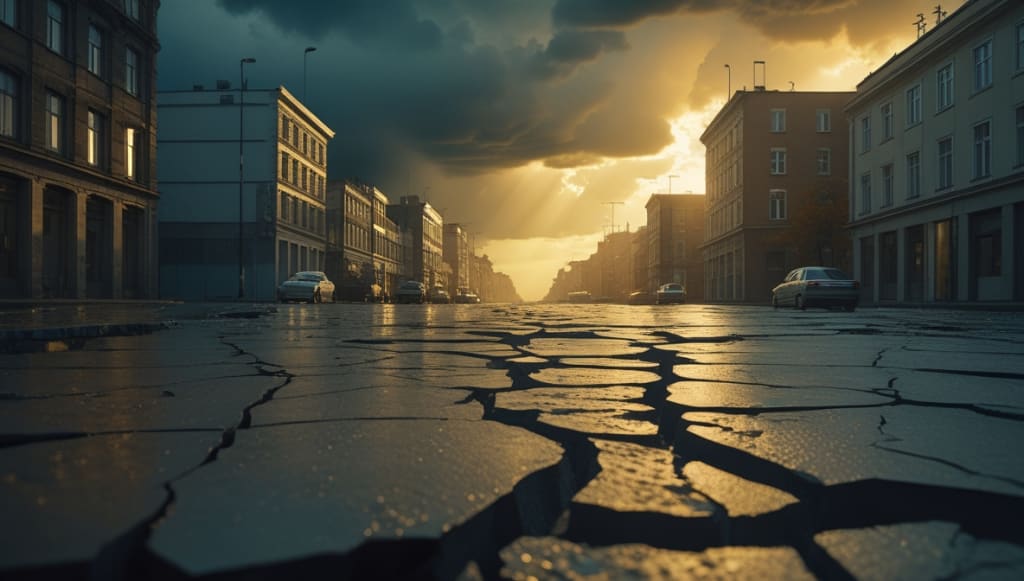
For millennia, earthquakes have upset not only the ground we stand on but also our knowledge of how the cosmos works. Some see them only through the lens of geology: the ongoing movement of tectonic plates with stress building up and then discharging below the Earth's surface. Conversely, some people look more deeply—or lift their perspective—wondering if these occurrences might be telling us, alerting us, or even signaling forces outside human understanding. A fascinating problem arises in 2025 as our planet is increasingly wracked by earthquakes and technology is moving at breakneck pace: Can both religious scriptures and scientific reasoning be genuine?
The Earth Is Speaking — and Scientists Are Listening
Modern seismology has given us incredible means by which to monitor the pulse of the Earth. Satellites keep an eye on minor changes in the Earth's crust. To forecast aftershocks, artificial intelligence systems are currently analyzing seismic data. Scientists may even identify quiet earthquakes, which are motions too slow for humans to notice yet strong enough to gently alter the path of continents.
Despite the great volume of data and sophisticated algorithms available to us, forecasting remains aggravatingly uncertain. Unpredictable earthquakes. They don't know the limits. One moment, a city may be bustling with everyday life; the next, concrete fractures, bridges fall, and whole settlements disappear in an instant.
Architects in Chile, Japan, Turkey, and other countries design earthquake-resistant skyscrapers. Regular California school drills are used. Humans take protections, but they never feel totally safe. Because, at a fundamental level, we understand one basic truth: the Earth will move at its own will.
This disturbing fact pushes individuals to seek outside-of-norm ideas.
Prophecies That Shook the World
Long before Richter scales and seismic detecting apparatus were created, historical texts described earthquakes as communications from the heavens. The Book of Revelation in the Bible mentions the Earth shaking in readiness for great change. Similar pictures can be seen in Islamic, Hindu, and Buddhist writing where quakes represent turning points of rebirth, retribution, or change.
The oscillations of the Earth were seen in different indigenous cultures as evidence of the spirit of the planet, implying that humans are only transient visitors to a dynamic planet. The Māori of New Zealand thought that Rūaumoko, a god, created earthquakes by stirring the ground when enraged. The ancient Greeks portrayed Poseidon, whose trident would slam the ocean floor.
One concept is consistent throughout history and across many cultures: earthquakes have meaning.
Many people are thinking back on these age-old stories as seismic activity and temperature change appear to rise. Are these events just coincidence or a great alignment?
Where Science Meets Faith
Science and religious texts seem to live in different worlds at first glance. Measurement, experimentation, and quantification are central in science. Religious writings examine morality and importance. Still, they could not be as contradictory as we believe.
This idea is not that different from the prophetic idea of scientists who warn that rising tectonic activity might result from retreating glaciers and shifting ocean dynamics. imbalance—indicating that nature retaliates when mankind interferes with it. Though the language may change, the basic idea stays the same: actions produce results.
The globe operates as a linked network. Whether referred to as the Earth's feedback system or heavenly justice, the result stays the same: disturbances cause effects.
Listening Without Panic
It's easy to see every shake as evidence of approaching catastrophe in a world beset with worry and sensational news. Still, knowledge rather than terror builds safety. Openness toward both empirical results and spiritual messages helps us to better grasp our place in the cosmos.
Like belief, seismic events show our frailty and reveal the false impression of control we preserve. The fundamental question is not only "why do "What insights are we getting from them?" rather than "they happen."
Maybe the lesson is about resilience—whether it be bodily, emotionally, or morally. Scientific developments let us create safer buildings; spiritual development lets us improve our character. Together they build the foundation needed to face an uncertain future.
The Ground Beneath Us
The earth will always be rotating. Our goal is to align ourselves rather than stop this trend. To understand what the Earth says via data and stories, via equipment and stories. It may be that the true warning has nothing whatsoever to do with disaster.
It refers to relationships: among humans and the sacred, between what can be measured and what is mysterious, between the outside and the depths beyond.
Each seismic shift is more than just danger if religious writings and factual evidence hold truth. It's a gentle call from the actual earth asking us to remember that we live inside a living thing and beckoning us to move with caution.
About the Creator
Keep reading
More stories from Shahjahan Kabir Khan and writers in Journal and other communities.
The Psychology of Prophecy: Why Humans Can’t Stop Predicting the End
People have always wondered about the future. From Nostradamus's enigmatic poems in the 1500s to today's TikTok influencers making audacious predictions of catastrophic events, the appeal of prophecy has endured throughout history. We both want and dread the end of prophecy since it provides comfort and a sense of power—contraryly speaking.
By Shahjahan Kabir Khan4 months ago in Journal
The goals I did not achieve
Every writing goal I made for the year is a wash. It has been this way for a while, but I think it's important to be open about my failures and the reality of how life can get in the way. This is especially true considering the several times I have posted on Vocal about my writing goals, how I was changing my approach, and where I was hoping to be for the upcoming year. I will probably do that again in a couple months, but for now, it is time to acknowledge where I am today.
By Kay Husnick22 days ago in Journal




Comments
There are no comments for this story
Be the first to respond and start the conversation.