
Driving Efficiency: How the Automotive Heat Shield Market is Heating Up
Why is the automotive heat shield market seeing major growth in EVs and hybrids?

As modern vehicles become faster, lighter, and more efficient than ever before, the hidden technologies that enable these advancements are becoming increasingly important. Automotive heat shields now receive increased attention and innovative developments as they join the ranks of unsung heroes. The automotive heat shield market is rapidly accelerating its growth because automakers are pushing for better performance and sustainability under increased global regulatory pressure.
Understanding the Role of Heat Shields
Automotive heat shields function to shield vehicle components from extreme temperatures while optimizing thermal management to ensure passenger comfort. Heat shields are essential for temperature management in engine bays and exhaust systems along with other areas that produce or encounter high heat. Effective shielding is essential because excessive heat exposure can decrease vehicle performance while damaging sensitive components and shortening the lifespan of both traditional and electric vehicles.
Basic concepts define these components which are normally produced from metal, composite or insulation materials yet they play a significant role in improving vehicle efficiency and emissions control along with enhancing safety.
Market Growth Driven by Performance and Regulations
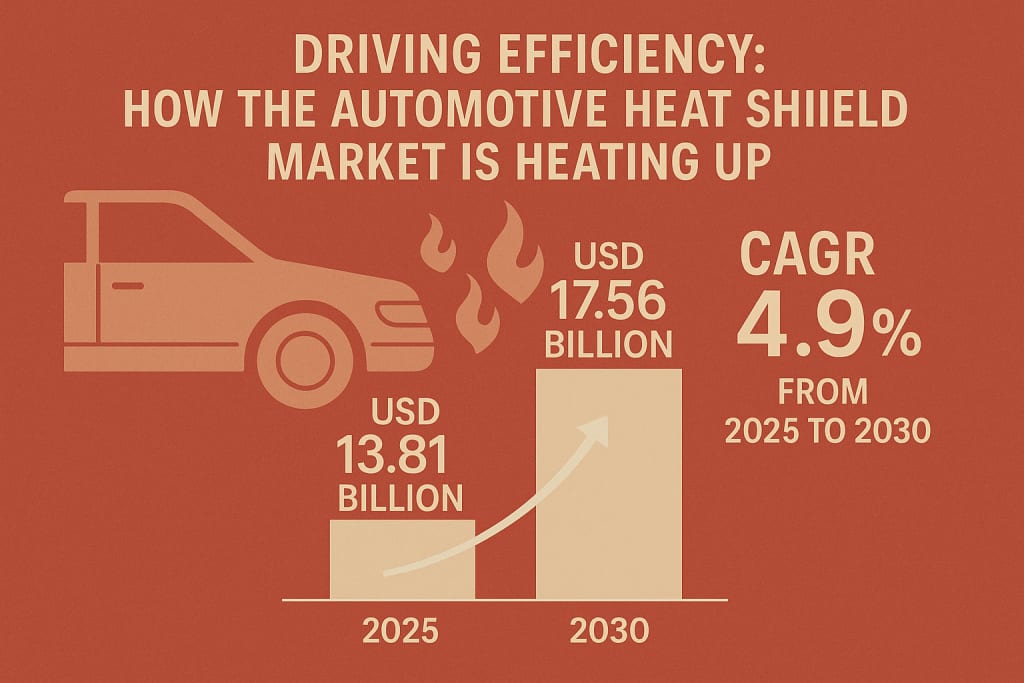
Recent industry research shows that the global automotive heat shield market will surpass $17.56 billion by 2030 while maintaining consistent CAGR of 4.9% from 2025 to 2030. Several key factors are driving this expansion:
1. Stringent Emissions Regulations
International governments are implementing more rigorous CO₂ and NOx emissions standards. Advanced heat shielding enables efficient thermal management which is essential for maintaining appropriate combustion temperatures and reducing engine emissions.
2. Rise of Turbocharged Engines
Manufacturers use turbochargers to achieve higher power outputs from smaller engines which has made turbochargers widespread. The high heat output from these systems necessitates advanced shielding technologies to protect nearby components from thermal damage.
3. Electrification of Mobility
Despite common misconceptions electric vehicles (EVs) require heat shields for proper functioning. The operation and charging of battery systems, inverters and electric motors generates heat. The growing adoption of electric vehicles directly increases the requirement for heat management solutions that combine light weight with high efficiency.
4. Focus on Fuel Efficiency and Lightweighting
Manufacturers are now using lightweight heat shielding materials because vehicle lightening demands continue to push production toward high-performance materials that offer thermal protection and reduce weight.
Material Innovations Are Redefining the Market
The introduction of advanced materials represents a significant advancement in automotive heat shield market developments. Automotive heat shields made of traditional metals are now being replaced by multi-layer composites together with ceramic fibers and nano-coatings. The latest heat-resistant materials deliver enhanced protection from heat while providing additional advantages like resistance to corrosion and simplified installation processes together with extended durability.
Aluminum-based shields continue to be favored in automotive applications due to their low weight and recyclable properties while insulated sandwich panels and aerogel composites stand out as premium options for high-performance and electric vehicles.
Manufacturers now produce intricate custom-fit shields with minimal waste and high precision through 3D forming and laser cutting technologies which makes these shields perfect for modern compact engine bays.
Segment Trends and Market Landscape
The automotive heat shield market comprises various product categories including exhaust shields and turbo shields as well as engine compartment shields and others. The automotive heat shield market is divided into segments based on material choice, vehicle category and regional market distribution.
Exhaust system shields lead the market segment because they play an essential function in heat transfer reduction and underbody protection.
Passenger vehicles make up the largest segment but advanced shielding technologies are now being adopted by commercial vehicles and high-performance sports cars.
The Asian-Pacific region dominates the global market for automotive heat shields due to the manufacturing strength of China, Japan, and India. The automotive focus in North America and Europe centers on advanced high-end and electric vehicle technologies.
Challenges in the Market
Despite the market’s momentum, challenges persist:
• Cost Pressure: Original equipment manufacturers require solutions that maintain performance levels while minimizing costs. Suppliers need to find an equilibrium between developing new technologies and maintaining affordable pricing.
• Design Complexity: The need for advanced design and manufacturing capabilities emerges as efficient shielding becomes essential in increasingly compact vehicle spaces.
• Thermal Runaway in EVs: Electric vehicle batteries can overheat or fail due to inadequate thermal management. EV platform safety standards demand rapid innovation from heat shield suppliers.
The Future: Smart and Sustainable Shields
The automotive heat shield market will develop alongside emerging automotive industry trends.
Premium vehicles may soon include smart heat shields that feature temperature sensors and active thermal management systems as standard equipment.
Automakers are increasingly interested in sustainable materials which include recyclable polymers and bio-based composites to meet their environmental objectives.
Manufacturers can streamline assembly and maintenance processes through modular and integrated designs which show particular benefits for EV platforms with limited space.
Conclusion
The automotive industry's push toward electrification and environmental responsibility is making heat shielding technology more strategic than ever. Heat shields shifted from being merely functional necessities to essential elements for vehicle performance and compliance standards.
The automotive heat shield market gains significance because it stands at the crossroads of innovative approaches while protecting increasingly complex and capable vehicles.
Source: https://www.theresearchinsights.com/
About the Creator
Paxton Templeton
I’m a storyteller at heart with a passion for turning data into compelling narratives. With a focus on industry trends, market insights, and growth statistics, I bring clarity to complexity
Keep reading
More stories from Paxton Templeton and writers in Journal and other communities.
The Silent Chemical Revolution: Hydrogen Peroxide Market at the Core of Sustainable Manufacturing
Introduction The sustainable industry continuously evolves while some materials quietly become significant forces of transformation. While complex chemicals capture most attention, hydrogen peroxide (H₂O₂) drives a quiet revolution towards sustainable manufacturing practices. Initially used mainly for disinfecting homes this chemical has become crucial for industrial sectors seeking eco-friendly and efficient production techniques.
By Paxton Templeton10 months ago in Journal
Author’s Advice
If you would’ve asked me 20 years ago did I know I’d become a writer and an author, I would’ve said “nope, ain’t happening”. As fate would have it I did become an author and I can honestly say I’m loving it so far. It really does feel good to be a writer. I’ve learned a lot on this journey and I feel like with even me being as new to this world as I am, there’s some wisdom I need to share with every other aspiring author.
By Joe Patterson4 days ago in Journal
A Transparent Look at Vocal Challenges and Top Stories
Almost three years ago, we shared a resource article that served as a place for people to suggest new challenge prompts. We thought it would be a good idea to refresh that thread, and take the opportunity to answer a few common questions about top stories, how challenges are judged and how submissions are reviewed.
By Vocal Curation Team3 days ago in Resources




Comments
There are no comments for this story
Be the first to respond and start the conversation.